Venezuelan Dominican Dreamers Finally Shift the Giants’ Latin Pipeline
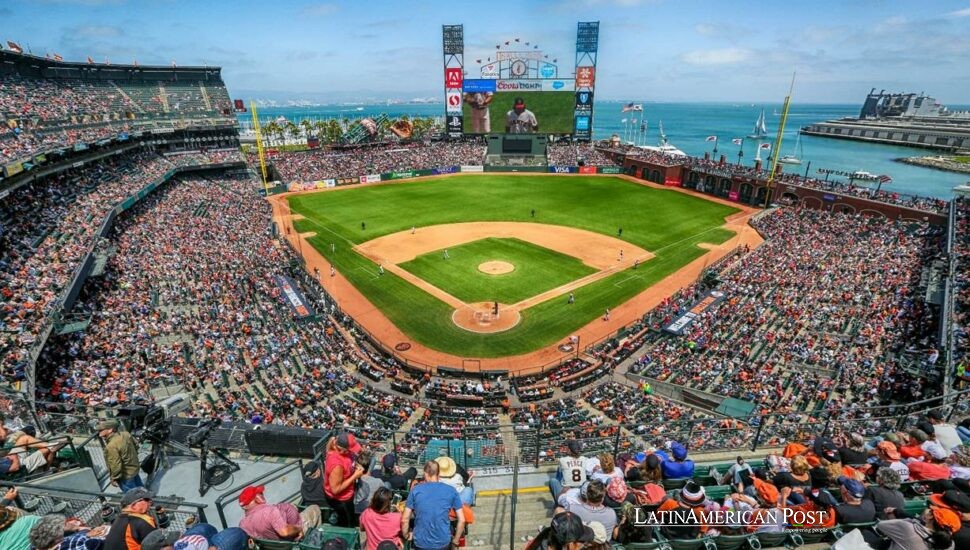
For decades, the San Francisco Giants watched Latin America feed other franchises’ glory. Now a Venezuelan and a Dominican teenage shortstop arrive like a promise—expensive, fragile, and thrilling—testing whether the club can finally grow its own Caribbean legacy.
The Long Drought After the Golden Names
In San Francisco, the franchise’s relationship with Latin America has always been a story of two eras: the early days when the Giants helped open doors, and the long middle when those doors seemed to close for everyone wearing orange and black. The evidence sits in the record like an ache. The team’s most luminous Latin American memories from the West Coast’s early decades read like a roll call of baseball history—Juan Marichal, Orlando Cepeda, Felipe Alou and his brothers Matty and Jesús, José Pagán, Manny Mota, José Cardenal, Tito Fuentes, André Rodgers—a generation that made the Giants feel connected to the Caribbean and to Spanish-speaking baseball cultures that were already producing genius.
Then the pipeline thinned, almost to nothing. After Marichal’s final season with the Giants in 1973, the club’s flow of Latin American talent “virtually dried up,” the text says. The playoff teams of the late 1980s had zero players the Giants developed from Latin America. The one hundred three-win team of 1993 had just one: Salomón Torres, who took the fateful loss in the season finale, was traded to Seattle for Shawn Estes, and went on to a serviceable career elsewhere. Even through the Barry Bonds years, the most notable homegrown Latin American name the Giants could point to was third baseman Pedro Feliz.
That emptiness becomes even sharper when you place it next to the championships. The Giants won three titles in 2010, 2012, and 2014, and their most vivid Latino star of that era was Pablo Sandoval, beloved and booming, a player who entered pro ball as a catcher and became a third baseman who hit his way into legend, winning the 2012 World Series MVP. Yet even Sandoval’s ascent carried an unsettling footnote: when he became an All-Star in 2011, the text notes he was the first homegrown Giant from the Caribbean to do so in forty years, since Marichal in 1971.
A New Class Arrives With a Price Tag
In 2026, hope has a face, and it is young. On the Giants’ own prospect list, five of the top ten are international signings, a sign that the organization is finally trying to build where it once lagged. The catch is time: all of them are in A ball or below, meaning the majors remain a distant country. Still, the text captures the emotion of this phase perfectly—how it becomes “fun for the Giants and their fans to dream,” especially after recent success signing elite teenage Latin prospects.
Last year’s international signing period delivered a headline name: Josuar Gonzalez, a seventeen-year-old switch-hitting Dominican shortstop, signed for $2,997,500, the second-biggest international bonus in franchise history. At the time, he was compared to a young José Reyes or Francisco Lindor, and was ranked the No. 1 prospect from Latin America and No. 2 overall behind Japanese pitcher Roki Sasaki. In a business where comparisons can be marketing, those names still land like a dare: if you’re going to dream, dream big.
Now the encore is expected to be larger, louder, and even more symbolic. As this year’s international signing period begins, the Giants are poised to sign the No. 1 prospect from Latin America for the second straight year: Luis Hernandez, a seventeen-year-old Venezuelan shortstop, for an estimated $5 million—most of their allotted bonus pool of $5.44 million. The report describes Hernandez as having superior tools for his age, competing at a high level against far more experienced players, with advanced bat speed, pop, contact ability, defense, athleticism, and baseball IQ. The intrigue is immediate: how do you develop two gifted shortstops—Gonzalez and Hernandez—in the same system, climbing the same ladder, each carrying his own country’s baseball mythology on his back?
“It’s exciting the talent that’s coming into the organization through these countries,” Giants general manager Zack Minasian said. “This is something we feel needs to be a strength of ours for us to build and sustain a winner.”
The stakes behind that sentence are bigger than roster construction. Latin American baseball is not a peripheral pipeline; it is one of the sport’s beating hearts, shaped by family sacrifice, early professionalization, and the knowledge that one signature can change a household forever. The text notes the context: Latino players made up 28.6% of big-league rosters in 2025, and clubs scout kids in the Dominican Republic and other Caribbean areas when they are as young as thirteen. If the Giants are late to this market, they are not late to a trend—they are late to a reality.
Se hizo oficial la firma de Luis Hernández (SS) con San Francisco Giants 📝
— Raúl Zambrano Cabello (@RaulZambrano7) January 15, 2026
Su bono fue de $5.000.000
Firma histórica para el nacido en San Juan de los Morros. Formado en la Academia Carlos Guillén.
Pertenece a los Leones del Caracas. pic.twitter.com/aYytUYlKiN
The Academy, the Humility, and the Long Memory
The organization’s internal story, told here through Joe Salermo, reads like an admission and a reformation. “We’re going in the right direction,” said Salermo, the Giants’ senior director of international scouting. But he pairs optimism with caution that feels almost philosophical, the kind of humility you hear from people who’ve watched too many “can’t miss” prospects disappear into the ordinary.
“It’s a humbling game,” Salermo said. “We can’t sit on our hands and say we’re doing great. We’ve got to keep moving forward and look at the next class. Every year is a different year… don’t walk around like you have all the answers because no one has all the answers… The day you think you have answers is the day you fail.”
The text traces why this humility exists: decades of swings and misses, and sometimes “without even any swings.” It points to regrettable signings such as Angel Villalona and Lucius Fox, and to Marco Luciano, a heralded international signing who didn’t pan out and was let go last month. Yet the report argues the system is changing, in part because the infrastructure finally caught up to the ambition.
In September 2015, Salermo was promoted to international scouting director and gained autonomy over the international operation. In August 2016, the Giants opened the Felipe Alou Baseball Academy in Boca Chica, near Santo Domingo, a headquarters for Latin American operations with fields, dormitories, dining hall, and extensive training facilities. The club was late to build it—“I hate to say it; I think we’re the last ones in,” Brian Sabean said at the time—an honest confession that doubles as an explanation for the drought.
Then came the structural shift that changed the market for every team: a 2017 collective bargaining agreement change that placed a hard cap on teams’ international bonus pools. The Giants had been penalized after spending $6 million on Fox, leaving them unable to spend more than $300,000 on any international prospect. In that constrained era, Salermo focused on mid-range prospects and found bargains: he signed closer Camilo Doval for $100,000 and Randy Rodríguez for $50,000—two names the text highlights as the only homegrown Latino pitchers since Marichal to make an All-Star team, both in the past three years.
Today, the Giants are freer to spend, and the money is louder—$2,997,500 for a Dominican shortstop, $5 million for a Venezuelan shortstop—but the question remains the same: can they finally develop, not just acquire? Buster Posey, now president of baseball operations after the 2024 season, visited the Alou academy early in his tenure, and Salermo called it an “impact statement,” a signal to staff: “I’ve got your back.”
In Latin America, baseball dreams are built in neighborhoods where talent is common but opportunity is not. The Giants’ new wave—Gonzalez, Hernandez, and the Caribbean-heavy names filling the farm system—offers a different kind of narrative than the one fans have lived for decades: not the story of watching other clubs harvest the region’s best, but of trying, at last, to become worthy stewards of those dreams. It is not a guarantee of championships. It is something rarer for this franchise in this market: a chance to stop being absent from a continent that has always been central to the game.
Credit: The San Francisco Standard — By John Shea
Also Read: Uruguayan Clásico Swaps Keep Montevideo Burning Long After Full-time Whistles