Essequibo Draws Washington Back to a Border It Helped Set
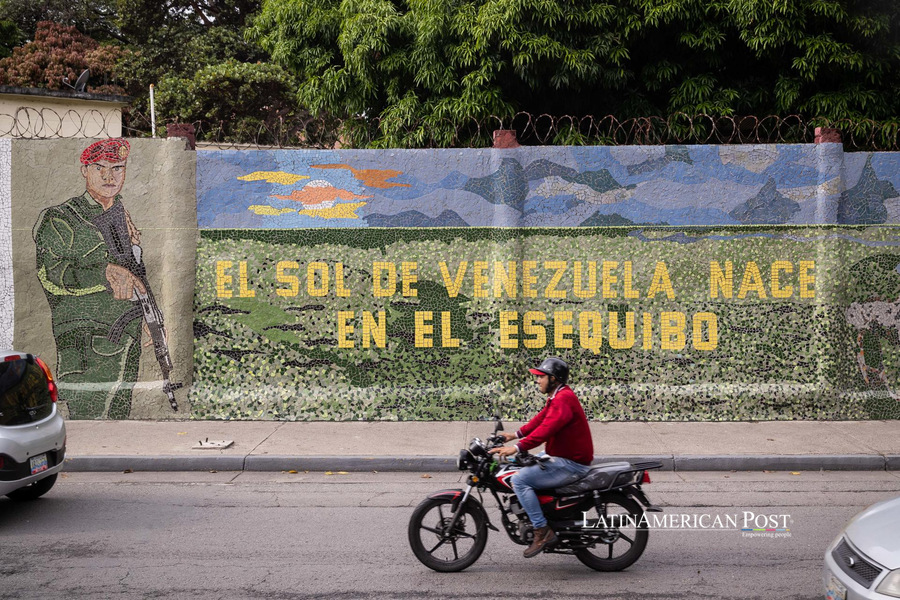
Washington says it stands by Guyana’s border with Venezuela. A reported suggestion that Guyana give up part of Essequibo has tested that assurance, just as a new offshore oil project shows how much has changed since arbitrators drew the line.
The Shop Both Sides Use
On the bank of the Barima River, one grocery shop serves Guyanese police officers and Venezuelan sailors. Guyanese sugar shares shelf space with flour and pasta from Venezuela. When journalist Nazima Raghubir visited for the Caribbean Investigative Journalism Network, a customer named Shelly remembered when more groceries came across from Venezuela. There used to be more to choose from, she said, and food cost less.
Guyana wants judges in The Hague to decide where its jurisdiction along this frontier ends. Then came a September meeting in Washington. Reuters reported Thursday that Jeremy Lewin, then the State Department’s policy planning chief, raised with Guyanese officials the possibility of ceding part of Essequibo to Venezuela. People familiar with the meeting differed on his precise words. Guyanese officials sought clarification afterward.
Lewin told Reuters that Venezuela’s acting president, Delcy Rodríguez, had written to President Donald Trump seeking mediation and had approached Lewin personally in Caracas. He said the White House authorized preliminary conversations. Reuters could not independently authenticate the letter. Guyana’s foreign ministry said its September discussion centered on the case before the International Court of Justice and that Washington had reaffirmed its support publicly and privately.
In a statement to EFE, the State Department said it still backed the 1899 arbitration award establishing the land boundary. That line should stand unless a competent legal authority changes it or both countries agree to another, the department said. Guyana’s consent would be essential to any negotiated deal. The territory Caracas claims west of the Essequibo River covers roughly 160,000 square kilometers, about two-thirds of Guyana.
Gold Drew Washington In
Venezuela has asked Washington for help with this border before. In 1841, Caracas protested a British survey that pushed the western boundary of British Guiana into territory Venezuela said it had inherited from Spain. Britain had acquired its colonies there from the Dutch under a treaty that left their western limit undefined. Gold discoveries gave London an incentive to press farther inland. Caracas appealed to the United States.
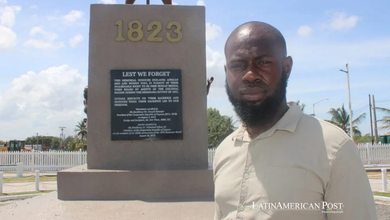
In 1895, Washington invoked the Monroe Doctrine to press Britain into arbitration. The award four years later left Venezuela the entire mouth of the Orinoco River, preserving its Atlantic outlet, and gave Britain the land stretching east to the Essequibo. British and Venezuelan commissioners marked the boundary together and signed a map in 1905. Guyana can point to the signatures. Venezuela argues that the original arbitrators reached a political bargain behind its back.
In 1962, Venezuela told the United Nations it considered the award invalid. The Geneva Agreement established a way to seek a settlement in 1966, three months before British Guiana became independent. Decades of diplomacy followed. In 2018, UN Secretary-General António Guterres chose judicial settlement, and Guyana filed its case. The court’s annual report to the UN General Assembly records that both countries presented their arguments in May 2026. The judges have yet to rule on the merits.
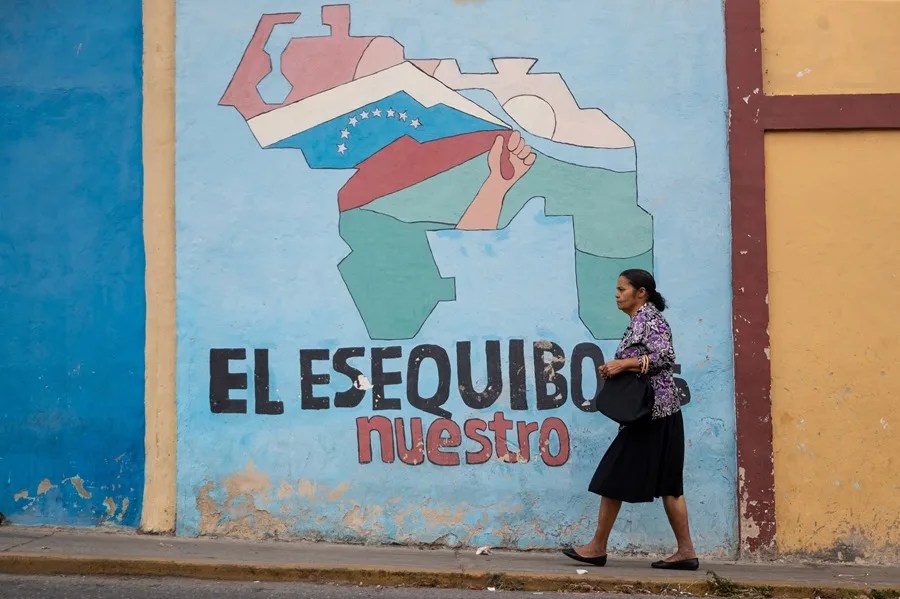
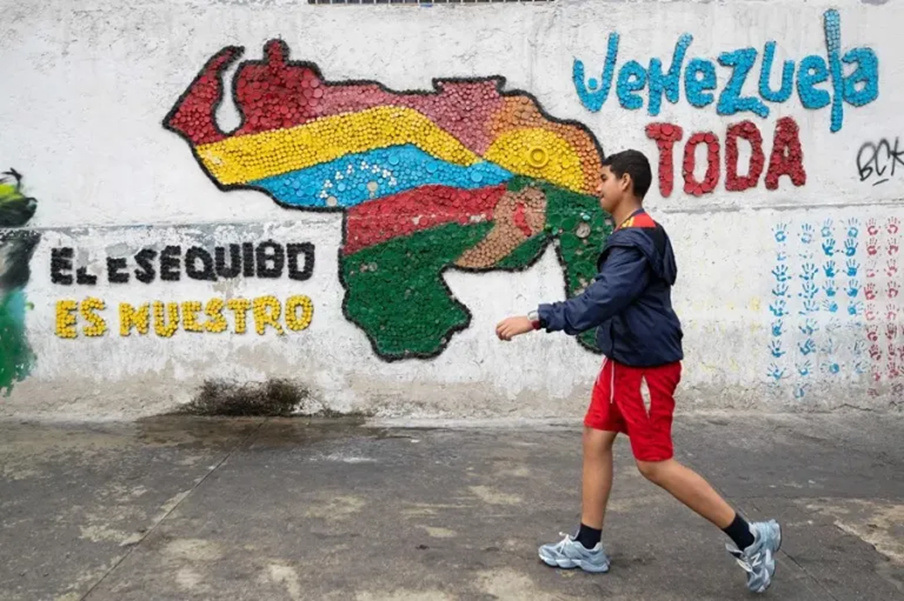
Meanwhile, the judges have ordered Venezuela to leave Guyana’s administration of the territory undisturbed. A Venezuelan law that took effect in 2024 created a state called Guayana Esequiba and required its inclusion on national maps. Anyone consulting an official map in Caracas now sees a Venezuelan state, even though Guyana still runs the police station.
The Oil Lies Offshore
An ExxonMobil-led consortium struck oil at Liza in the offshore Stabroek block in 2015. Estimates put the block’s recoverable oil and gas at around 11 billion barrels of oil equivalent. That figure applies to discoveries beneath the Atlantic. The case in The Hague concerns a land boundary. A stretch of coast can strengthen a country’s claim to adjacent waters, but a judgment on the land would leave the maritime boundary a separate question.
The speed of development helps explain Georgetown’s insistence on a ruling. Commercial production began in December 2019. By October 2026, the partners had pumped their billionth barrel. On Monday, ExxonMobil started production at Uaru, Guyana’s fifth offshore project, lifting installed capacity to 1.1 million barrels a day. The company expects the new vessel to reach its own capacity of 250,000 barrels a day early next year.
ExxonMobil holds 45 percent of the block, and China’s CNOOC holds a quarter stake. Each has committed money based on a license issued in Georgetown. In March 2025, Guyana said a Venezuelan naval vessel radioed the production ship Prosperity, saying it was operating in disputed waters. The Caribbean Community called on Caracas to withdraw the vessel.
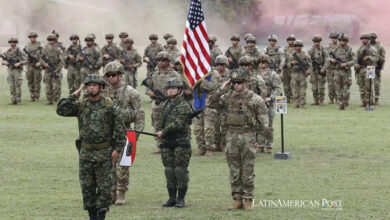
Washington now has another relationship to consider. On Wednesday, one day before it reaffirmed Guyana’s border, the United States signed a military cooperation agreement with Rodríguez’s government in Caracas. For Venezuela, American mediation offers a chance to reopen direct talks while that relationship is warming. For Guyana, a judgment would give a small country something an assurance from a powerful friend cannot guarantee. It would bind both parties long after this American administration leaves office.
The new production vessel carries a name from the Indigenous Warrau language, Errea Wittu, which ExxonMobil translates as “abundance.” In Imbotero, village leader Simon Lakhan offered Raghubir a farmer’s measure of what oil is worth. “We usually need a lot of fuel to get to the farms,” he said. Cheap fuel once came from Venezuela. Now villagers pay more to bring it from Charity, on the Guyanese side. For a farmer who gets to his plot by boat, that extra cost comes out of his pocket before the working day begins.