Peru Counts the Missing as Russia’s War Arrives at Latin America’s Doorstep
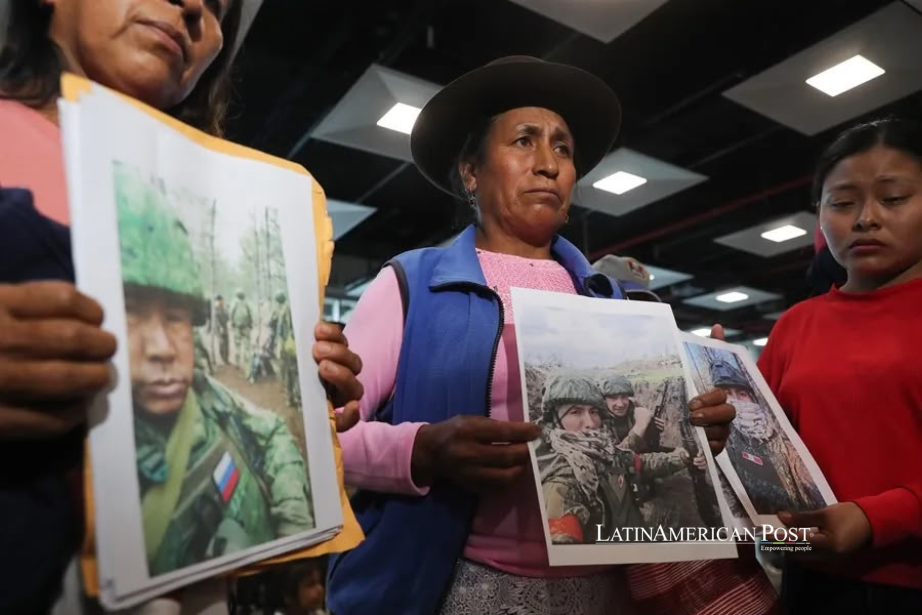
Peru’s tally of citizens killed or missing with Russian forces exposes an overlooked cost of the Ukraine war. Across Latin America, recruitment networks connect promises of better wages to battlefields, leaving families demanding answers that their governments still cannot provide.
The War Behind the Photographs
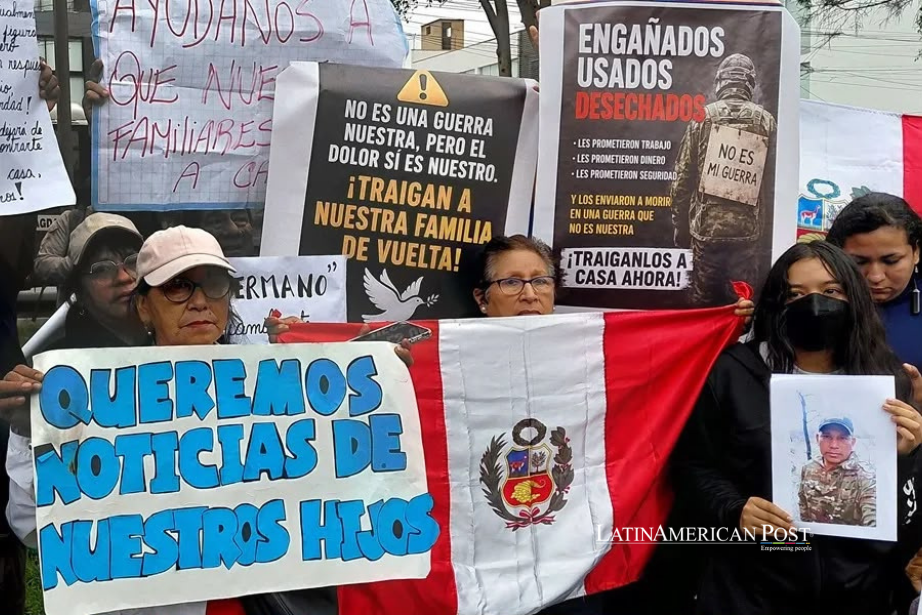
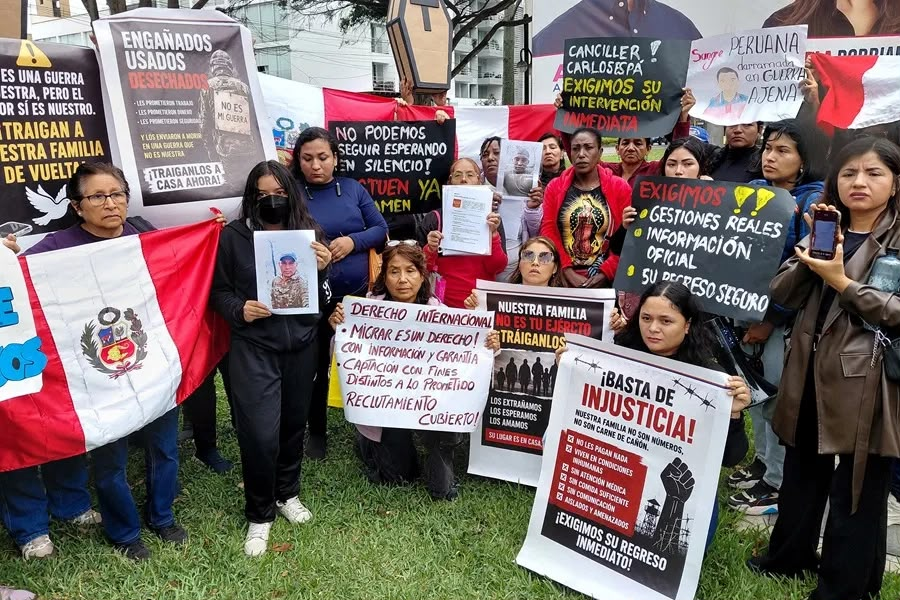
In Lima, relatives have carried photographs to the Foreign Ministry, the Russian Embassy, and the airport, demanding news of people who left Peru expecting an opportunity abroad. Their questions are concrete. Where are they? Can they speak? Will they come home?
The government now acknowledges 25 Peruvians killed while fighting for Russia, up from 11 previously reported. Another 187 are missing, and four have been captured by Ukrainian forces. For families, these categories describe radically different possibilities. None offers a simple end to the waiting.
Foreign Minister Carlos Espá told lawmakers that authorities had received 430 reports from relatives and verified 344 files. That leaves 86 without formal verification, exactly one in five notifications. An unverified file does not mean a false report. It means the state has not established the facts.
Even the confirmed figures need clarification. The reported dead, missing, and 132 people in active service total 344; adding the four prisoners produces 348. Overlapping classifications or different reporting dates might explain the discrepancy. Until officials clarify it, these figures cannot support a clean breakdown of outcomes.
The death count has increased by 14, or approximately 127%. But Espá supplied no dates for the deaths. The rise, therefore, measures additional deaths acknowledged by the government without establishing whether battlefield mortality accelerated since its previous update on August 9.
Lawyer Percy Salinas, representing families, told EFE that as many as 1,200 Peruvians had been recruited. His estimate is almost three times the number of family notifications registered by the ministry. Those are different measures, however, and the larger estimate remains unverified. Their distance exposes the unresolved question of scale.
A Job Offer Becomes an Order
The recruitment route described by Espá began inside Peru. Intermediaries financed journeys to Europe and facilitated military contracts written in a foreign language. Families say recruiters promised civilian employment and generous dollar payments, only for their relatives to be sent into combat after reaching Russia.
Around 100 families filed trafficking complaints with prosecutors in April. More have joined since. Their allegations include confiscation of passports and phones by the Russian military. These remain allegations requiring investigation, but they identify mechanisms through which a worker’s ability to refuse or escape could disappear.
Paying for travel removes a barrier to migration. Controlling the documents and communication afterward can create another barrier, this time against leaving. A signature on an unfamiliar contract cannot, by itself, resolve whether someone understood the arrangement or was deceived about the work.
This is one way a distant war becomes a Latin American employment problem. The recruitment pitch approaches people through ordinary ambitions: earning more, supporting relatives, finding a future elsewhere. The promised opportunity can conceal a transfer of danger that becomes clear only after arrival.
Colombia demonstrates why the regional picture needs distinctions. The Associated Press reported in 2024 on Colombian veterans who knowingly joined Ukraine’s forces, attracted partly by better pay. Their military experience, developed during Colombia’s long internal conflict, had become valuable in another country’s war.
That route differs from the deceptive recruitment described by Peruvian families. Yet Colombians also appear in Amnesty International’s September investigation into Russian recruitment. Interviewees described false civilian job offers followed by military service. Amnesty concluded that many documented cases amounted to trafficking.
Neither nationality nor a military uniform tells the whole story. A willing volunteer, an economically pressured veteran, and a civilian deceived about a job may arrive near the same fighting through profoundly different decisions. Treating them all as adventurers obscures who recruited them, what was promised, and whether they could leave.
The shared regional vulnerability is the gap between livelihoods available at home and opportunities advertised abroad. In Colombia, combat experience can become an exportable skill. In the Peruvian allegations, even the expectation of civilian work becomes a recruitment tool. Both routes carry consequences back to households.
Families Inherit the Search
Salinas told EFE that staff changes following President Keiko Fujimori’s July 28 inauguration had disrupted communication. Families were being summoned to hear that relatives remained missing, information they had received months earlier. His account describes administrative repetition where families were seeking progress.
Continuity matters because every new official should not require relatives to reconstruct the same absence. Records must survive political transitions. Otherwise, families become the institution’s memory, carrying names and previous correspondence between offices while the people they seek remain beyond reach.
Peru says consular efforts continue to obtain official information from Russia. That dependence reveals an imbalance: authorities seeking answers must approach the state whose military holds the relevant records. Diplomatic contact is necessary, but announcing contact is not equivalent to locating someone.
The regional response therefore has to begin before departure and continue afterward. Investigating intermediaries at home can establish who financed travel and made promises. Coordinated case records can help governments distinguish confirmed locations from unanswered requests while protecting families from repeated bureaucratic dead ends.
For now, the photographs do that work in public. They insist that the Ukraine war’s Latin American consequences have names, and that “missing” must remain a demand for answers rather than the last word.