Chiclayo, Peru, Powerful Photos Bring Pope Leo XIV’s Legacy Home
In Chiclayo, Peru, an outdoor exhibition brings Pope Leo XIV back among the people who remember him serving meals and wading through floodwater. As surgery clouds his planned November visit, photographs show why this city’s affection for him goes far beyond celebrity.
Before the White Cassock
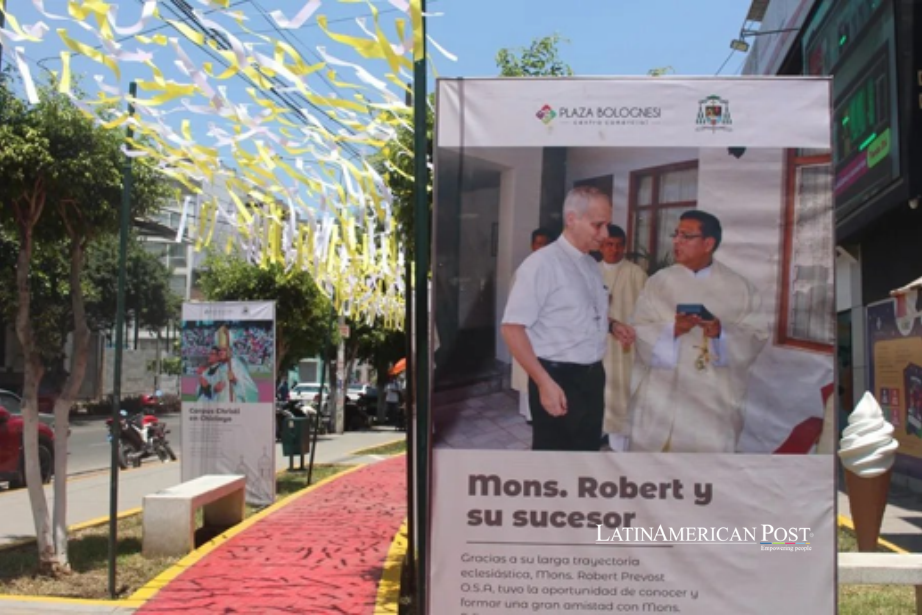
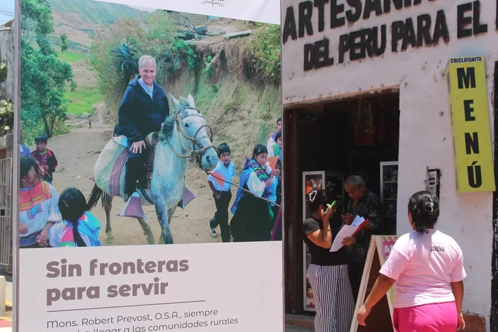
In one photograph, Robert Prevost serves a portion of Peruvian stew at a community kitchen. In another, he arrives on horseback in an Andean village, children gathered around him. Near Chiclayo’s cathedral, the man now known as Pope Leo XIV appears at a scale his former neighbors recognize: close enough to touch.
The exhibition along Bolognesi Avenue in the capital of Peru’s Lambayeque region turns a public walkway into something like a family album. Childhood pictures from Chicago sit within a story that stretches through university, priesthood, and decades of work in Peru. A young Prevost is meeting Pope John Paul II in 1982. Elsewhere, he gently touches an older woman’s forehead.
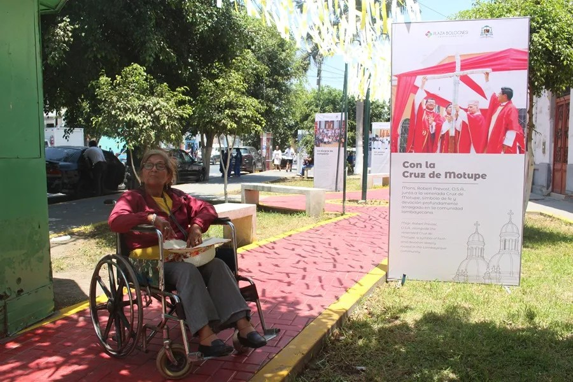
Organized by the Plaza Bolognesi shopping center and the Diocese of Chiclayo, which supplied photographs, the display includes 64 images across 32 panels, according to Peru’s Andina news agency. Its outdoor setting matters. People can encounter these memories while moving through their own city, without making a separate pilgrimage to a museum.
“He has left his mark,” shopping center manager Augusto Sotelo told EFE, pointing to Prevost’s social work, participation in public and religious projects, and involvement with Santo Toribio de Mogrovejo University. His account describes a bishop whose responsibilities regularly brought him into contact with people beyond the cathedral.
The chronology helps explain that familiarity. Prevost became Chiclayo’s apostolic administrator in 2014, its diocesan bishop in 2015, and a senior Vatican official in 2023. Locally, the roughly eight years are remembered for repeated encounters, not a brief visit by a dignitary. Across separate postings, he spent more than two decades in Peru and became a citizen in 2015.
In Boots in the Floodwater
One image places him in rubber boots during flooding. The exhibition includes scenes from the 2017 coastal El Niño emergency, when rains in northern Peru turned ordinary routes and homes into places of danger. Here, the photograph’s significance extends beyond evidence that a future pope was willing to get his feet wet.
Peru’s civil defense agency recorded 182,955 people affected or severely affected across Lambayeque’s 38 districts during that disaster. Every district was touched. That geographical reach matters: assistance had to move through an entire regional network while households, roads, and public buildings were themselves under strain. The emergency could not be contained within one neighborhood.
These figures describe the burden facing public agencies and community organizations alike. A meal served through a communal kitchen belongs to that larger economy of survival, in which neighbors organize around needs that cannot wait. A bishop’s presence can help bring attention and resources; it cannot replace drainage, safe housing, or sustained public investment.
The photographs also resist reducing local religious life to disaster relief. Baptisms, confirmations and village celebrations occupy the same visual record. Those occasions matter because trust develops through repetition. A person who appears at a family celebration may be remembered differently when he returns during an emergency.
That relationship complicates the shorthand of an American pope with a Peruvian connection. Chicago was his birthplace. Peru became a country of citizenship and sustained responsibility. His elevation brings the experiences of a northern Peruvian diocese to the Vatican, allowing residents to see their community as part of forming a global religious leader.
A Homecoming Worth Waiting For
The planned reunion now carries anxiety. Leo underwent surgery on October 13 to remove the lower lobe of his right lung after doctors identified an adenocarcinoma. He has begun returning to public duties, but his November journey through Uruguay, Argentina and Peru remains uncertain. Affection cannot settle a medical timetable.
Sotelo told EFE that the exhibition would wait for him if he postponed the visit. “It’s moving that someone who was here among us has become one of the most important people in the Catholic Church worldwide,” he said. The operative words are “among us.” They describe belonging before they describe rank.
There is a commercial dimension, too. A shopping center helped organize the tribute, and a papal visit could bring customers to local businesses. Yet the exhibition offers no attendance or spending figures that would justify confident predictions of an economic windfall. Public affection is visible; its conversion into broadly shared income remains a separate question.
Chiclayo already serves as a gateway to the Moche heritage associated with the Lord of Sipán and the royal tombs museum in nearby Lambayeque. This exhibition adds a different kind of memory: people still living can recognize the occasions, institutions, and streets their former bishop moved through.
The selection is affectionate and curated by institutions. Sixty-four photographs cannot fully assess anyone’s leadership. They can preserve the texture of encounters that official biographies compress into appointments. A hand resting on an older woman’s forehead says something a list of Vatican offices cannot.
For now, the photographs stand in for the expected visitor. The city can revisit the meals, ceremonies, and difficult days without knowing exactly when he will return. In those images, Leo XIV is already back in Chiclayo, standing among people who knew him before the world learned his name.