Guatemala Convicts Killer Officers as Homophobia Puts Unchecked Police Power on Trial
The convictions of seven Guatemalan police officers over a gay couple’s deaths expose more than individual brutality. They reveal how prejudice, official power, and concealment can converge, raising urgent questions about whose safety Latin American security institutions actually protect today.
The Cries Inside the Station
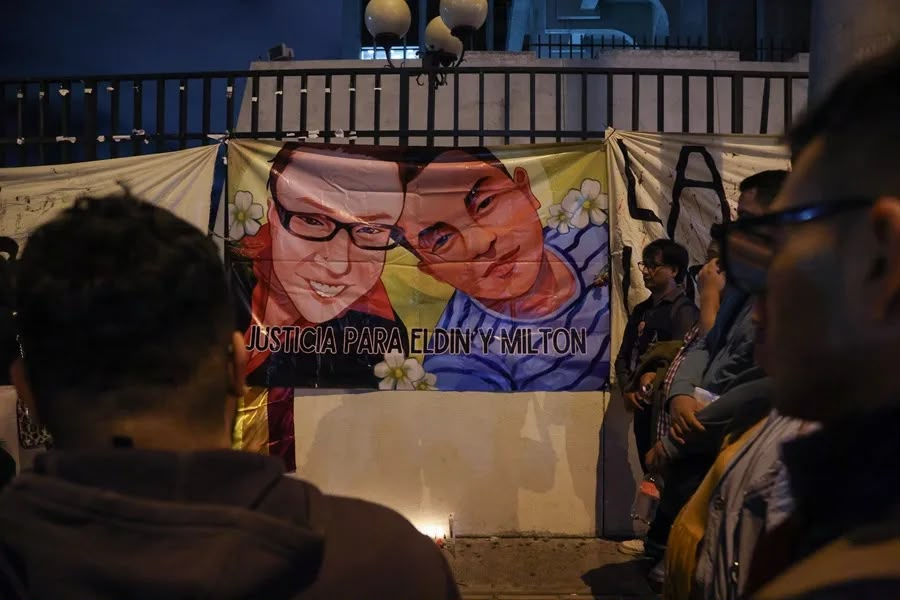
Eldin Choc Xi called for help inside a police substation. His cries were recorded. More than two years later, those sounds became evidence against officers implicated in killing him and his partner, Milton Nelson Santamaría. The institution holding them had become the danger.
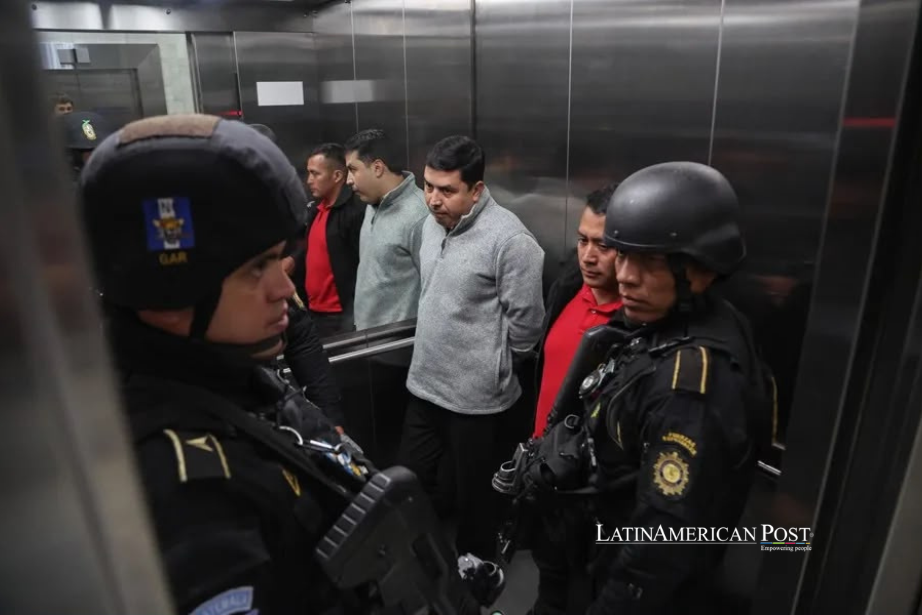
Guatemala’s High Risk Court B convicted seven former officers Wednesday over events following the couple’s April 2024 arrest in San Andrés Itzapa, roughly 30 miles west of Guatemala City. Police had accused the men of public disorder. That accusation became the entrance to an ordeal neither man would survive.
The sentencing details matter. Fuller courtroom reports establish that Edy Vásquez Rabanales and Fredy Velásquez Pérez each received 60 years, representing 30 years per victim. Mauricio Contreras received 30 years for Santamaría’s killing and was acquitted over Choc Xi’s death. The remaining defendants received sentences for other offenses.
Two officers received 11 years each for breach of duty and discrimination. Reporting by The Associated Press describes findings that they directed homophobic insults at the victims while fellow officers tortured them. This supplies evidence of prejudice beyond the fact that the victims were a gay couple.
That distinction strengthens the case against institutional homophobia. Sexual orientation alone cannot establish why someone was murdered. Here, reported courtroom findings connect discriminatory conduct to the violence itself. Describing the killings as prejudice-driven has an evidentiary basis, although the convictions should still be identified by their actual offenses.
Santamaría suffered fatal bleeding and trauma. Choc Xi died from asphyxiation; residents found his body seven days after his detention. Those seven days measure more than an investigative delay. They mark the interval between entering state custody and his whereabouts becoming publicly knowable again.
When Prejudice Acquires a Badge
Homophobic policing rests on an antiquated proposition: that officers may enforce social conformity alongside public order. Under that logic, a couple’s intimacy becomes grounds for humiliation, and the badge gives private contempt coercive force. The question is whether institutions interrupt inherited hierarchies of respectability or reproduce them through everyday official decisions.
The problem is not simply that some officials hold old prejudices. It is that they possess contemporary powers to detain people, control access to assistance, and produce the first official account of what happened. A slur becomes more dangerous when its speaker also controls the door.
Latin American debates about security often reward visible severity. But severity and competence are different things. An officer who assaults a detainee has not made a neighborhood safer. He has demonstrated that custody can remove a person from protection rather than place that person under it.
This case also shows why explanations centered entirely on individual rage are inadequate. Seven convictions involve different forms of participation. The court distinguished killing from discriminatory conduct, unlawful detention, and obstruction. The pattern demands examination of cooperation and silence, without assuming that every defendant committed the same acts.
Concealment extended beyond police personnel. In September 2025, firefighter Josué Francisco Buch Cúmez admitted giving a false account that placed the injured Santamaría in the street rather than inside the police station. He received an 18-month sentence convertible to a fine.
The location was consequential. Moving an injury outside custody in an official account can redirect suspicion away from officers before an investigation properly begins. Accountability therefore depends on more than punishing whoever delivered the blows. It requires witnesses and emergency personnel who can report what happened without protecting colleagues or fearing retaliation.

The Violence Missing From the Count
Regional statistics require similar scrutiny. The Inter-American Commission on Human Rights documented 770 violent incidents against LGBT people across 25 countries in the Americas between January 2013 and March 2014. Of those, 176 were nonfatal. This was a historical monitoring exercise, not a current Latin American crime rate.
The imbalance illustrates a reporting problem. Killings attract attention that threats and assaults often do not. The commission warned that fear of retaliation, distrust of authorities, and reluctance to disclose sexual orientation suppress reporting. Its figures describe documented cases, not the full scale of violence.
That makes official silence particularly treacherous. A low complaint count may indicate safety, but it may also indicate that victims expect mistreatment at the reporting desk. Without comparable collection methods and reliable population denominators, country rankings can reward weak documentation and punish stronger monitoring.
The economic consequences reach beyond individual cases. When approaching police carries additional risks, protection becomes harder to obtain for people without money for lawyers, transport, or relocation. Prejudice can deepen existing inequality by making the same public institution less accessible to some citizens than to others.
Guatemala’s verdict demonstrates that evidence can break through a false official narrative. It does not establish how frequently such narratives survive elsewhere. Nor can prison terms alone guarantee that the next detainee receives medical attention or that the next witness feels safe speaking.
The practical test comes before another courtroom recording is played: independent scrutiny of detention and credible channels for complaints and consequences for concealment. Choc Xi’s recorded cries helped expose what happened. A functioning security institution should have answered them while he was alive.