Venezuela After Maduro Migrants Weigh Homecoming Between Hope and Fear
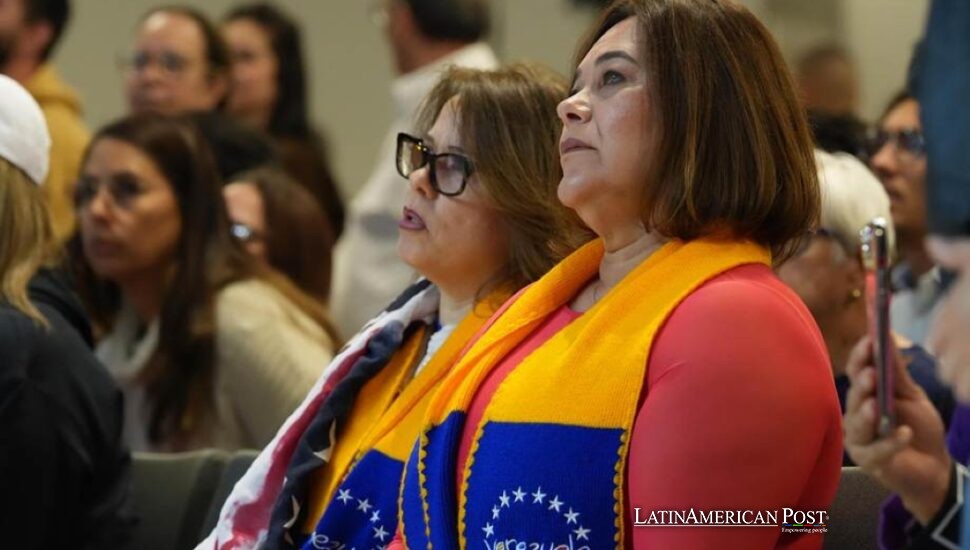
Along the Caribbean and across the Andes, Venezuelans who fled collapse since 2014 are re-reading their futures. With Nicolás Maduro ousted by the United States, cautious hope flickers—elections, jobs, safety. But fear and logistics still decide who dares return.
The Long Road Out, And The Harder Road Back
For more than a decade, the map of Venezuela has extended far beyond its borders—into rented rooms in Bogotá, factory shifts in Lima, crowded apartments in Santiago, and the long, punishing northbound corridors that end at the U.S. border. The scale has been so vast it stopped sounding like a number and started sounding like weather. According to Reuters, about a quarter of Venezuela’s population has fanned out across Latin America, the Caribbean, Spain, and the United States since 2014, fleeing an oil-dependent economy crippled by mismanagement. The exodus—about eight million people from the OPEC member—reshaped neighborhoods, schools, hospitals, and labor markets across the hemisphere, creating new diasporas in places never prepared to become permanent receiving countries.
Now, that same diaspora is being asked to consider a question that sounds simple until you try to answer it: what does “home” mean after you’ve rebuilt your life somewhere else, even partially, even painfully? Reuters reports that Venezuelans scattered throughout the region are weighing whether to plot a future back home after the U.S. ouster of long-time leader Nicolás Maduro raised cautious hopes for democratic elections and a way out of economic collapse. But in Latin America, hope is rarely clean. It arrives with conditions, doubts, and the memory of promises that did not survive contact with power.
In Colombia—host to Latin America’s largest Venezuelan migrant population—Juan Carlos Viloria speaks from inside that tension. “I want to return to my country, I want to help rebuild,” Viloria, a doctor who helps run a migrant advocacy group, told Reuters. His desire is both personal and civic, the kind of sentence you hear from people who have watched their country become a wound and still believe it can scar over into something livable.
Yet his next thought is the one that keeps many people’s suitcases closed. With Maduro’s former vice president Delcy Rodriguez “tightening her grip on power,” Viloria told Reuters that fears of continued government repression and economic insecurity were holding people back. That fear is not abstract. It has a face, paperwork, checkpoints, and the persistent knowledge that a state can change its rhetoric faster than it changes its habits.
Viloria added in his interview with Reuters that border communities in northeastern Colombia have even seen a rise in people crossing into Colombia to earn cash while the situation in Venezuela stabilizes. It is a kind of commuter exile: not a definitive return, not a definitive departure, but a daily calculation of risk and necessity. For those who have lived through collapse, stability is not a slogan. It is measurable—wages that buy food, hospitals that treat, streets that can be walked after dark.
Panama’s Waterline, Where Uncertainty Becomes Visible
The report’s most haunting image is not a statistic or a political statement. It is a boat. In Miramar, Panama, on January 15, 2026, a drone view captured by Reuters shows a vessel bound for Colombia, carrying Venezuelan migrants as it sails near the coast of Colon while they return to Venezuela following deportation and failed attempts to enter the United States, amid renewed hopes of returning home. Water has always been a border in Latin America, but in the last decade it has also become a mirror—reflecting a region that exports people when it cannot protect them.
In the United States, Venezuelans arrived in such large numbers at the southern border that they became the face of U.S. President Donald Trump’s hard-line migration policy, Reuters reported. That framing matters because it helps explain why some are now drifting back south through Panama. People do not simply change their minds about migration. They collide with enforcement, run out of money, run out of time, or run out of emotional oxygen. A return can be voluntary, coerced, or somewhere in between.
For many, the hardest part is admitting that leaving again would not just be hard—it might be impossible. Some have settled in their new countries, Reuters noted, and moving again would not be an easy choice. “Settled” can mean a child enrolled in school, a spouse employed, a landlord who finally trusts you, a clinic that knows your name. It can also mean fatigue—the kind that makes even hope feel heavy.
And yet, their decision to return or stay could dramatically influence Venezuela’s future. As Reuters observes, a country that lost eight million people lost not only labor, but skills, networks, and a generation’s worth of professional experience. If people like Viloria return, they bring knowledge of survival in other systems—how hospitals function, how organizations advocate, how communities rebuild. If they do not, recovery becomes slower and more fragile.
“Rebuilding Venezuela will require many of the talents of those of us who have left,” Viloria told Reuters, one of a dozen migrants—from day workers to business owners to engineers—interviewed by the news agency in Colombia, Peru, Chile, Mexico, and Panama. The sentence sounds like patriotism until you hear the exhaustion behind it. To rebuild requires not only love of country, but a belief that the country will not punish you for coming back.
Hope Has Names, And Fear Does Too
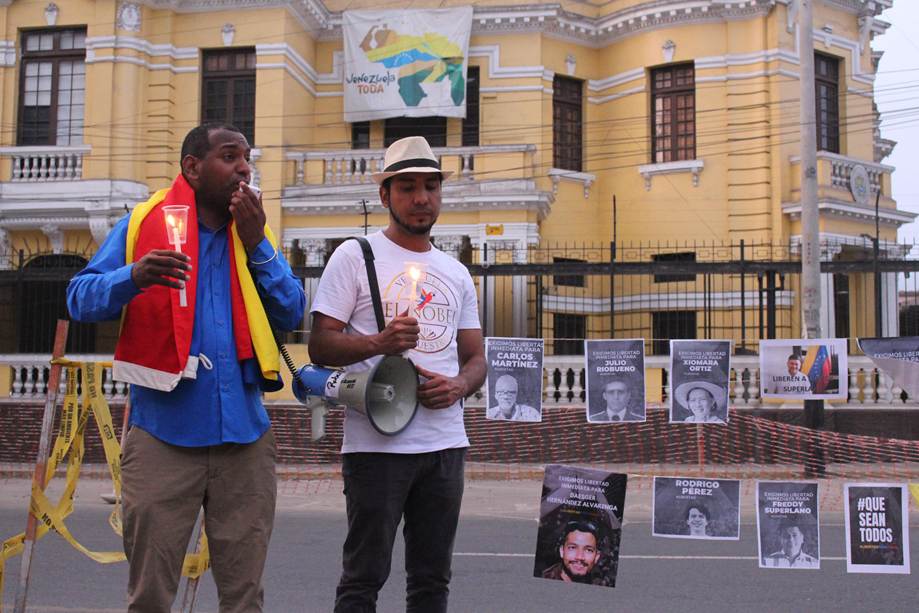
If Viloria’s voice carries responsibility, Nicole Carrasco’s carries memory. Carrasco, who moved to Chile in 2019 after her father was arrested, told Reuters she feared nothing had yet changed for political prisoners and their families. The pain here is familial, not abstract.
“It is not as if Venezuela is free yet—there are still many very bad people in power,” Carrasco said in her Reuters interview, adding that she longed to return home to see family and eat traditional foods like arepas. The line holds two truths at once: love for home and distrust of the machinery that governs it.
Reuters notes that opposition leader and Nobel Peace Prize winner Maria Corina Machado, whose candidate was widely seen as the legitimate winner of the 2024 election that Maduro was accused of rigging, has called for a transition of power as soon as possible so Venezuelans can return home. For migrants, that transition is not abstract. It is the difference between risking everything and risking nothing.
Uncertainty still dominates the near term. While many migrants Reuters spoke to expressed doubt about the short term, the agency reports that most remain hopeful change will ultimately be for the better. Hope, here, is not optimism. It is strategy.
Luis Diaz, traveling through Panama back to Venezuela after a year in Mexico, summed up that limbo in an interview with Reuters. “I don’t know whether it’s good or bad,” he said. “Now they’ve done what they’ve done, something different is going to start.”
Another migrant, Omar Alvarez, also passing through Panama, told Reuters he was confident that with hard work Venezuela could become a better place to live. “All of us outside Venezuela, I think we can come together and recover our country by working together, like we have always done in every country we’ve arrived in,” he said. “With all of us united, our country’s economy will rise again.”
That idea—reported by Reuters through the voices of migrants themselves—sits at the heart of this moment. The diaspora is not only the consequence of collapse. It is also a potential engine of recovery, if conditions allow. And in Venezuela today, conditions remain the thin line between return and exile, between rebuilding a life and reliving its deepest wounds.
Also Read: Latin America Returns to Center Stage as CIA Covert Power Rewrites Rules