Brazilian Model’s Trump World Fall Reveals Power, Loyalty, and Exile
A Brazilian woman who was once welcomed into Donald Trump's social orbit now says she was deported under his second administration, turning one personal rupture into a revealing story about migration, proximity to power, and the unstable loyalties inside the American elite.
The Promise of Being Near the Right Table
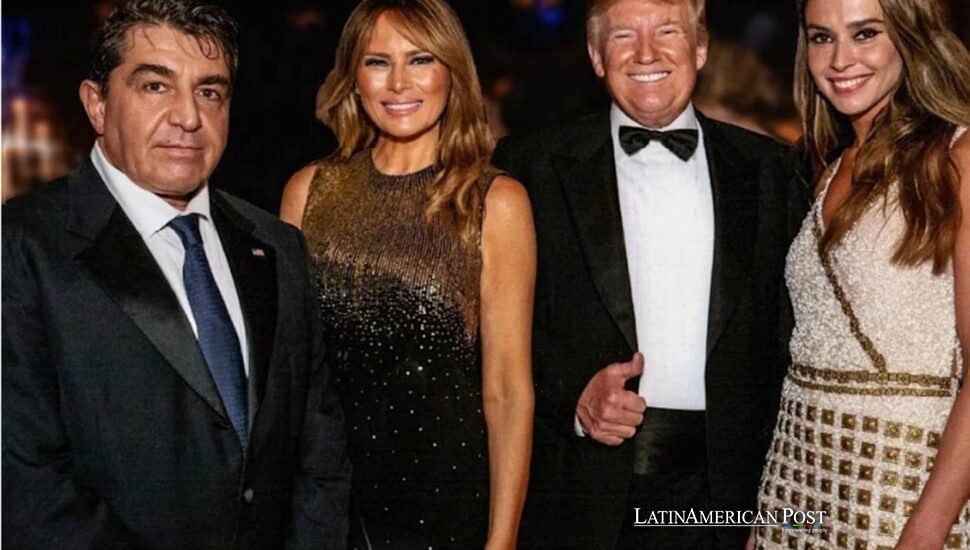
They stood together beside Donald Trump in front of a giant Christmas tree at Mar-a-Lago, hands almost touching, two immigrant women who had crossed oceans toward the same bright American promise. Melania Trump had arrived from Slovenia. Amanda Ungaro had come from Brazil. Both were mothers of one son. Both moved through a world of fashion, wealth, introductions, and male power. For a time, the notes say, they also moved in the same orbit, dining regularly with Trump and Melania at the Palm Beach resort through Ungaro's then-boyfriend, businessman Paolo Zampolli. It looked like the old story of access doing what America often promises it can do, turning outsiders into insiders, or at least letting them sit close enough to feel the heat.
But the real story here is not glamour. It is fragility. Because in the years since that Mar-a-Lago photograph, the two women's paths have split into different moral universes. Melania, now back in the White House, has remained publicly protected by rank, marriage, and a carefully managed silence that only recently broke when she condemned what she called lies about alleged links to Jeffrey Epstein and reports that she had flown on his plane. Ungaro, by contrast, says her own American dream ended in deportation back to Brazil after Trump's return to power, a turn so sharp it reads less like social decline than like a lesson in how quickly belonging can evaporate when it was never truly guaranteed.
That contrast gives the story its force. One immigrant woman stays inside the architecture of national power. Another says the same administration expelled her, whom she once brushed shoulders with at private dinners. For Latin Americans, especially Brazilians, who have long understood how status can open doors without ever erasing vulnerability, the symbolism is hard to ignore. In one season, the table feels intimate. In the next step, the state arrives.
The conduit between the two women is Zampolli, the Milan-born businessman who has known Trump since the mid-nineteen-nineties and who has long presented himself as the man who introduced Melania to the future president. The notes cite reporting that he helped secure Melania's U.S. visa after meeting her at a Milan casting call and later introduced her to Trump at a party in New York. He has also said he flew with Trump to attend the Mar-a-Lago wedding in 2005. On Instagram, he described himself as a friend of the president for more than 30 years and of the first lady for 29, adding a phrase that lands like a theme for the whole story: "Loyalty is king."
It often is, until it is not.

When the State Enters a Family Fight
Ungaro's account of her proximity to Trump-world comes through a different register, less polished and more bruised. She told Brazil's O Globo that when Trump won in 2016, Zampolli behaved as if he had been elected too. Suddenly, she said, invitations multiplied. At New Year's parties at Mar-a-Lago, she and one other couple were the only ones at the table with Trump and Melania. It is an image of admission to the inner ring, the kind of admission that can feel almost permanent when you are inside it.
But nothing in this story seems permanent except hierarchy. At one point, Ungaro herself was appointed to a ceremonial role as Grenada's ambassador to the United Nations through Zampolli's White House connections. That detail matters because it shows how porous the line between personal networks and official titles can become within elite political ecosystems. Roles appear. Doors open. Influence moves through friendship before it ever announces itself as power.
Then the circle cooled. After nineteen years with Zampolli, during which they had a son together, Ungaro split from him, later married a Brazilian physician, and was living in Florida when she was arrested in June two thousand twenty-five on fraud-related charges and ultimately deported for overstaying her visa. At the time, she was involved in a custody dispute with Zampolli over their teenage son.
This is where the story becomes more unsettling than a mere tale of social rise and fall. According to The New York Times, as referenced in the notes, Zampolli asked the administration for a favor, requesting that Ungaro be placed in ICE detention to help him win custody. In his interview with the Times, Zampolli denied asking for ICE to intervene, calling the allegation absurd. The Department of Homeland Security also denied that Ungaro was deported for political reasons. Those denials matter, and any honest telling has to keep them in view. Still, the very fact that personal custody battles, immigration detention, and presidential proximity can appear in the same sentence tells you something bleak about the age.
For many immigrants, detention is the point where the American dream drops its costume. It stops speaking the language of opportunity and starts speaking the language of paperwork, overstays, enforcement, and removal. Ungaro's story feels especially jarring because the notes place her so close to the people and spaces that project safety, influence, and exception. Yet closeness, here, did not guarantee protection. If anything, it makes the fall look even harsher. America can invite you into the photograph and still refuse you the country.

The Epstein Shadow and the Price of Proximity
Hovering over all of this is the Epstein shadow, which is what turns the story from a private drama into something more like a map of how fashion, power, and compromised networks have long overlapped. The notes say Zampolli's name appears multiple times in the Epstein files released by the Department of Justice and that he reportedly discussed buying a modeling agency with Epstein, who died in jail in two thousand nineteen. Ungaro told O Globo she had been asked to testify before the House Oversight Committee investigating the Epstein case, though she had not been subpoenaed.
She also said that, as a 17-year-old represented by Jean-Luc Brunel, she flew on Epstein's plane at a time when Brunel, a modeling figure and Epstein's associate, was recruiting young girls. Her recollection is chilling in its plainness. There were around thirty girls on the plane, she said, many of them younger than she was, more like students than models.
That memory does not prove everything, and it should not be forced to. But it does illuminate the kind of world these women were moving through, one where beauty, migration, male sponsorship, and elite access were rarely cleanly separated. Melania has now publicly denied that Epstein introduced her to Trump or that she was ever on the plane. That denial is part of the story too, because it shows how intensely everyone around this orbit is now trying to redraw distance, to say who was near, who was not, who introduced whom, who flew where, who belongs to which photograph.
The Brazilian angle sharpens the tragedy rather than softening it. Ungaro's story is not just about a former model who fell out with a powerful man. It is about how provisional immigrant elevation can occur within systems built on personal loyalty and institutional power. A Brazilian woman can dine with a president, receive ceremonial titles through connections, and still end up back in Brazil, telling her version of events from the other side of the border.
In the end, that may be the most revealing image left behind by the notes. Not the giant Christmas tree, not the Mar-a-Lago table, not even the famous names. Just the gap between invitation and security. Between being near power and being protected by it. One woman remained inside the palace of denials. The other became a cautionary tale about how quickly access can curdle when loyalty, immigration, and private grievance start touching the machinery of the state.
Also Read: Brazil Turns to Washington as Crime Politics Tighten Before Election