Venezuelan Opposition Voices Reappear as Fear Loosens Under Washington’s Shadow
In Caracas, a bearded former governor records himself outside a notorious prison and says the quiet part aloud. Since Maduro’s ouster by the U.S., critics are testing speech again, while an amnesty promise raises a more complex question: who controls what comes next?
Outside Helicoide, a Man Risks His Name Again
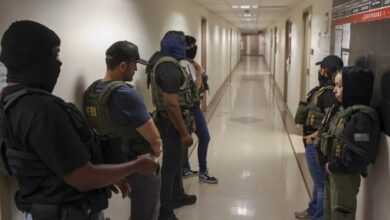
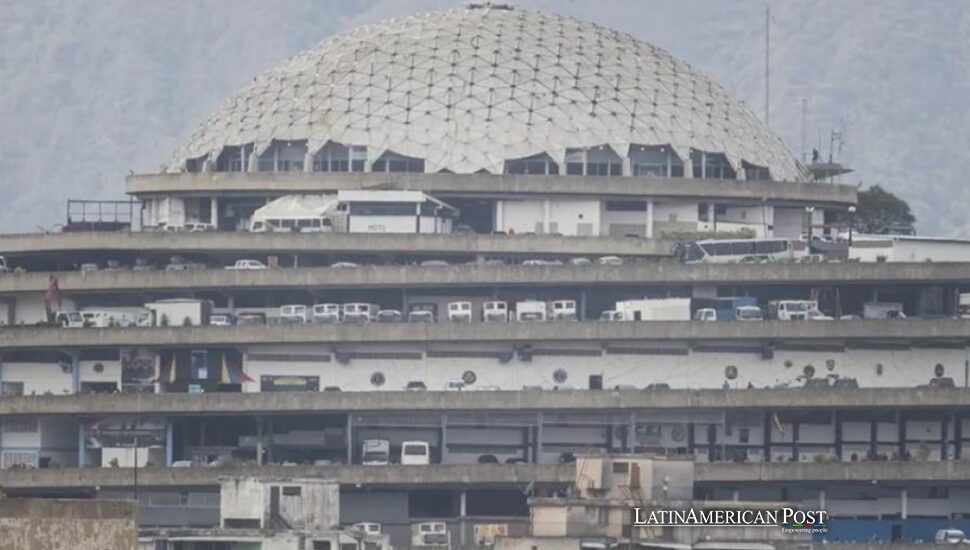
The spiral of Helicoide sits in the capital like a building that never stopped listening. Out on the street, Andrés Velásquez holds up a phone and films himself with the kind of caution you can see in a person’s shoulders. His beard is new, bushy enough to change the way his face reads on camera, and that detail matters because the note of this moment is recognition and risk. He is outside the place that has haunted opponents for years, and he is asking for something that once could have been treated as a provocation: the release of political prisoners, all of them.
“We must dismantle the entire repressive apparatus in the hands of the state,” Velásquez said in the video. “Venezuela will be free!”
The trouble is not that Venezuelans suddenly forgot fear. The problem is that fear has become a daily administrative fact, the kind you plan around like traffic or power cuts, and now people are trying to live without it while the state still remains in the same hands, highlighting the ongoing barriers and the resilience needed to cope with them.
Velásquez did not stick around to become one more government critic jailed after the 2024 presidential election. The notes say he crisscrossed the country campaigning for Nicolás Maduro’s opponent in that disputed race, then grew a thick beard, sent his children into exile, and avoided public events that could expose him to arrest. That is how private survival looks in political terms. You cut your public life into smaller and smaller pieces until you can pass as ordinary.
After Maduro’s overthrow by the U.S., he began to speak again. First in a video on January 19 supporting Maduro’s removal while calling for new elections, then days later outside Helicoide. It is the same act twice, in slightly different keys. Saying the country needs elections. Saying the prisons need to open and saying it where people can see.
The notes describe prominent critics emerging from hiding to test the limits of speech after years of silence, inspiring hope and resilience in the audience. Families of jailed activists are protesting outside prisons. People freed under the new climate are defying gag orders that are usually imposed as a condition of release. Media outlets are reopening airwaves to voices banished in recent years. It is not a parade. It is more like a cautious reoccupation of public space, one small act at a time.
A Small Opening, With a Big Hand on the Door
Velásquez likened what is happening to glasnost, the Soviet-era policy of openness that preceded the collapse, but this opening is heavily influenced by external actors like the Trump administration, which the notes say has used financial incentives and threats of additional military strikes to carry out the president’s pledge to ‘run’ Venezuela from Washington.
The wager here is that loosened repression might lead to a genuine civic opening. The fear is that loosened repression is simply tactical. The ultimate goal of the Trump administration’s maneuvers is still unknown, the notes say, even as the White House has praised acting President Delcy Rodríguez’s willingness to partner with the U.S. to open Venezuela’s oil reserves, combat criminal networks, and curb the influence of Iran and Russia. Opponents worry that elections and a restoration of democracy could be indefinitely delayed.
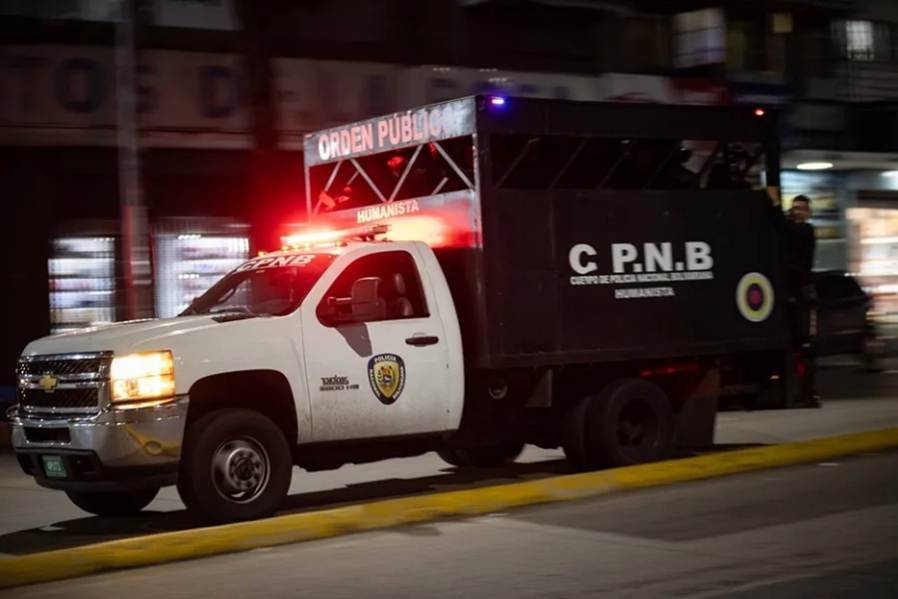
Last week, Rodríguez, a longtime Maduro ally, announced plans for a general amnesty that could lead to the release of hundreds of opposition leaders, journalists, and human rights activists detained for political reasons. She also announced the shutdown of Helicoide, promising to transform the building into a sports and cultural complex for police and residents of the surrounding hillside slums.
“May this law serve to heal the wounds left by the political confrontation fueled by violence and extremism,” Rodríguez said at the event, she told AP.
Those are the words. On the ground, the questions are procedural and blunt. Who decides who counts as political? Who decides who is forgiven? Who decides what is forgotten? When the state offers amnesty without a credible change in the institutions that carried out repression, it can read like mercy and leverage at the same time, underscoring the need for genuine reform to build trust and hope.
Pedro Vaca, the top freedom of expression expert for the Inter-American Commission on Human Rights, said the gestures are not enough without an independent judiciary and law enforcement.
“Venezuela’s civic space is still a desert,” Vaca said, he told AP. “The few critical voices emerging are seeds breaking through hardened ground, surviving not because freedom exists, but because repression has loosened while remaining ever-present. Let us be clear: this does not mark a democratic turning point.”
That is the sober version of the scene outside Helicoide. A man speaks, a crowd gathers, a camera records. And somewhere behind the scenes, the structures that once punished speech are still intact.
Airwaves Crack Open as Old Reflexes Return
The notes trace how self-censorship deepened after the July 2024 election, when Maduro launched a wave of repression marked by thousands of arbitrary detentions as he disavowed evidence showing he had lost to opposition candidate Edmundo González by more than two-to-one. Dissidents went into hiding. Independent outlets softened already cautious coverage for fear of being unplugged.
Now, broadcasters are moving again.
Venevision has reopened its airwaves to anti-government voices and has been covering opposition leader Maria Corina Machado’s moves in Washington since Maduro’s capture. Globovision invited back commentator Vladimir Villegas for the first time in years. Villegas was known for navigating the restricted space by keeping hardened opponents off his show. The program was abruptly canceled in 2020 after he criticized Maduro for forcing DirecTV to carry state TV in violation of U.S. sanctions, a move that led DirecTV to abandon the country along with its international news offerings. In other words, media policy became a household inconvenience. A political decision, felt as missing channels, missing windows.
Rodríguez has not embraced meaningful public debate beyond announcing an advisory commission on political co-existence to be headed by Villegas’ brother, Culture Minister Ernesto Villegas. And already, some allies appear intent on shutting down criticism. Authorities have yet to restore full access to X, which Maduro blocked after Elon Musk accused him of stealing the 2024 vote.
When Venevision covered Machado meeting Secretary of State Marco Rubio, Interior Minister Diosdado Cabello accused the media of playing into a plot by the Nobel Prize winner to sow chaos. “Without media attention, her notoriety fades away. Without headlines, she disappears,” Cabello warned on state TV, the notes report.
Yet even state TV is showing cracks. The notes describe Rodríguez touring a university campus in Caracas and being confronted by a small group of student protesters. State TV did not mention the demands, but it aired the scene of Rodríguez calmly stepping away from her security entourage to “exchange ideas” with what the broadcaster called activists from “extremist parties.” A few weeks earlier, the notes say, that kind of televised friction would have been unthinkable under Maduro.
Velásquez, in an interview, said he will continue to push the envelope while remaining wary because the repressive apparatus remains under Rodríguez and her allies. “We must continue winning back lost terrain, challenging power. An opportunity has opened up, and we can’t let it close again,” he said, he told AP. “But the biggest obstacle we have to overcome is fear.”
In the coming weeks, he hopes to organize a public event with other opponents who have recently come out of hiding, including Delsa Solórzano, who resurfaced at a rare press conference and described living clandestinely without sunlight. “I didn’t hide because I committed any crime but because here fighting for freedom became an extremely high risk to your life, your freedom, and your safety,” she said, she told AP.
And then there is the pressure from below, from people who paid the cost directly. Journalist and political activist Carlos Julio Rojas spent 638 days in prison, he said, describing handcuffs, denial of sunlight, and confinement in a tiny cell without a bed. Released last month, he said he was instructed never to discuss the abuse. “For me, not speaking meant I still felt imprisoned. Not speaking was a form of torture,” Rojas said, he told AP. “So, today, I decided to remove the gag and speak.”
What stays with you is how quickly silence turns from protection into a cage. What stays with you is the idea that a country can reopen its mouth while still tasting the fear that closed it.
Adapted from original report by The Associated Press.
Also Read: Colombian Plane Crash Exposes the Hidden Cost of Regional Connectivity