In eastern Guatemala, drought has destroyed crops meant to keep families fed when other harvests failed. Empty wells, lost investments, and shrinking options now leave farmers searching for wages on melon farms while their own fields yield nothing but dust.
The Crop That Was Supposed to Last
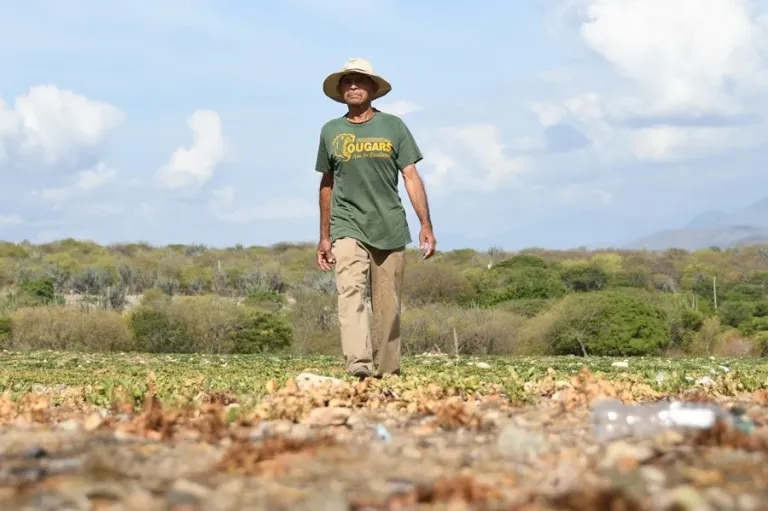
Felícito Marroquín bends toward the cracked earth and touches what is left of his peanut field. At 72, he had planted something he trusted to endure dry weather better than corn. Across his 3.5 hectares in El Jícaro, in Guatemala’s eastern department of El Progreso, the plants withered before producing a harvest.
“From selling peanuts, we buy the corn and beans we eat,” he told EFE. Corn dries out quickly, he explained; peanuts resist it better. “But this year we got nothing.”
That choice matters. Marroquín was not ignoring the risk. He had organized his farming around it. The crop that usually gave him a better chance of surviving drought failed alongside the more vulnerable ones.
He lost more than 15,000 quetzales, approximately $1,930, invested in planting. Spread across the field, that is more than 4,285 quetzales per hectare, with no harvest to recover the expenditure. The figure measures money already spent, not the income a successful season might have generated.
His household therefore faces two connected losses: the crop that would have brought in cash, and the purchasing power that would have turned that cash into meals. Hunger can arrive even when the failed crop is not the food a family normally eats.
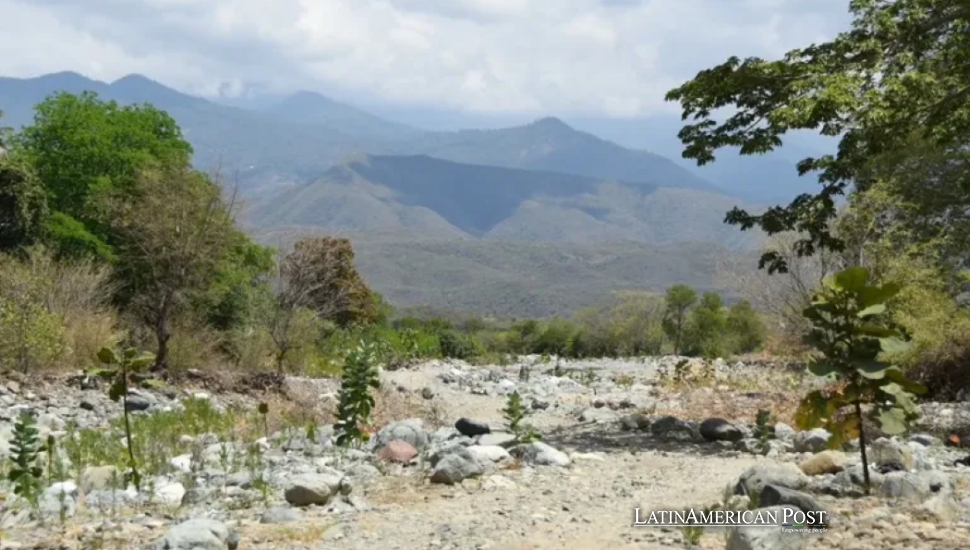
El Jícaro lies in Central America’s Dry Corridor, a drought-prone region with more than 10 million inhabitants, according to EFE. Its regional scale matters because bad seasons can strike many neighboring farming communities at once, across borders.
This is one household, not a statistical sample of Guatemala. But its arithmetic explains how a drought becomes an emergency before a national harvest total can describe its scale. Whatever money comes next must stretch between food today and the possibility of planting again.
Where the Wells Give Out
In nearby Las Ovejas, Jesús Rodríguez sits beneath a thatched roof, in a house without walls and with an earthen floor. In the scene EFE documented, he holds small corn cobs without kernels. Delfa Esperanza Carías watches the fields where months of work have come to nothing.
“The water in the wells dropped to levels we had never seen,” Carías told EFE. Plants dried before producing, she said, leaving families with nothing to eat and nothing to sell.
The fallback systems have failed together. Wells are depleted. Pits lined with black plastic, intended to catch rain, offer no dependable reserve. Changing crops could spread some risk; changing the container cannot supply water that never arrives.
Reaching these communities means crossing dry riverbeds and stony tracks passable on horseback or in four-wheel-drive vehicles, EFE reports. Their distance from reliable roads adds another problem to crop failure: any effort to move supplies in, or produce out, must negotiate that terrain.
When neighbors lose crops together, the problem reaches beyond individual kitchens. Less produce is available to sell, and less cash circulates among local buyers. Food available elsewhere cannot resolve that by itself: households need both a way to reach it reliably and money to pay.
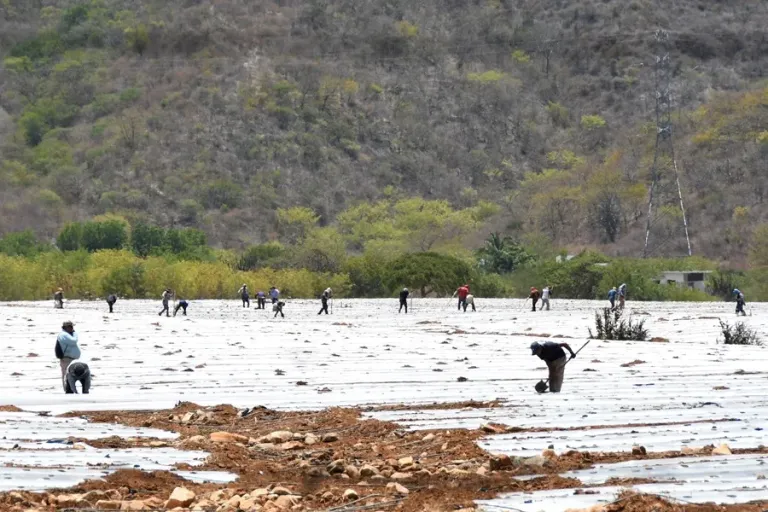
Some residents seek day labor on melon farms. “Many neighbors go there to earn enough for the day,” Marroquín told EFE, “although it is not the same as working your own land.”
The distinction is economic as well as personal. Wages can buy a meal but cannot replace a ruined season’s investment. Nearby commercial agriculture does not automatically secure the livelihood of a small farmer whose own production has collapsed. A field can still offer employment while surrounding households lose their harvests.
Rain Cannot Refund a Harvest.
Agriculture Ministry extension worker José Antonio Acevedo told EFE that families he was assisting had lost their entire subsistence production. The damage began during germination, he said, and water for improvised irrigation was practically unavailable.
Those observations help explain why rainfall and crop losses don’t match in percentages. On September 8, Guatemala’s meteorological agency, INSIVUMEH, reported rainfall deficits of around one-third of normal levels. That does not mean every farm loses one-third of its crop. In the communities Acevedo assessed, losses were total.
Timing matters alongside quantity. Rain that arrives after plants have died cannot restore the missed harvest. Nor does a regional rainfall estimate reveal whether a particular household still has access to a functioning well.
The outlook offers little reassurance. In its September bulletin, INSIVUMEH warned that the conditions it was monitoring could persist through at least the first half of 2027. Separately, the World Meteorological Organization projected an almost certain continuation of El Niño through February 2027, with further strengthening expected before year’s end.
These forecasts describe an extended climate risk, not a guarantee that every village will remain continuously dry. Their household consequences can last longer than the weather pattern itself. Replanting requires money, and people cannot postpone eating until the next crop matures.
Marroquín’s choice of peanuts shows that adaptation was already happening in this corner of the Dry Corridor. Its failure exposes the limits of asking a different seed to compensate for missing water. He still has land. What the drought has taken is the harvest that made it possible to live from it.