Costa Rica’s 3D-Printed Guns: A New Criminal Blueprint Emerges
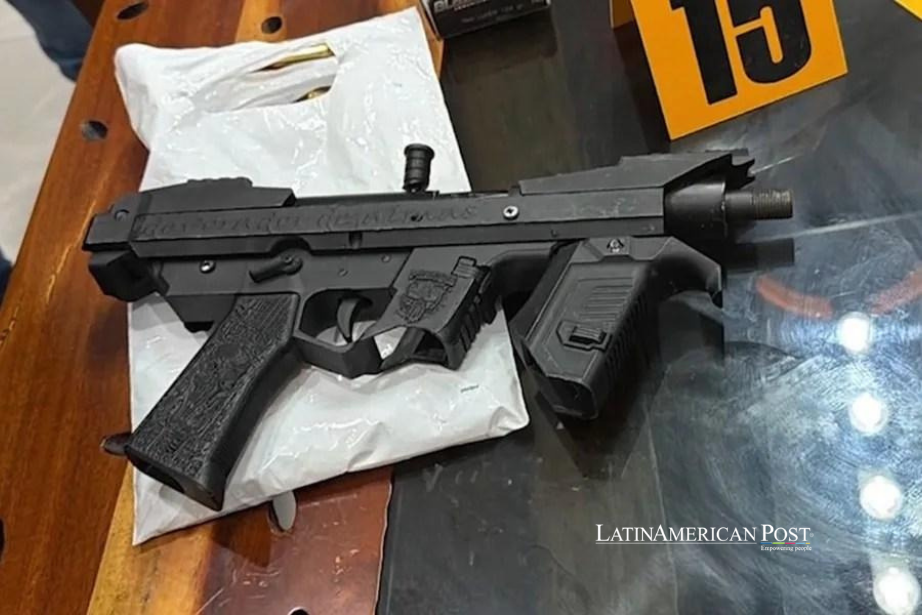
Four firearms with printed components, seized alongside cocaine in Costa Rica, reveal how digital manufacturing can complicate gun tracing. The discovery raises urgent questions for Latin America, where trafficking networks already connect global technology, illicit wealth, and devastating local violence.
A Raid With a New Detail
The cocaine was familiar. The guns demanded another look.
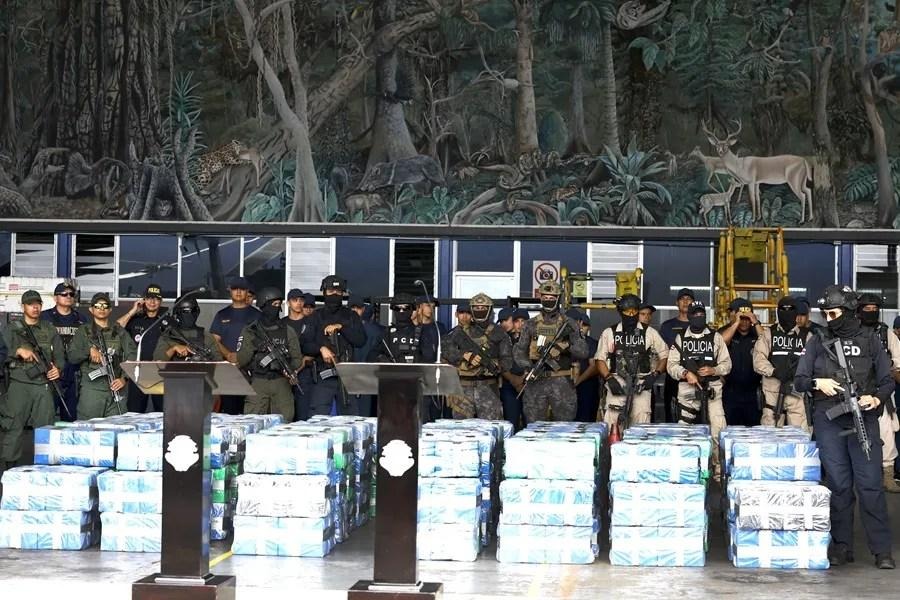
In a luxury house in Uvita, on Costa Rica’s Pacific coast, drug police found 357 kilograms of cocaine and four firearms incorporating components made through 3D printing. Authorities arrested two Costa Ricans they described as guarding the property during Wednesday’s operation.
By Thursday, the discovery had become a national security warning.
“Criminal gangs are modernizing,” Deputy Security Minister Nelson Barquero said in comments EFE reported. He warned that the weapons could evade regional and international tracing systems. The ministry said the combination of printed components and conventional firearm parts could match the lethality of ordinary weapons.
The setting matters. This was a property allegedly sheltering a substantial drug shipment in a country that judicial authorities describe as a center for storing and reexporting South American cocaine. The weapons appeared within that trafficking environment, although investigators have not publicly established where their printed components were manufactured.
Four recovered guns establish an investigative problem. They cannot reveal how many similar weapons circulate across Costa Rica, whether local production exists, or whether criminal organizations are replacing their conventional arsenals.
For people living with rising violence, however, a new supply channel need not become dominant to matter. Every additional weapon can expand the means available to intimidate a witness, protect a shipment, or settle a dispute.
What the Printer Actually Changes
Three-dimensional printing builds a physical object from a digital design by adding material in successive layers. Different systems work with different materials. In the weapons discussed here, the important distinction is between printed components and a complete firearm manufactured entirely by a printer.
Hybrid weapons combine printed parts with conventional components. They still use ammunition, and their danger comes from the functioning weapon as a whole. Plastic in part of the structure does not make the projectile harmless. Reliability and durability can vary, so the ministry’s warning about lethal potential should not be mistaken for published performance tests of these four guns.
The larger disruption concerns the paper trail.
A conventional firearm’s identifying marks can help investigators follow manufacturer and dealer records. An illicitly produced component may lack that documented origin, interrupting an established route for reconstructing supply. Digital manufacturing also means that knowledge can move internationally without a finished weapon traveling alongside it.
That weakens some familiar controls, but it does not erase every investigative possibility. Physical evidence and communications can still produce leads. Ballistic examination may help connect recovered evidence to shootings. Finding the original purchaser through commercial records and investigating how a weapon was used are different tasks.
The distinction matters because describing a weapon as completely untraceable can obscure the forensic work still available. Authorities need the ability to recognize unfamiliar components, preserve evidence, and compare findings across jurisdictions.
For Latin America, the potential change is significant. Criminal access to weapons has long depended partly on trafficking, diversion and illicit workshops. Digital manufacturing could add more dispersed production to those existing channels. Its regional impact would depend on adoption, technical capability, and enforcement, none of which a single Costa Rican raid can measure.
The same manufacturing methods also serve legitimate engineering and medical purposes. Treating the printer itself as the enemy would confuse a useful technology with its criminal application.
The Regional Cost of Falling Behind
The drug figures show why Costa Rica cannot treat the discovery as an isolated curiosity. Through August 2026, authorities seized 40.6 metric tons of cocaine, according to the Costa Rican Drug Institute. That was 49.5 percent more than during the corresponding period in 2025.
Eight months had already produced roughly 87 percent of the previous year’s entire seizure total of 46.5 tons. The increase could reflect more trafficking, better interception, or both. Seized cocaine measures what authorities caught; the amount that passed through remains unknown.
For scale, the Uvita shipment was equivalent to less than 1 percent of that January through August total. The guns made this operation distinctive, but the cocaine placed it within a much larger economy.
That economy brings familiar regional dangers. Authorities have identified connections between Costa Rican organizations and Mexican and Colombian cartels. Such relationships can carry purchasing power and criminal expertise across borders, creating opportunities for new technologies to spread alongside established trafficking practices.
The human stakes are already severe. Costa Rica has recently recorded around 900 homicides annually, with authorities attributing approximately 70 percent to drug trafficking. That attribution is an official assessment, not proof that printed weapons contributed to those deaths. This seizure has established no such link.
The practical implication is that regional security cooperation must reach beyond counting intercepted shipments. Shared forensic capacity and investigations into criminal financing would help determine whether isolated discoveries reflect a broader market. Public reporting must also distinguish printed components from other homemade weapons.
Costa Rica’s challenge is to investigate four guns carefully while preparing for what they may represent. For a family fearing the next shooting, the manufacturing method matters chiefly because it may make another weapon easier to obtain, and accountability harder to secure.