Brazil Enters Election Stoppage Time as Richarlison’s Island Dispute Tests Flávio Bolsonaro
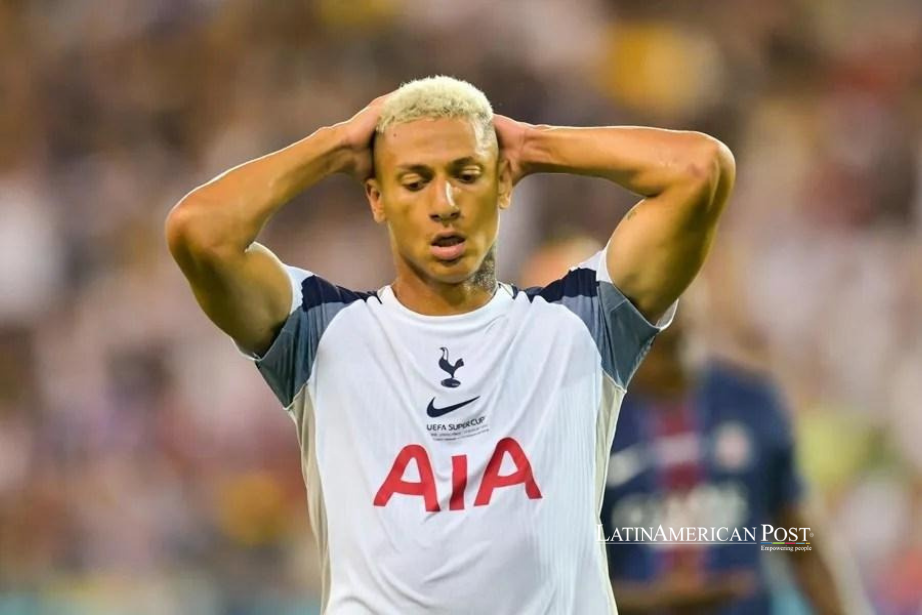
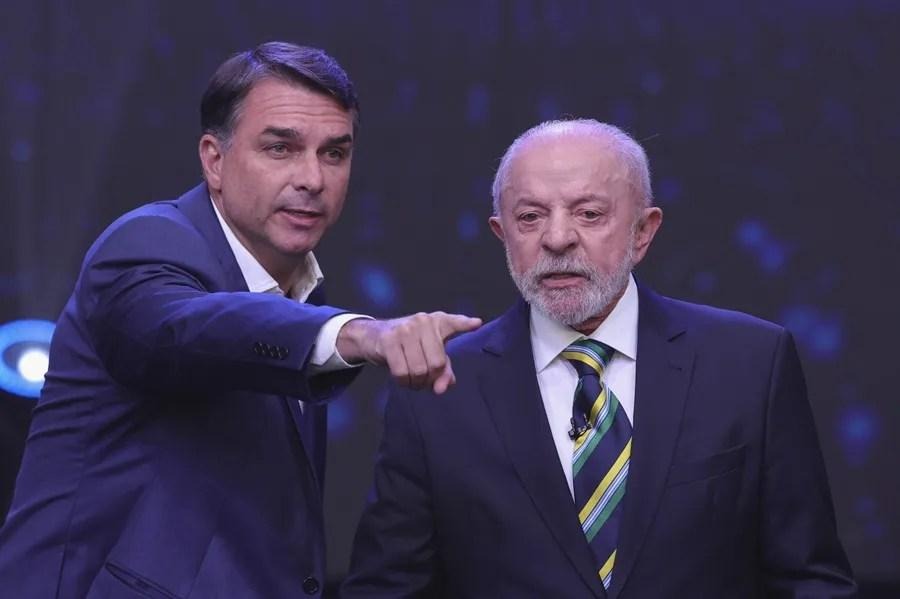
A soccer star’s contested island purchase has entered Brazil’s presidential runoff as Lula and Flávio Bolsonaro stand nearly level. Richarlison’s accusation brings sporting fame into a property dispute whose political force may outpace investigators’ ability to establish the facts.
An Island, Two Competing Accounts
Richarlison came to his audience carrying paperwork. The Tottenham forward showed documents and payment records, trying to explain how a property he says he bought slipped out of his control. Days before Brazil votes, an argument over an island near Angra dos Reis has become an argument over who gets heard.
President Luiz Inácio Lula da Silva has promised to seek a Federal Police investigation into the player’s allegations against his runoff opponent, Senator Flávio Bolsonaro, and lawyer Willer Tomaz. Richarlison accuses them of improperly securing control of the property after he refused to sell.
The underlying dispute concerns rights to occupy an island property, a more complicated matter than simply owning an island. Richarlison says roughly 10 million reais went into the acquisition, improvements, and security. He alleges that his regularization request languished while the rival claim advanced with extraordinary speed.
Lula has suggested political influence explains that contrast. Proving such interference would require administrative records and evidence linking officials to specific decisions. Without the surrounding facts, different processing times cannot establish corruption.
Tomaz says his company acquired the rights lawfully and disputes the authority of the people who sold to Richarlison. Bolsonaro denies participating in the transaction; his representatives say he was named as a witness and neither bought, sold, nor brokered the property. These competing accounts remain essential to understanding the allegation.
The political appeal is easier to grasp than the paperwork. Most Brazilians will never buy an island. Many recognize the frustration of waiting for an official decision while someone apparently better connected moves ahead. Whether that happened here remains disputed. But the accusation gives an expensive property fight a potentially familiar emotional shape.

When Soccer Leaves the Stadium
Richarlison’s reach gives that story an audience beyond habitual political viewers. An Olympic champion and national team forward can bring an administrative dispute into conversations that usually concern goals, injuries, and the next match.
That is an advantage in attracting attention, not evidence of electoral persuasion.
Soccer can cross club loyalties when players represent Brazil, but national identification does not dissolve class or party divisions. The relevant question is whether this complaint reaches people who would otherwise ignore the campaign entirely.
Brazilian soccer already carries partisan baggage. Neymar endorsed Jair Bolsonaro in 2022, while the national team’s yellow shirt became closely associated with the former president’s supporters. Richarlison’s confrontation with Jair’s son undermines any suggestion that sporting prestige naturally belongs to one political camp.
For Lula, defending the player creates an opportunity to discuss fairness through a recognizable person rather than another campaign speech. For Bolsonaro, the danger is having to explain a complicated property dispute while his opponent repeats a simpler accusation. Explanations involving competing occupation rights travel less easily than a famous striker saying he was wronged.
Still, admiration has limits. Supporters can celebrate an athlete’s goals and reject his politics. Others may see a wealthy player’s property dispute as far removed from grocery bills, rent, and public safety. Lula’s intervention could also invite questions about why presidential attention reaches a celebrity so quickly.
The institutional test therefore matters politically: an investigation must examine evidence impartially. A promise to investigate cannot become a presidential verdict, and defending a famous complainant cannot substitute for equal treatment of less visible citizens.
A Race Inside the Margins
The numbers explain why both campaigns care about a story this late.
Bolsonaro received 47.03 percent of valid votes in the first round, against Lula’s 45.16 percent, a 1.87-point gap. Other candidates together accounted for 7.81 percent. Their voters provide room for movement, although neither finalist can assume those votes transfer intact.
Datafolha’s latest survey gives each candidate 50 percent of valid voting intentions after rounding. Across all respondents, Bolsonaro has 47 percent and Lula 46 percent. These figures use different denominators: the valid vote calculation excludes responses that do not select either candidate. The rounded tie does not mean identical underlying support.
The survey interviewed 2,520 people between October 20 and 22 and carries a two-point margin of error. Lula gained one point from the previous survey. Quaest also places the candidates one point apart. Small differences within sampling uncertainty cannot establish a decisive lead or prove that Richarlison changed anyone’s mind.
Turnout offers another route to a different result. About 33.5 million eligible Brazilians, roughly 21 percent, abstained in the first round. That group is politically diverse, not a reserve army waiting for either candidate.
Lula’s outreach to younger people and those over 70, whose voting obligations differ from most adults, reflects that challenge. His supporters’ WhatsApp channel reportedly has 8.5 million followers, but subscriptions don’t translate into additional ballots. A supporter already determined to vote adds online activity without changing the electoral arithmetic.
Richarlison’s accusation could increase attention, reinforce doubts, or encourage participation. The polling has yet to isolate any of those effects. Its immediate significance is that it forces questions about power and fairness into a campaign with little room for error. On Sunday, the electoral judgment will arrive before any promised investigation can be assumed complete.