Uruguay Virtual Game School Reduces Need to Relocate for Tech Careers

In Uruguay, a virtual game school run as a cooperative is challenging the old rule that talent must relocate to Montevideo. For one designer from Mercedes, remote classrooms became a policy argument about opportunity, labor, and who gets to enter tech.
A Laptop Glow and a Long Road Back From Mercedes
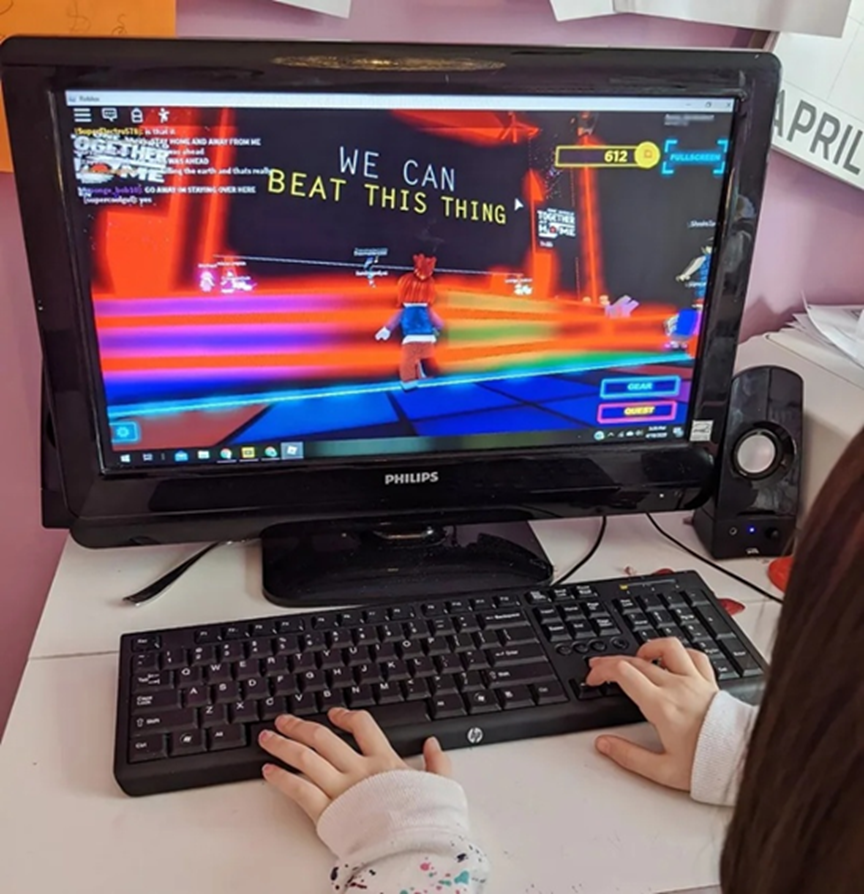
On a quiet day at home, Christian Olivera teaches a class that exists because his own education once demanded a kind of migration. The screen becomes a small window into a bigger national pattern: who gets to study, who has to move, and who can afford the years it takes to find the right door.
Olivera did not arrive at game design by accident. He arrived by endurance. The path took seven years, leaving his parents’ home in Mercedes, in the department of Soriano, trying two degree programs that bored him in Colonia and Montevideo, and working three years in call centers to save enough money to finally study what he actually wanted.
Then Covid arrived. The plan shifted again. He studied from his new house, finished, found work, and unexpectedly saw the school where he trained close by. That closure is the hinge of this story. Instead of treating it like a dead end, Olivera gathered his teachers and built a new checkpoint.
They called it Game Dojo, a virtual school focused on training video game developers, run cooperatively so it would not depend on investors or a single owner who could shut it down on a whim. It took a year and a half to prepare. The teachers are working professionals. The pitch is simple, almost stubborn: if the industry is remote, education can be remote too.
“As a teacher, the first thing I want is to prevent my students from making the same mistake I made, whether as a student or in life,” Olivera told Wired.
The trouble is that Uruguay’s education map still pulls hard toward Montevideo. Even as institutions talk about decentralization, the capital remains the center of gravity for tertiary study. Game Dojo is not pretending to be the whole solution. It is something narrower and, in its way, sharper: a school designed around the assumption that relocation is a barrier, not a rite of passage.
That assumption has data behind it. An industry report cited in the notes states that more than 13,000 Uruguayan students enrolled in technology-related programs, and 87% studied in Montevideo. The remaining share is concentrated in only four of the country’s nineteen departments. The numbers do not just describe geography. They describe friction.
“Deciding to keep distance classes makes sense,” Olivera told Wired. “It’s comfortable for teachers, and today nine out of ten companies work this way.”
He frames it as alignment. Train people in the same conditions they will face on the job. But the wager here is bigger than convenience. It is about who gets to try.
Olivera remembers the costs with the kind of detail that lingers when you have paid them yourself. “If I could have studied from my house, I would have avoided coming to Montevideo, paying rent, groceries,” he told Wired, describing what it means to turn a passion into a practical plan when the plan requires moving.
A Cooperative School Tries to Outrun the One-Owner Trap
The cooperative model is the other argument Game Dojo is making, and it comes from lived experience, not ideology. A school closes, a community scatters, and the people who taught and learned there are left with the same question: was the institution ever really theirs?
Olivera and his partner, Yamila Imperial, leaned into a structure where the teachers are also responsible for the school’s survival. “What we liked about the cooperative model is the idea that each person is responsible for the well-being and good performance of the company and the school,” Olivera told Wired. He pointed to what happens when there is only one owner: one day, they decide to stop, and everything ends.
Gustavo González, a former teacher at the earlier academy who became Game Dojo’s academic coordinator, described the shift as practical. “It happened in informal conversations,” he told Wired. They already knew each other as colleagues and wanted to feel comfortable with the venture. A cooperative, in their view, was a way to distribute both obligations and benefits without pretending the work would be easy.
That internal control matters because the video game field changes fast, and the school is selling itself on relevance. “Because we are active professionals in the industry, we can modify content if a new technology starts being used or if a technology starts failing,” Olivera told Wired. He summed up the appeal in one line that sounds almost like relief: “The cooperative model gives us the flexibility to decide without depending on anyone else.”
In the classroom, the approach is intentionally hands-on. The notes describe a two-year program that emphasizes practice from the first class, with students finishing multiple games of their own. González argues that a generalist base is not a weakness. It is how teams learn to speak to each other. A programmer has to explain an idea to an artist. An artist has to understand what the game engine can and cannot do. If everyone shares the basics, collaboration becomes less mystical and more manageable.
Then there is the new pressure point: artificial intelligence. Olivera draws a line between using tools and outsourcing understanding. “We don’t encourage its use during the program,” he told Wired, adding that the school tries to teach students to see AI’s failures and use it responsibly instead of trusting it unquestioningly.
Game Dojo’s slogan, he said, is blunt: “We don’t train vibe coders,” Olivera told Wired, describing a style of programming where people rely on AI prompts to patch errors without building solid foundations. What this does is pull the conversation back to labor, not hype. If the goal is to produce employable developers, the school argues, you cannot skip the part where you actually learn how the work actually functions.
From Plan Ceibal to Gender Gaps in the First Cohort
The broader policy picture sits behind all of this, sometimes quietly, sometimes not. In the notes, Omaira Rodríguez, a specialist in creative industries at Uruguay XXI, ties the sector’s growth to national conditions that are rarely discussed in gaming terms. “Plan Ceibal was a kickstart,” she told Wired, referring to the One Laptop per Child program. She also pointed to Uruguay’s renewable energy matrix and the country’s internet coverage as factors that make it attractive for globally networked work.
At the same time, the school is confronting what the industry has long carried: a gender gap. Eva Sequeira, the project coordinator, reviewed the first generation of Game Dojo students and found it entirely male, an outcome she reads as a challenge, not trivia. “A male cohort reflected what the game development industry has historically dragged along,” she told Wired, describing a lack of representation that can make women less likely to imagine themselves in the field.
So the cooperative is trying to build pathways on two fronts: more women among instructors and more women among students. The notes describe links with women working in the sector, an agreement with a community that organizes a women’s game jam, and partial scholarships intended to widen the pipeline. Sequeira said results are already visible in enrollments for the next year, even before registration closes. “Our goal isn’t only to balance numbers,” she told Wired. “It’s to build a space where more women feel they belong.”
Olivera, for his part, keeps returning to the same point, the point that sounds less like marketing and more like memory. He is not trying to romanticize staying put. He is arguing that the option should exist. That a kid in the interior should not have to redraw their whole life at eighteen to learn what a game engine is, or to discover that making games can be a real job.
And that, in Uruguay, a laptop at home can be more than a screen. It can be a policy statement. Insert your coin. Try again. This time, without the forced move.
Also Read: Dominican Republic Searches for Enriquillo, the Continent’s First Guerrillero and Historical Figure