Mexico Surf Trip Murders Expose the Distance Between Finding Bodies and Justice
Three surfers went to Baja California for waves and ended up hidden in a well. Their killers’ convictions expose a larger question for Mexico and Latin America: can forensic technology deliver justice beyond the cases that command the world’s attention?
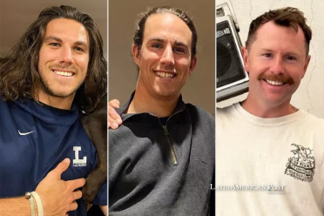
Three Lives Before the Case
Callum Robinson had a life in San Diego, a place on Australia’s lacrosse team, and a younger brother was coming to visit. Jake, a doctor, was due to start a job at a hospital in Geelong after returning home. Their American friend, Carter Redd Rhoad, was looking forward to a wedding celebration. More than the beach awaited all three.
In late April 2024, they traveled into Baja California and camped near Punta San José, roughly 50 miles south of Ensenada. Their photographs showed waves and isolated beaches. Then the messages stopped. They never arrived at their booked accommodations. What had looked like freedom from ordinary obligations became an absence nobody could explain.
According to prosecutors, Ary Gisell Silva Raya met the travelers on April 27 and encouraged a companion to rob them. The robbery followed the next day. Early accounts suggested the attackers wanted tires from the pickup and shot the men when they resisted. Later testimony made that shorthand harder to accept.
Silva Raya told the trial that her former partner, Jesús Gerardo García, known as “El Kekas,” described approaching the tent with a 9mm pistol. She recounted his account of the victims surrendering possessions and pleading for their lives. This was testimony about his reported confession, not her eyewitness description of the shootings. It nevertheless challenged any comforting idea that handing over valuables necessarily offered an escape.
The search began with people who knew what silence meant. A friend testified that unanswered messages on April 28 and a missed accommodation booking alarmed him. Rhoad’s partner located his phone’s last reported position near Ensenada. Eight friends crossed into Mexico. They eventually reached the campsite and recognized a mug and a glasses case among the remnants of a burned tent. A familiar object had become evidence.
What the Well Could Not Hide
The bodies were recovered on May 3 from a well about 50 feet deep, roughly four miles from the killing site. Boards covered its opening. Authorities said extracting the bodies took two hours. The truck had been burned. All three men had suffered gunshot wounds to the head.
A fourth body was also found, deposited much earlier. Its presence did not establish that the same assailants had killed that person. It did establish that the search for three foreigners had exposed another death. For residents who complained that Mexican disappearances rarely received such swift attention, the discovery gave their objection an awful physical form.
The digital trail mattered, but no machine delivered a complete solution. Authorities found one victim’s cellphone in Silva Raya’s possession. Separately, an officer described noticing a well near an abandoned oceanfront building and detecting an odor. Phone evidence, friends’ recognition, foot searches, and forensic examination each contributed a different piece.
Nor was every recovered object automatically proof. Investigators described burned clothing, blood traces, a tooth, and a .45-caliber bullet near the well. Defense lawyers questioned the age of some material and discrepancies in recorded timelines. A forensic witness could not say when certain items had burned. That limitation matters: finding something near a crime does not establish when it arrived or whom it implicates.
On October 9, 2026, Judge Raúl Hernández found García, Irineo Francisco “N,” and Ángel Jesús “N” guilty of the murders, armed robbery and armed carjacking. The judge accepted witness evidence the defense had challenged. Silva Raya had already received a 20-year sentence in November 2025 after pleading guilty to violent robbery and vehicle theft.
The court is scheduled to sentence the three men on October 16. Prosecutors are seeking 210 years for each defendant; that is a request, not a sentence already imposed. For Debra and Martin Robinson, who traveled from Australia for the trial, the distinction between accountability and recovery remained absolute. Their sons were not coming home.
Justice Beyond the Passport
The regional lesson is not that one spectacular technology cracked the case. Useful information became actionable when people searched, investigators assembled evidence, and a court tested it. Reproducing that process for families without international visibility is harder.
For searches involving a living person, phone records can help establish a last known location or movements of a stolen device. Those are different things. A handset traveling after a disappearance does not prove its owner traveled with it. Investigators must cross-check the digital trace with witnesses and physical evidence, rather than mistaking a map marker for a person. The Baja case’s recovered belongings show why technology should direct careful investigation, not replace it or encourage families to confront suspected criminals themselves.
A human rights report released in May 2026 by the Inter-American Commission on Human Rights, using figures available when it was finalized in June 2025, recorded more than 128,000 missing people in Mexico and cited independent estimates of over 70,000 unidentified bodies in state custody. Those totals cannot simply be added. Someone registered as missing may already be among unidentified remains. The challenge is connecting a name in one file to a body in another.
Beyond this investigation, DNA matching offers a concrete extension. Interpol’s I-Familia compares unidentified remains with genetic profiles supplied by relatives across national borders. Potential matches require expert interpretation and further checks. This does not mean I-Familia solved the surfers’ case. It is an existing mechanism that could help when a family lives in one country and a body is recovered in another.
A Guatemalan family should not have to travel between Mexican morgues to identify a relative. Shared records could make the information travel instead. In Colombia and Peru, where families still seek people lost during decades of conflict, comparable coordination could connect older burial records with present-day searches. The histories differ; the need to identify people and inform families does not.
But equipment purchases alone would miss the bottleneck. Governments should budget for technicians, maintained laboratories, and reliable evidence storage, not merely software licenses. Investigators need time to follow leads. Witnesses need protection. Families need accessible reporting channels and explanations they can understand. A database entry should begin work, not become the bureaucratic substitute for doing it.
Safeguards are equally practical. The commission documented disappearances involving state officials as well as organized crime. Giving institutions more sensitive information therefore requires consent, restricted access, and independent oversight. Interpol keeps I-Familia’s family profiles separate from criminal databases. That separation offers a useful principle: searching for someone should not turn their relatives into surveillance targets.
Success should be measured in shorter search times, more confirmed identifications, and evidence that survives courtroom scrutiny. No phone signal can promise a rescue. No genetic match can promise a conviction. But properly supported forensic work can deny perpetrators the assumption that concealment ends a person’s story.
The well held four people. This verdict concerned three. A regional response worthy of those lives would refuse to let that difference become a hierarchy of grief.