Magellan Strait Sovereignty Is Not a Soap Opera When History Keeps Receipts
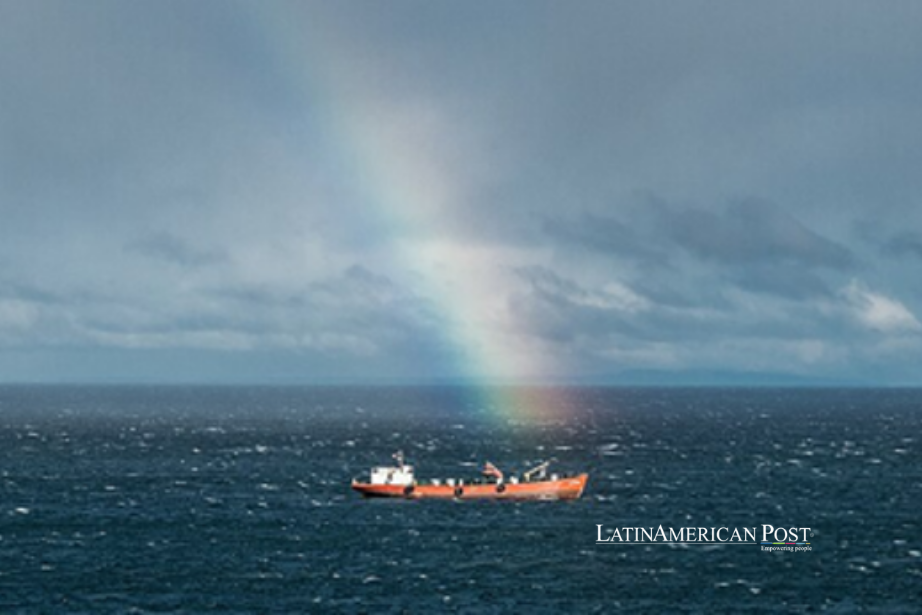
Chile’s anger over Washington’s Magellan Strait comments is not diplomatic theater. From Mexico’s lost provinces to Panama’s canal enclave, Latin American history explains why offers to protect sovereignty, tied to political cooperation, sound less like friendship than a familiar invoice.
An Offer With an Unwelcome Echo
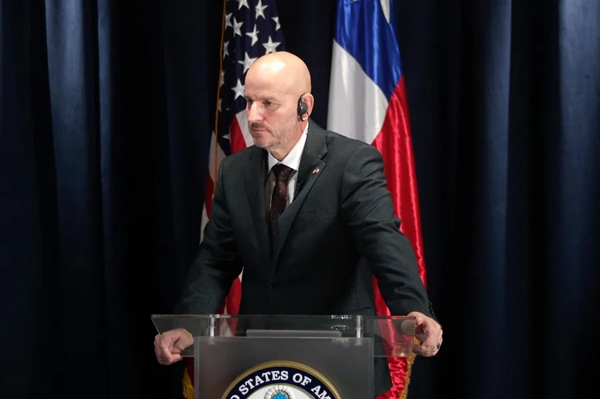
Brandon Judd reached for a television metaphor. On October 7, 2026, the U.S. ambassador to Chile dismissed the controversy around his Magellan Strait comments as “drama,” saying his remarks had been distorted and that he had not conditioned Chilean sovereignty. His clarification deserves to be heard. His metaphor deserves to be rejected.
At a trade event, he had linked American help protecting Chile’s rights over the strait to cooperation on Washington’s priorities. Foreign Minister Francisco Pérez Mackenna replied that Chile could defend itself. Respecting territorial sovereignty and negotiating defense cooperation are different questions. Judd did not announce an American territorial claim. But Chile need not accept ambiguous bargaining language without objection.
The irritation also followed Chile’s August protest over an Argentine air force chief’s sovereignty comments and Judd’s earlier summons over assertions concerning the left and Chile’s 2019 uprising. Under the 1881 boundary treaty with Argentina, the strait’s perpetual neutrality and free navigation coexist with Chilean sovereignty. Neither requires a U.S. permission slip.
That is the distinction a trade audience should understand. Agreements can exchange benefits; territorial title is not a discount earned through loyalty. Chile can negotiate maritime cooperation while rejecting any suggestion that a foreign sponsor is required. Treating that boundary as oversensitivity makes a manageable disagreement harder.
The Map Was Never Just a Map
Mexico supplies the continental scale. After an American invasion, the 1848 Treaty of Guadalupe Hidalgo transferred roughly 525,000 square miles. Washington paid Mexico $15 million and assumed certain claims by American citizens. Mexican families faced a new sovereign without moving house. Indigenous homelands also crossed the redrawn boundaries. These were not vacant acres awaiting an owner. The treaty’s promises of property and civil rights were not decorative: they concerned whose courts would govern a family’s land and legal standing.
The separate Gadsden Purchase, finalized in 1854, transferred another 29,670 square miles for $10 million. That was about 5.7 percent as much land for two-thirds of the direct payment. These deals weren’t comparable: one followed military defeat; the other sought a southern railroad corridor. But the disparity warns against confusing a territory’s size with its strategic significance.
Panama makes that lesson painfully specific. After Colombia rejected the proposed canal treaty, Washington dispatched warships supporting Panamanian independence in 1903. Panama had its own separatist aspirations; reducing its people to stolen Colombian property would repeat the imperial habit of erasing local agency. Yet Colombia lost its department, and the new republic soon accepted a foreign enclave across its middle.
The canal agreement gave Washington sovereign-like powers over a ten-mile-wide strip while promising Panama $10 million and annual payments of $250,000. It also guaranteed Panamanian independence. There lies the uncomfortable pairing: protection for the republic, extraordinary foreign authority over its most valuable corridor. The strategic prize was not acreage alone. It was the ability to organize commerce between oceans.
Panama gained control of the canal in 1999 through negotiated treaties. That outcome matters too: the lesson is not permanent helplessness, but the years required to undo concessions once described as durable friendship.

The Fine Print Outlived the Promises
Cuba illustrates how sovereignty can survive on paper while control leaves the room. The 1901 Platt Amendment made American withdrawal conditional on Cuban acceptance of extensive U.S. intervention rights. The ensuing Guantánamo agreements recognized Cuba’s ultimate sovereignty but granted Washington complete jurisdiction and control within the leased area. The 1934 treaty preserved that arrangement without a fixed expiration date. Calling it simply an American annexation would be inaccurate. Calling it ordinary Cuban control would be absurd.
Puerto Rico followed another path. Spain ceded the island to the United States in the 1898 Treaty of Paris. This was not territory taken from an independent Puerto Rican republic, nor did the treaty establish a freely chosen partnership among equals. Its terms placed the civil rights and political status of the island’s native inhabitants in Congress’s hands. People became the subjects of a settlement negotiated by outside powers.
Nicaragua’s Corn Islands reveal how little land such arrangements sometimes required. The Bryan-Chamorro Treaty, signed in 1914, offered $3 million for exclusive canal rights, renewable 99-year island leases and a naval base concession. Washington never exercised sovereignty over the islands. That qualification matters. But the canal monopoly constrained Nicaragua’s ability to bargain with other powers, even without construction. The U.S. signed a termination agreement in 1970. An unbuilt canal could still carry a political cost.
None of these episodes proves that Washington intends to seize the Magellan Strait. History does not warrant inventing an invasion. It is a reason to distinguish cooperation freely negotiated from protection presented as leverage. Chile should preserve working relations, acknowledge Judd’s clarification, and insist that territorial rights remain outside transactional bargaining.
A diplomatic protest is a modest instrument for that purpose. No ships need to move. No partnership needs collapse. An ambassador can recognize that Latin Americans hear such language against a history of shifted borders and surrendered authority. The answer is not another joke about television. It is an unambiguous assurance that friendship comes without a territorial invoice.