Latin America Reads Between Trump’s Map Lines in an Old Naming Dispute
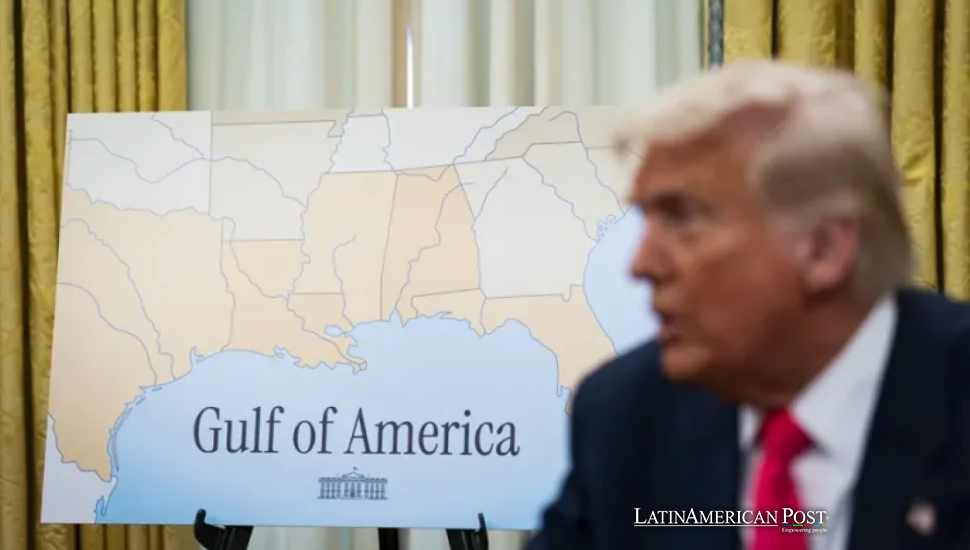
Donald Trump’s geographic renaming campaign has revived a question familiar across Latin America: who gets to call themselves American? Behind new labels for shared waters lies a history of empire, competing identities, and technology that gives national decisions international visibility.
A Border Inside the Screen
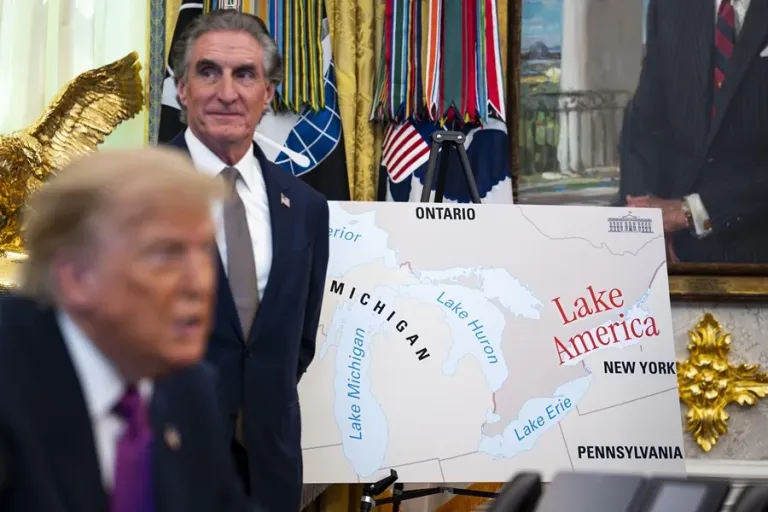
Open Google Maps in the United States and Lake Ontario appears as Lake America. Open it in Canada and the familiar name remains. EFE’s August 30 report says users elsewhere see both. The water has not moved. The label depends on where someone holds a phone.
Trump ordered the lake’s federal renaming on August 27, 2026, following his January 20, 2025, order adopting Gulf of America. On September 7, EFE reported his suggestion that New Mexico become New America. Two executive actions and a proposed state name change are different things, with different legal limits.
The administration presents the changes as recognition of national history and economic contributions. Its lake order cites nearly $4 billion in U.S. environmental investment over a decade and nine of the Great Lakes’ 11 icebreaking vessels. Those figures describe its justification, not an agreement with Canada.
Nine out of 11 represents approximately 82 percent of the cited fleet. But a fleet share is not a territorial share, and investment totals do not measure exclusive ownership of a place’s history. The order directs federal naming practices; it does not document Canadian consent.
Canadian Prime Minister Mark Carney rejected the change. In remarks reported by EFE, he said the lake would remain Ontario “before, now and always.” For Canada, the name is not simply an alternative label awaiting replacement. Its government continues to use it.
The gulf illustrates the same limit farther south. Trump’s order describes the U.S. continental shelf extending to maritime boundaries with Mexico and Cuba. Both neighbors remain present even in the document introducing the new name. An instruction about federal maps is not, by itself, an instrument redistributing those countries’ waters or existing economic rights.
America Before the United States
The wider dispute begins with a word carrying different meanings. In Spanish, americano can express continental belonging, while estadounidense identifies U.S. nationality. The Royal Spanish Academy also records americano as meaning estadounidense. Usage overlaps; there is no universally observed linguistic frontier matching the political one.
The historical sequence is clearer. The Library of Congress identifies Martin Waldseemüller’s 1507 map as naming the landmass America in recognition of Amerigo Vespucci’s understanding that it was a continent distinct from Asia. That name predates the 1776 Declaration of Independence by 269 years. It did not originate with the United States.
EFE’s historical account draws on Daniel Immerwahr’s writing in Mother Jones. He explains that Washington’s generation commonly used institutional descriptions such as the Union or the Republic. Proposed alternatives included Fredonia and Columbia. America was available, but it was not the country’s inevitable everyday name.
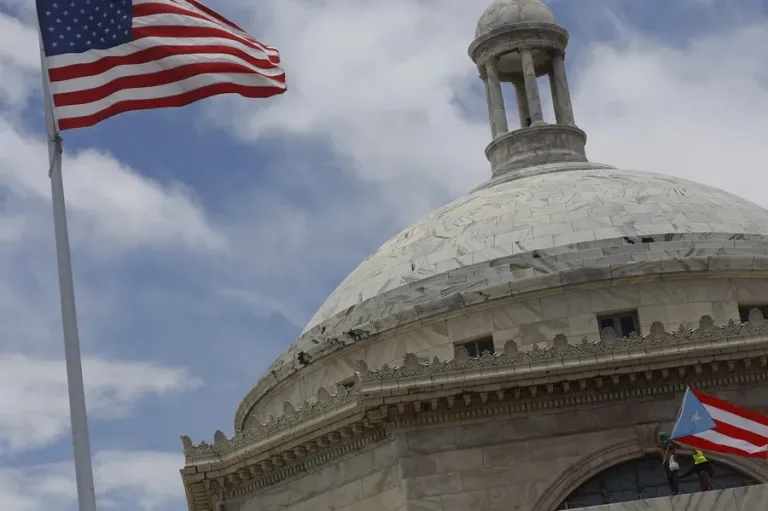
His argument connects its growing political prominence with overseas expansion around 1898. Acquisitions from Spain brought Puerto Rico, Guam, and the Philippines under U.S. control. America could describe a political formation encompassing states and overseas possessions without suggesting that every territory had entered an equal, voluntary union.
There is a useful measure behind that interpretation. Harvard Law Review quotes Immerwahr’s finding of only 11 unambiguous references to the country as America in presidential messages and public papers from the founding through 1898, approximately one per decade. That measures official language, not conversations in every household.
It therefore supports a claim about changing presidential vocabulary, not proof that ordinary English speakers today are asserting ownership of neighboring countries. Continental identity and conventional national usage can coexist, even when governments turn the ambiguity into a political argument.
Old Doctrine, New Distribution
EFE places Trump’s naming initiatives alongside his “Donroe” formulation, invoking the Monroe Doctrine of 1823. The State Department’s historical account distinguishes that doctrine’s original opposition to European interference from Theodore Roosevelt’s later justification for unilateral U.S. intervention. The history developed in stages, rather than following one unchanged formula.
The distinction matters because contemporary images can suggest more than an executive order accomplishes. EFE reported that Trump shared a map on September 7 covering Mexico, the Caribbean and Canada, as well as Greenland and Iceland, with the U.S. flag. He supplied no explanatory comment.
Mexican President Claudia Sheinbaum responded by reaffirming her country’s independence. Mexico “is not and will not be a colony or protectorate of any foreign country,” she said in a statement reported by EFE. That exchange establishes a diplomatic disagreement, not a change in borders.
Technology gives the naming decisions a separate reach. Google describes its Gulf labels as following established practices: U.S. users see Gulf of America, Mexican users see Gulf of Mexico, and everyone else sees both. Its own explanation therefore shows why a domestic designation can become visible internationally without universal adoption.
The dispute has also entered popular culture. South Park’s creators announced a satirical rebranding as South America, citing the “bravery and patriotism of Apple and Google,” according to EFE. Their joke concerned companies distributing official names, not the geography of the southern continent.
For Latin America, the immediate change is not a new border but official language reaching ordinary screens. Federal terminology and territorial sovereignty remain distinct. A person can encounter America as a country on one map and as a continental home in their own vocabulary. The same word carries both.
Also Read: Trump’s Mexico Border Wall Draws a Hard Line Through a Living Homeland