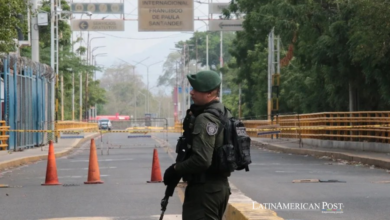
Ecuador Clears Fishermen While Its U.S. Alliance Drifts Into Murky Legal Waters
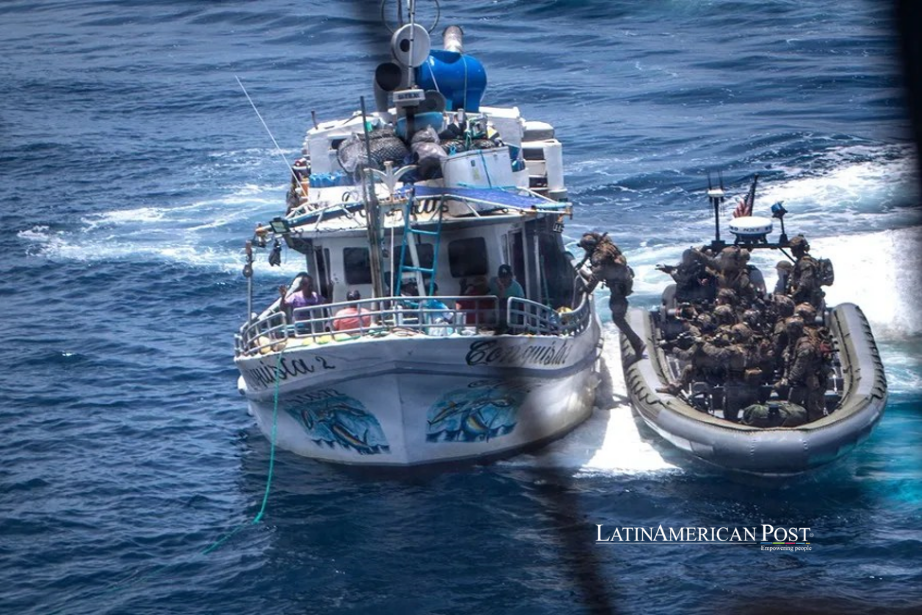
Eight acquitted fishermen and eight sunken boats expose the distance between American military claims and Ecuadorian courtroom evidence. Their cases now test a Pacific security partnership whose governments must explain who answers when vessels disappear, and criminal allegations fall apart.
A Verdict Without a Boat
The verdict could clear their names. It could not raise the Don Rufo.
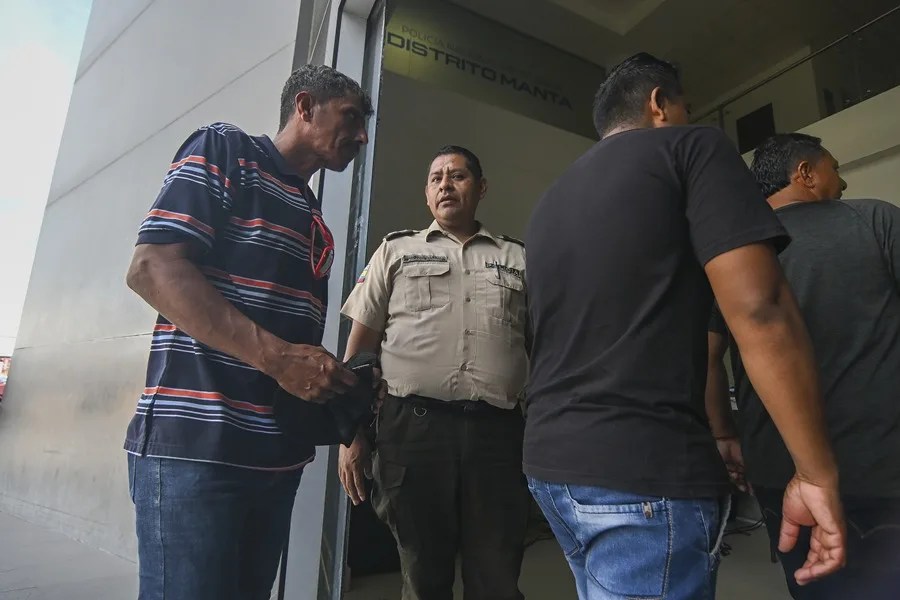
Eight crew members were acquitted Thursday after their fishing vessel was intercepted and sunk by U.S. forces on September 8. Their lawyer, Juan Alvia, told EFE that the judge reprimanded the prosecutor for bringing a case without evidence, wasting public resources along the way.
The men had left the main vessel in smaller boats before the interception. Ecuador’s navy found them two days later and handed them to police. Six other crew members had already been released without charges. Another adult faces separate proceedings; a teenager still awaits a hearing.
Washington’s explanation was logistical: the eight vessels destroyed between August 28 and September 16 allegedly supplied fuel to speedboats carrying drugs northward. Authorities linked their crews to Los Choneros, the Ecuadorian criminal organization associated with Mexico’s Sinaloa cartel. Alvia told EFE that prosecutors presented no evidence supplied by American forces connecting his clients to crime.
With 32 earlier acquittals reported by EFE, the latest ruling brings that total to 40. Proceedings involving another 46 crew members are scheduled to resume November 4. These are substantial failures to substantiate allegations across several boats, although they cannot establish what happened aboard every vessel.
An earlier Human Rights Watch accounting covered 160 crew members: 90 under investigation, 56 whose arrests judges ruled unlawful, and 14 never brought before a judge. That means 35 percent had already suffered detentions courts rejected. Those procedural rulings are distinct from acquittals, and the successive snapshots should not be added together.
Permission Has Its Limits
Was the operation legal? Boarding, detention and destruction require separate answers. An acquittal does not automatically make an earlier interception unlawful: the evidence needed to justify an investigation differs from the proof required for conviction. Equally, permission to investigate does not authorize punishment.
A bilateral maritime agreement, effective since February 2024, provides a framework for cooperation. Ecuador’s Constitutional Court classified it as cooperation against illicit maritime activity, not a military alliance, when it ruled that legislative approval was unnecessary. That distinction matters: a policing agreement cannot simply be treated as an unrestricted authorization for war.
The agreement sets procedures for boarding vessels beyond territorial waters, including authorization involving the vessel’s flag state. It requires respect for human rights and the use of reasonably necessary force. Ecuadorian consent can establish jurisdiction for specified actions; it cannot erase the limits on how those actions are carried out.
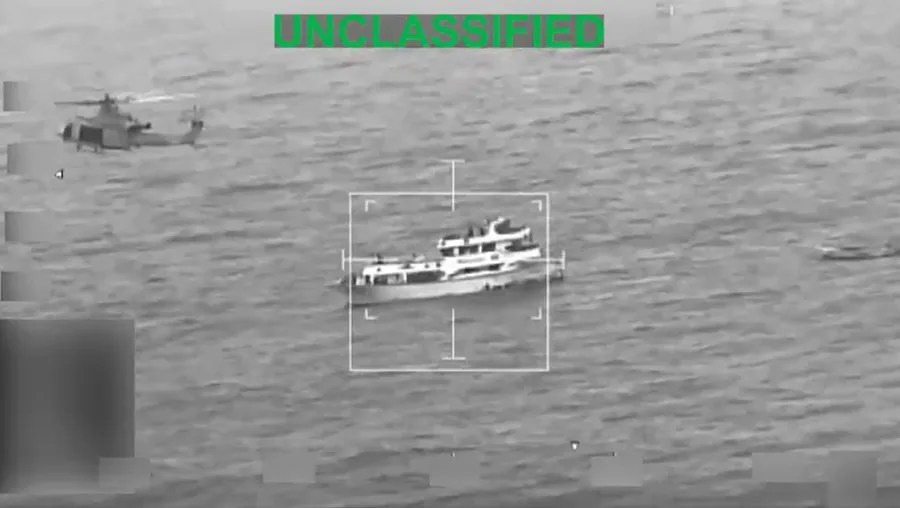
Destruction demands particular scrutiny. In its September 3 account of one interception, Southern Command said American personnel boarded, searched, and cleared a vessel without incident, removed its occupants, then sank it. That sequence raises an obvious question: once the vessel was controlled, what lawful necessity required sinking it instead of preserving it?
Calling Los Choneros terrorists does not, by itself, turn suspected suppliers into lawful military targets. Governments must establish the applicable legal framework and the facts justifying force. The available record does not establish that every boarding was unlawful, but it also does not demonstrate a lawful basis for every sinking.
Human Rights Watch, drawing on 27 interviews and documentary material, could not determine whether the boats supplied traffickers. It also reported allegations of beatings, threats and coerced signatures. Those claims require investigation; arbitrary detention and cruel treatment are prohibited regardless of whether an underlying trafficking allegation eventually proves true.
The Alliance Comes Ashore
For Ecuador, the strategic bargain is understandable. Disrupting fuel supplies could restrict trafficking routes across the eastern Pacific. American surveillance and naval capacity can extend Ecuadorian enforcement. But this partnership ultimately depends on Ecuadorian prosecutors converting operational claims into cases that survive judicial examination.
When that handoff fails, the costs are uneven. Washington can announce a destroyed logistical node. Ecuador inherits defendants, court expenses, and the political consequences of citizens returning without the vessels that employed them. An acquittal restores legal standing; it does not replace fishing income or automatically compensate a lost boat.
Article 20 provides that the country whose officers allegedly caused the loss considers damage claims under its domestic law. Compensation belongs in the diplomatic conversation, although payment depends on each claim’s merits.
Manta carries an older argument inside this new one. Ecuador ended U.S. access to its counternarcotics air facility there in 2009, presenting the decision as a defense of sovereignty. Today’s controversy revives a practical version of that debate: who controls the evidence, who authorizes destruction, and whose institutions answer afterward?
The danger for cooperation is therefore institutional as well as diplomatic. Repeated unsupported prosecutions could weaken coastal communities’ willingness to trust authorities or share information. Sinking suspected supply boats may produce visible results while making the networks behind them harder to prove, particularly if useful evidence disappears with the hulls.
A credible partnership would preserve evidence, document each authorization and investigate alleged abuses, with remedies where violations are established. Its success should be measured through substantiated cases and disrupted networks. For Don Rufo’s acquitted crew, the distance between a military announcement and a courtroom finding is already measured in a boat that cannot come home.