Trump’s Mexico Border Wall Draws a Hard Line Through a Living Homeland
Along the border with Mexico, a new Arizona wall threatens Tohono O’odham family ties and sacred places. As construction preparations advance, a claimed 95 percent drop in migrant arrests sharpens questions about security, sovereignty, and whose history the project recognizes.
A Homeland Before the Line
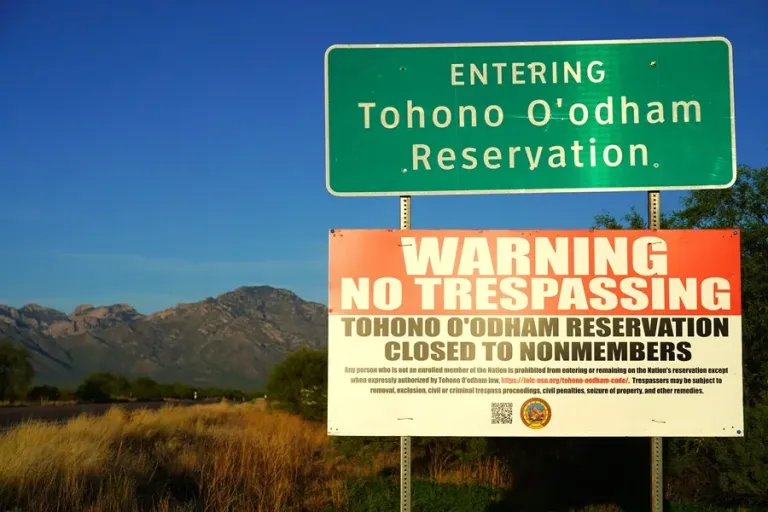
At night, some members of the Tohono O’odham Nation light fires and hold peaceful ceremonies. By day, others watch contractors and border agents working nearby. Chairman Verlon José described these routines to EFE. Watching has become another way of protecting home.
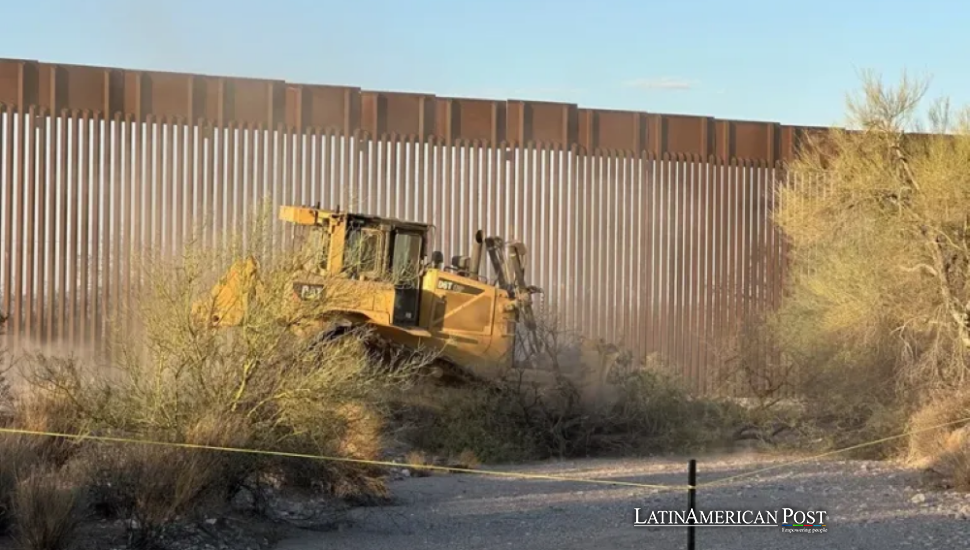
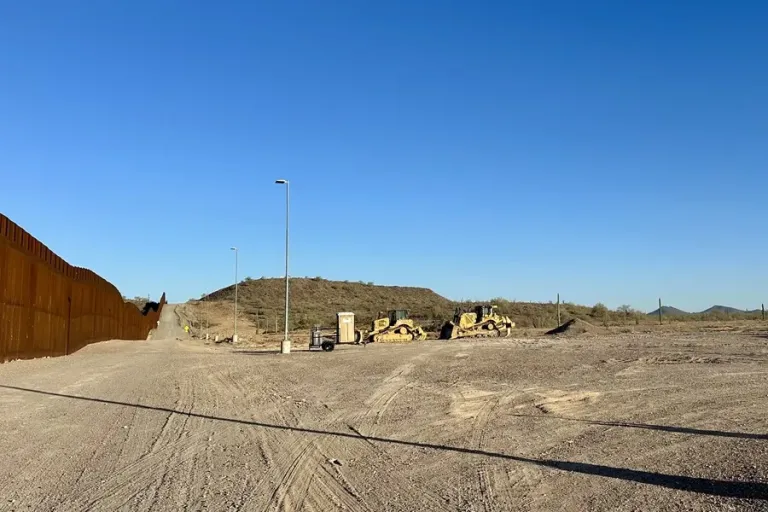
President Donald Trump’s administration has begun work on Tucson 5, a planned 100-kilometer (about 62 miles) border barrier. EFE reports heavy machinery at the site, while Customs and Border Protection says surveying and soil sampling are underway. Tribal leaders oppose the project as an intrusion on their sovereignty. The proposed barrier, described by EFE as a double layer of steel and concrete about 30 feet high, would confront something harder to measure: a community whose family relationships extend across Arizona and the Mexican state of Sonora.
“We have always protected our land, our community,” José told EFE, explaining that this responsibility predates the United States. His argument begins somewhere other than Washington. The land is not simply a corridor through which strangers pass. It is where people belong.
Members cross the international boundary for pilgrimages and religious ceremonies, or to visit relatives. They fear the wall will disrupt those journeys and damage ancestral cemeteries. A crossing that appears optional in an enforcement plan can be indispensable to a family maintaining its obligations to the living and the dead.
Historically, O’odham communities moved between seasonal homes to follow water and cultivated fields nourished by desert rains. Mobility was part of survival, not an aberration. That history helps explain why a spring, a route and a gathering place cannot be treated as interchangeable parcels.
The Numbers Behind the Wall
José points to a figure that complicates the administration’s urgency: migrant arrests in the area, he told EFE, have fallen 95 percent over two years. Taken literally, that leaves five arrests for every 100 recorded at the earlier level. His objection is about building another barrier after that decline.
But the percentage is José’s account, not a complete statistical series presented in EFE’s reporting. Without the underlying totals and matching geographic boundaries, it cannot establish the precise scale of remaining activity. Arrests are enforcement outcomes, not a census of everyone who crosses.
Nor does a decline in migrant arrests establish an equivalent decline in drug trafficking. Treating those measures as interchangeable would weaken the argument against the wall. The stronger question is narrower: what additional protection will this particular barrier provide beyond arrangements already operating here?
CBP describes Tucson 5 as closing a longstanding corridor for drug smuggling and unauthorized migration. Its commissioner, Rodney Scott, says the project will close a dangerous security gap. José counters that the Nation has consistently allowed Border Patrol access and cooperated with federal operations.
The court record supplies a concrete example: in 2004, the Nation approved vehicle barriers that stopped vehicles without preventing pedestrian passage. Opposing a taller wall is therefore not the same as opposing border enforcement. The disagreement concerns the instrument, its consequences, and who decides. The same court record describes two federal operating bases and 10 fixed surveillance towers authorized by the Nation. The choice is not between a wall and an untouched desert with no security infrastructure already in place.
That distinction also matters economically. A project’s length says nothing by itself about value for money. A defensible assessment would compare its added security benefit with alternatives while accounting for disrupted community access. Sacred places cannot be restored merely by reimbursing a construction bill.
Sacred Ground, Federal Paperwork
The legal dispute turns partly on a strip of land just 60 feet wide, reserved for federal purposes by Theodore Roosevelt in 1907. The Nation contests the government’s authority to impose the project on land it regards as its own. A narrow boundary carries a much wider conflict.
The written court opinion specifies the August setback: Judge Richard J. Leon denied a preliminary injunction, finding the Nation unlikely to prevail on its claims. That was a refusal to halt the project at this stage, not a final judgment settling every dispute. José told EFE the Nation has appealed.
Leon also said he expected federal officials to honor assurances of consultation and cooperation. That expectation leaves a practical test. Consultation must mean more than announcing where equipment will go after the consequential choices have already been made.
Quitobaquito illustrates what property lines miss. The spring lies outside the reservation, on federal land, but remains sacred to the O’odham. Its pond also shelters threatened wildlife, including Sonoyta turtles and Quitobaquito pupfish. Its cultural importance does not disappear because another government holds the title.
Arizona Representative Adelita Grijalva told EFE the dispute concerns Indigenous rights and ancestral places, not simply national security. She and other Democrats have urged CBP to stop construction.
For José, the wound is also one of recognition. “It is as if our beliefs and our ancestors had no value,” he told EFE. The fires at night insist otherwise, even as preparations for the wall advance. The people watching are not asking Washington to invent a homeland. They are asking it to recognize one.
Also Read: Chile Remembers Allende as Silence Reopens Latin America’s Old Democratic Wounds Again