Brazil Bans Online Betting and Soccer, Confronting the Price of Its Sponsors
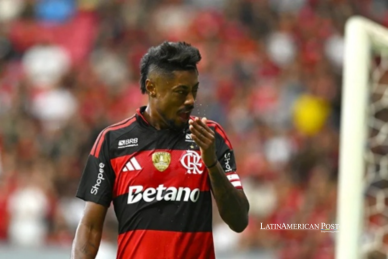
Brazil’s online betting ban has left soccer clubs confronting their dependence on gambling money. Behind warnings of financial collapse lie concentrated revenues, continental ambitions, and a humbler problem: jerseys already made, contracts already signed, and bills that keep coming due.
Six Months of Shirts
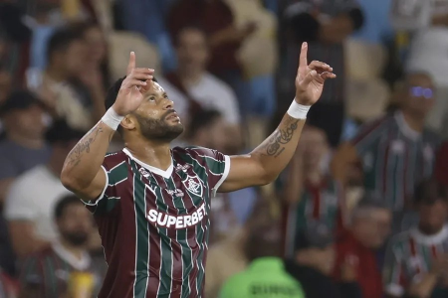
At Fluminense, the dispute has already reached the merchandise. The club says its stores hold enough jerseys bearing its principal sponsor’s name for six months. Sponsorship contracts stretch across several seasons. Neither fact fits easily into a deadline measured in days. A shirt already manufactured represents spending already committed, regardless of what happens next to the company printed across its chest.
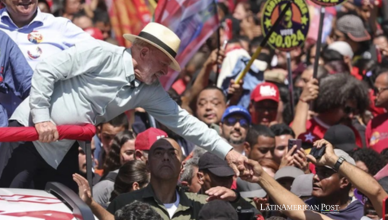
President Luiz Inácio Lula da Silva announced the prohibition on September 25, 2026, citing household indebtedness and gambling addiction. Clubs defended the regulated market, warning that ending betting would end Brazilian soccer. Lula rejected that claim. The confrontation sets concerns about family finances against institutions that have built substantial commitments around betting revenue. Since legalization in 2018, betting brands have spread beyond shirts into stadium naming, tournament sponsorship, and television coverage. Removing the logo therefore affects several businesses selling access to the same matchday audience.
There is a distinction between shutting platforms and replacing income. The Health Ministry’s published timetable requires removing advertising by October 5 and taking platforms offline on October 6. That short operational wind-down differs from the financial transition sought by specialists concerned about contracts covering multiple seasons. Moisés Assayag, managing partner at Channel Associados, told EFE that soccer would not disappear, but clubs faced a serious threat without time to find alternatives. His concern was their existing deficits: even a modest share of turnover can still matter when expenditure already exceeds income.
The Numbers Beneath the Badge
Annual financial statements cited by EFE put direct betting sponsorship at 7.97 percent of Brazilian clubs’ 2025 revenues. For Corinthians, the proportion was 17.3 percent; for Flamengo, 12.6 percent. The national figure therefore conceals sharply different exposure. Corinthians depended on betting companies for more than twice the reported overall share.
Replacing that income requires more than reversing those percentages. Assuming sponsorship disappears entirely, and other revenue stays unchanged, Corinthians would need new income equivalent to 20.9 percent of its remaining revenues to restore the original total. Flamengo’s equivalent hurdle would be 14.4 percent. These are replacement calculations, not forecasts of bankruptcy.
EFE’s 2026 sponsorship total is 977 million reais, with 71.7 percent concentrated in five clubs. That means approximately 700.5 million reais for that group and 276.5 million for everyone else. Together, the largest recipients command more than two and a half times the remainder. The threatened income is substantial, but unevenly distributed. The same report says the number of sponsored first-division clubs fell from 18 in 2025 to 13 in 2026. That is a 27.8 percent decline in club count, not necessarily in money. Fewer logos don’t necessarily mean reduced financial dependence without comparing contract values and the clubs’ other earnings.
Flamengo president Luiz Eduardo Baptista offered a broader estimate: 430 million reais in financial impact next year, speaking to CNN. That is a club projection, not an audited loss or simply the value of one shirt contract. The reported remarks do not provide an itemized reconciliation between direct sponsorship and the wider figure. Flamengo warned that reductions could reach youth development, women’s soccer, and Olympic sports, as well as suppliers and other workers. Those are potential consequences the club identified, not confirmed cuts. They explain why the argument extends beyond transfer budgets: institutions supporting several sporting activities can distribute a revenue shock well beyond the men’s first team.
Money Without a Home Team
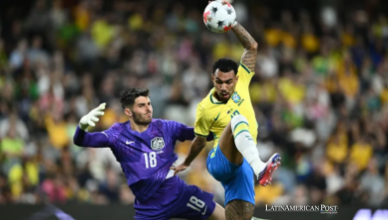
Brazilian clubs won the seven completed editions of Libertadores through 2025, with five finals contested entirely by Brazilian teams. That amounts to 12 of 14 finalist places, roughly 86 percent. The record establishes competitive dominance. It cannot isolate how much came from betting sponsorship rather than other revenues or sporting decisions.
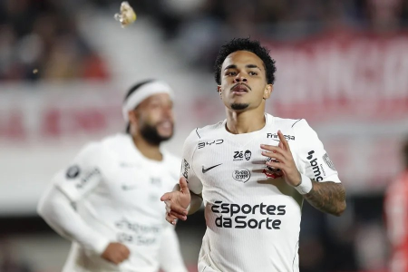
The commercial model is regional. Of the 32 teams reaching the round of 16 across this year’s Libertadores and Sudamericana, 23 had betting sponsors, nearly 72 percent. Argentine agreements cited by EFE ranged from $2.5 million to $7.5 million annually. Corinthians’s reported $29.4 million deal was almost four times that upper figure.
Assayag argues that sponsors seeking continental exposure could move investment to clubs elsewhere, including River Plate. Brazilian audiences might still see the brands in international matches while sponsorship payments reach foreign teams. That is his proposed mechanism, not evidence that equivalent replacement deals have already been signed. He also considers Flamengo and Palmeiras better positioned to restructure than some domestic rivals. The implication is not necessarily an end to Brazilian success, but potentially fewer Brazilian clubs able to finance deep continental runs. Which clubs adapt depends on resources beyond the sponsorship figures alone.
Flamengo and Fluminense additionally warn that illegal operators could retain bettors while regulated sponsorship disappears. The government’s stated objective is reducing household harm. The reporting supplies no estimate of how many people would stop betting or move elsewhere. Lost club revenue and reduced gambling harm are different outcomes and require different evidence.
For now, Fluminense’s stock captures the immediate mismatch. The merchandise belongs to agreements made under one set of expectations. The deadline belongs to another. Between them sit sales still to be made and commitments that a disappearing logo does not