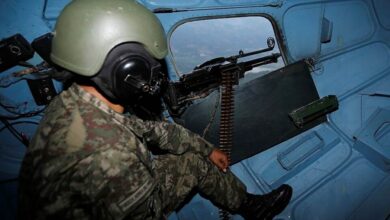
Guatemala Probes Army’s Role After Eight Killings Leave Huité Searching for Answers
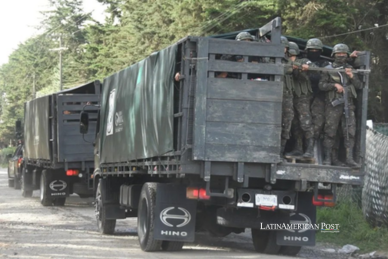
Eight killings in Huité have prompted Guatemala to investigate its army’s role amid conflicting accounts from relatives and officials. Four crime scenes, 77 ballistic items and questions about military conduct leave investigators reconstructing what happened in the eastern border region.
Burials Before Answers
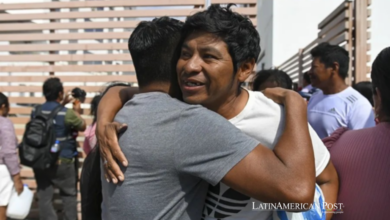
The families were burying their dead while the identity of the gunmen remained unresolved. At Tuesday’s mass funeral in Huité, relatives accused state security forces of participating in the attack. Police and the government denied those allegations, EFE reported. Grief and an argument over responsibility occupied the same small municipality.
On Wednesday, September 30, 2026, President Bernardo Arévalo confirmed a military presence during Sunday’s violence and announced an internal inquiry. Eight people had been killed, including women and a child, in Huité, Zacapa, about 93 miles east of Guatemala City. The Public Ministry, Guatemala’s prosecution service, leads the criminal investigation.
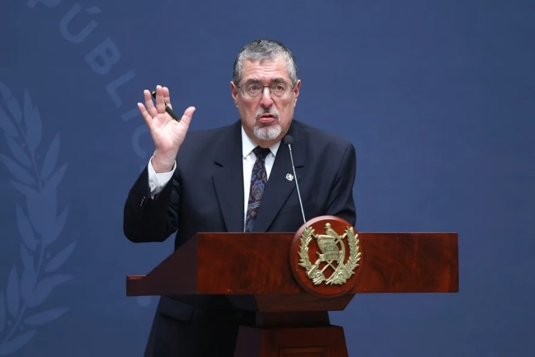
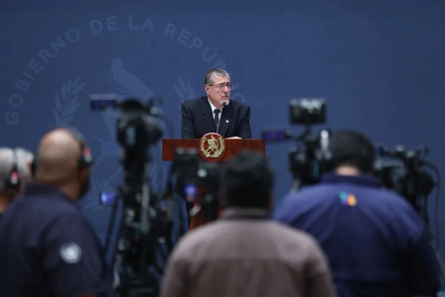
“Yes, there was a military presence. There is no doubt about that,” Arévalo said at a news conference covered by EFE. A multidisciplinary military commission would establish how troops operated and the extent of their involvement, he said.
Arévalo said he ordered the commission on Monday, September 28, two days before announcing it publicly. That dates the internal response to the day after the killings. It does not say when it will make its conclusions available to the wider public.
That acknowledgment does not establish who fired the fatal shots. Nor does it necessarily contradict the army’s earlier statement that its vehicles reached the area but stayed outside the confrontation. The disputed question is not simply whether soldiers were nearby, but where they were, when they arrived, and what they did.
The army attributed the violence to territorial disputes between transnational criminal organizations. It said troops avoided entering the fighting to prevent escalation and protect civilians. Those remain the institution’s account and explanation, not findings that independently resolve the families’ accusations.
“We are not doing anything illegal; it is our film right,” a woman says in a recording described by Con Criterio. The exchange places a resident behind the camera, preserving her own account of an encounter with armed men whose affiliation had not yet been established.
What Seventy-Seven Clues Can Say
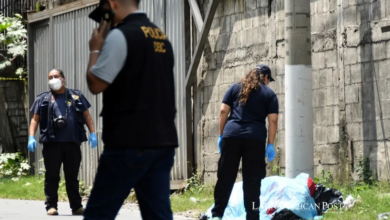
Prosecutors processed four crime scenes and initially found seven bodies. An eighth victim died after being taken to a hospital. The sites yielded 77 ballistic items, alongside other evidence. Those figures establish the spread of the investigation, but they do not yet reconstruct the attack.
Four scenes require several locations to be connected through evidence and chronology. They do not, by themselves, prove four separate groups of attackers or one coordinated operation. Likewise, 77 ballistic items are not necessarily 77 shots, still less a count of
weapons or shooters. Dividing them among eight victims would produce arithmetic, not an explanation.
Former antinarcotics prosecutor Alan Ajiatas told Con Criterio that the National Institute of Forensic Sciences should examine the material and compare it with registered weapons. A possible match would still leave another question: who was holding the weapon when it was fired?
The videos have their own limits. Ajiatas said an apparent official badge or plate needed confirmation and noted that criminal groups know the uniforms and tactical equipment used by security forces. Appearance alone cannot settle institutional identity. A recorded vehicle, an armed person and a fatal shot are different pieces of the reconstruction.
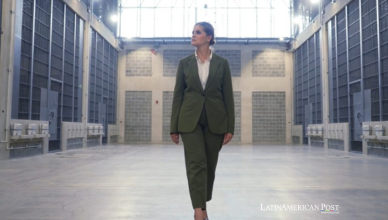
Defense Minister Henry Sáenz said the commission would examine operational planning, doctrine, logistics and personnel to determine whether military protocols and applicable rules were followed, according to EFE. The commission will send its report to prosecutors.
The two inquiries therefore address overlapping but distinct questions. An internal review examines the deployment and compliance with military rules. The criminal investigation must establish responsibility for the killings. One report can inform the other without automatically answering it.
The History Behind the Scrutiny
Guatemala has investigated military violence before, on a vastly different scale. Its United Nations-backed Commission for Historical Clarification estimated that more than 200,000 people were killed or disappeared during the 1960–1996 armed conflict. It attributed 93 percent of documented violations to state forces and associated groups, compared with 3 percent to guerrillas.
Among identified victims, 83 percent were Indigenous Maya. These are findings about a specific conflict and its victims, not statistics describing present-day Huité. Their importance lies in the documented history of civilian harm and state responsibility. They cannot identify the perpetrators of Sunday’s killings.
The commission also documented genocidal violence against Maya communities. That history belongs in the background of scrutiny over military conduct, but treating Huité as a repetition before evidence establishes what occurred would confuse historical context with a verdict.
Zacapa’s position near Honduras adds another layer. EFE describes it as a strategic region for drug trafficking. That geography helps explain the authorities’ focus on organized crime; it does not establish the allegiance of anyone killed. Living along a trafficking corridor is not evidence of membership in a criminal group.
The announced inquiry leaves concrete matters unresolved: the movements of the troops must be placed alongside the sequence of shootings, and the military account examined against physical evidence and testimony. The commission’s breadth describes who will investigate inside the institution. It does not disclose what those investigators have found.
For Huité, the immediate gap is between an acknowledged deployment and unexplained deaths. The families have already held a funeral. What remains missing is an account connecting the armed men, the weapons, and the eight lives lost.