Venezuelan Brothers Make World Series History and Keep Baseball in the Family
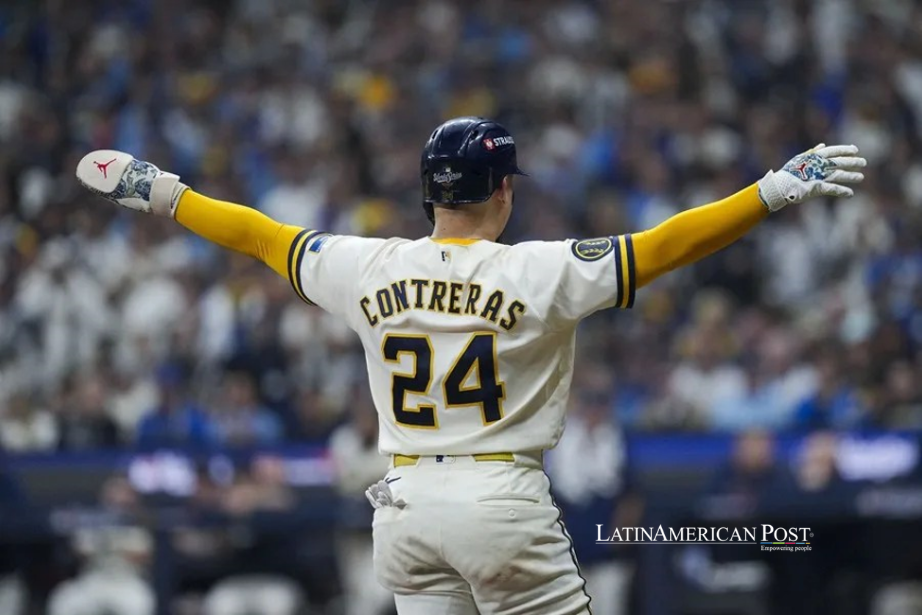
William and Willson Contreras have turned Venezuelan baseball pride into a family milestone. Their World Series championships illuminate a wider Latin American inheritance, where brothers, fathers and sons pass along practical knowledge, opportunity and expectations that can outlast any uniform.
Brothers Beyond the Box Score
After the trophy came the embrace. William Contreras had helped Milwaukee win the 2026 World Series; his older brother, Willson, was there to share it. For the cameras, two famous ballplayers. For each other, something older than either uniform.
“My brother is my role model,” William said in remarks Reuters reported. The sentence carried more weight than the usual championship language. Even at baseball’s summit, he still had someone he looked up to.
Ten years separated their championship performances. Willson helped the Chicago Cubs end a 108-year drought in 2016. William’s Milwaukee triumph made the Venezuelans the tenth set of brothers to play for World Series winners, according to EFE.
The distinction requires care. William already owned a ring from Atlanta’s 2021 championship, but he did not appear in that World Series. This milestone counts participation in the winning final, rather than possession of championship jewelry. His earlier contribution to Atlanta still counts.
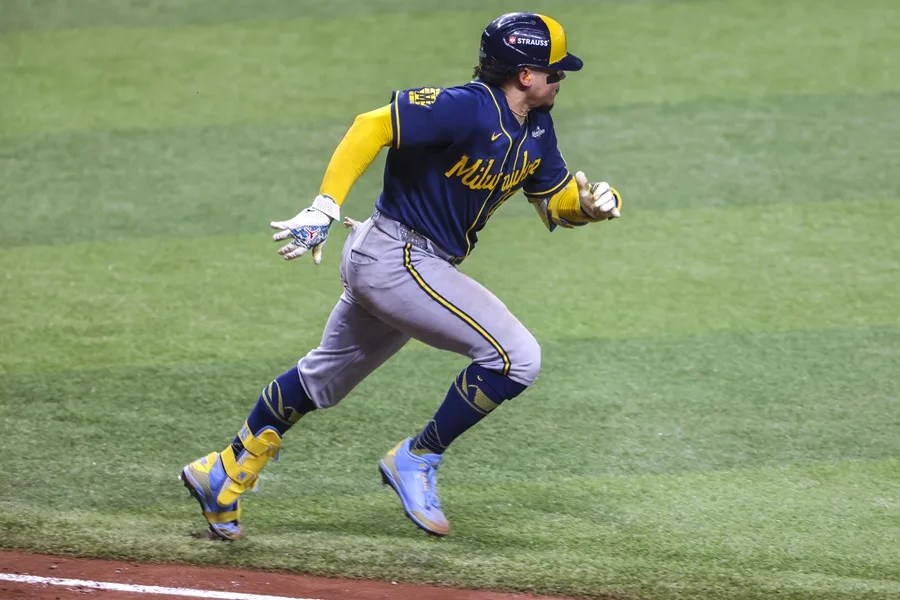
Now the performance was unmistakably his: eight hits in 21 at-bats, a .381 average, and the World Series MVP award. A small sample cannot summarize a career. It can, however, explain why this October belongs to William on his own terms.
Their bond also offers a useful lens on Latin American baseball families. Talent matters, but so does having somebody who understands a slump, a demotion or the distance from home. Experience becomes practical help when there is a trusted person to call.
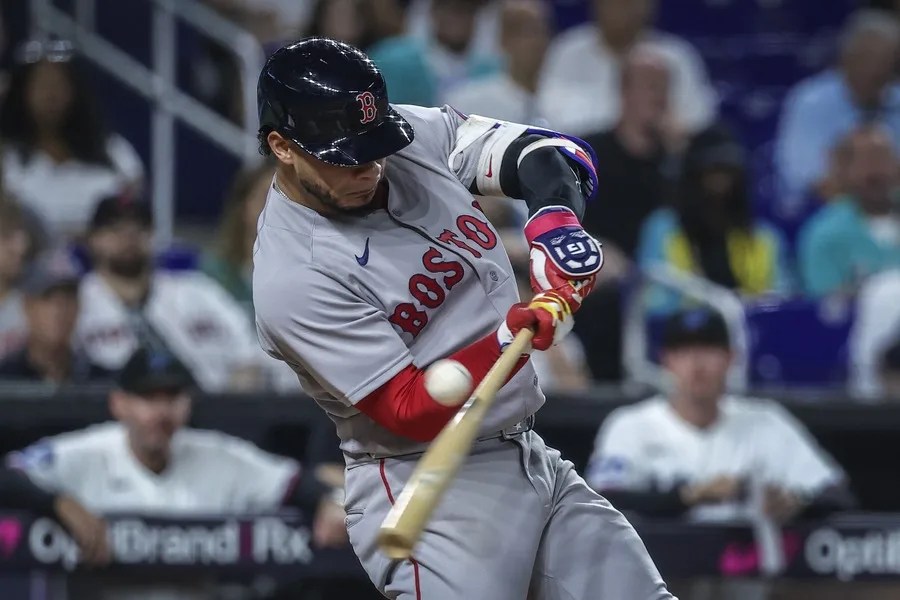
The Family Tree Takes the Field
The Dominican Republic’s Alou family provides an earlier chapter. Felipe, Matty and Jesús shared San Francisco’s outfield in September 1963. Felipe’s son, Moisés, born in Atlanta and raised largely in the Dominican Republic, later became a major league star himself. Three brothers, then another generation: sustained employment at baseball’s highest level, not simply a famous photograph.
Even their surname carries a history of adaptation. As the Society for American Baseball Research explains, the brothers were known as Rojas in the Dominican Republic. American baseball adopted their maternal surname, Alou, and the younger brothers followed Felipe under that name. The family became internationally recognizable through an American misunderstanding.
Puerto Rico’s Bengie, José, and Yadier Molina turned catching into a family specialty. All three played for World Series champions. Bengie and José won together with the 2002 Angels; José also won with the 2009 Yankees, while Yadier won with St. Louis in 2006 and 2011.
Those careers complicate the familiar picture of Latin players as suppliers of power and speed. Catchers study hitters, direct pitchers, and manage a game’s emotional temperature. The Molinas made their living in a position that requires both physical endurance and tactical authority.
Another Puerto Rican family connects brothers with a father’s example. Sandy Alomar Sr. played 15 major league seasons. His sons, catcher Sandy Jr. and second baseman Roberto, followed him. Roberto collected 2,724 hits and ten Gold Gloves. Their shared upbringing produced different positions and careers, showing how inheritance can provide preparation without prescribing an identical player.
What a Surname Cannot Guarantee
Cuba’s half-brothers Liván and Orlando Hernández supplied another championship connection. Liván was the 1997 World Series MVP with Florida; Orlando won four titles. Their achievements belong in Cuba’s baseball history, even though they lifted the trophies for American clubs.
The Dominican Republic also produced Ramón and Pedro Martínez. Ramón won 20 games for the Dodgers in 1990; Pedro later earned three Cy Young Awards. The younger brother’s larger historical reputation can obscure what the older brother accomplished. Their example cautions against treating a baseball family as one repeated career, or assuming that the first arrival will remain its biggest star.
The Dominican father and son Vladimir Guerrero and Vladimir Guerrero Jr. extend the story across another border. The younger Guerrero was born in Montreal, where his father played. They became the first father-and-son duo to win the Home Run Derby, in 2007 and 2023, respectively. Heritage and birthplace do not always occupy the same box.
Such families can offer unusually early access to professional routines and informed advice. That advantage should be acknowledged without reducing their achievements to inheritance. A recognizable surname might attract attention; it cannot make contact with a breaking ball.
Dominican-born and Venezuelan-born players occupied 153 of 948 roster and inactive-list places in MLB’s 2026 opening census, roughly one in six.
That scale extends well beyond celebrated households. Treating Latin American success as a handful of exceptional bloodlines overlooks the coaches, local clubs, and less recognizable families behind the wider talent base. Family knowledge helps explain continuity, but it cannot explain an entire region’s contribution.
For Venezuela, the Contreras milestone follows March’s 3-2 victory over the United States in the World Baseball Classic final. The two championships offer different kinds of belonging: one stitched across a national jersey, the other carried in a shared surname.
William’s achievement fits both stories. He followed his brother into the profession and eventually into this particular championship record. But following was never the same as being carried. This time, when the brothers embraced, the younger one had supplied his own October.