Martin, the Bolivian Hachiko: Eight Years of Loyalty After His Owner’s Death
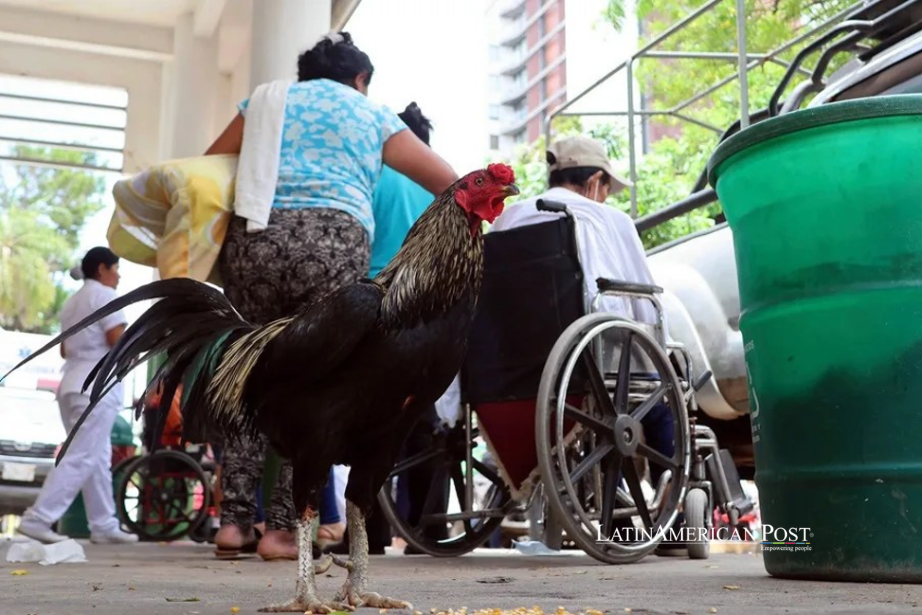
For eight years, Martin the rooster has lived outside a cancer hospital in Santa Cruz, Bolivia, becoming a local symbol of loyalty whose uncertain beginnings reveal something unmistakable about the workers, patients, and neighbors determined to keep him close by.
Eight Years at the Door
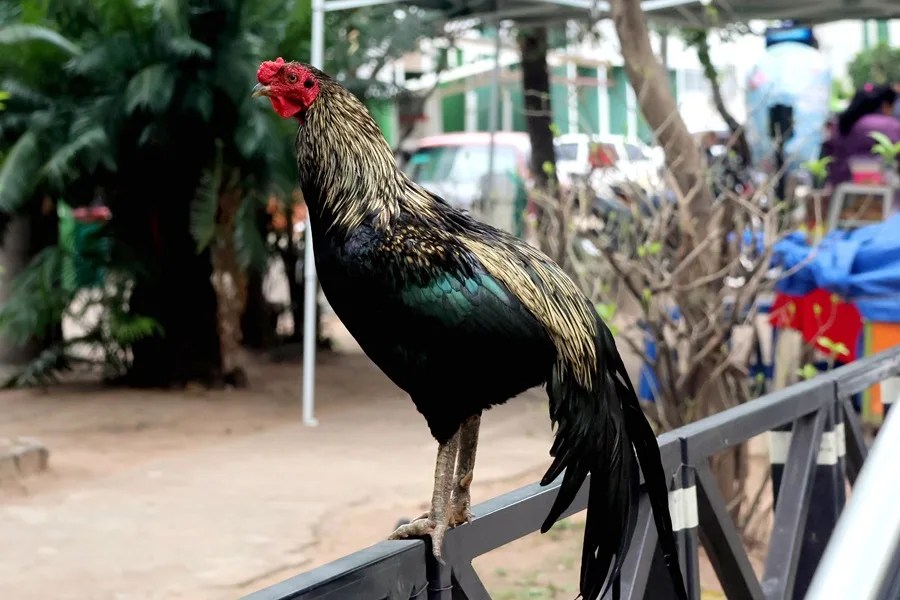
At the hospital entrance, Martin has places to go. He can visit food stalls, climb trees when rain comes or darkness falls, and sit on the iron barrier above the curb to watch traffic. His world is small enough to walk around. His place in it is hard to dispute.
For eight years, the rooster has lived outside the Eastern Bolivian Oncology Institute in Santa Cruz. Workers and regular visitors recognize him as part of the hospital’s daily life. Some compare him with Hachiko, the Japanese dog whose years of waiting for a deceased owner became an enduring story of devotion.
Martin’s own history begins with an arrival that remains partly reconstructed. “He arrived with his owner in a pickup truck, and we assume he flew down,” administrative employee María del Carmen Gamón told EFE. “Apparently, the patient died, and then he stayed.” Her wording preserves uncertainty that the more polished legend can easily erase.
Gamón has worked at the hospital for 25 years. She offers the perspective of someone familiar with its routines, but her account does not establish exactly what happened to the man or what the rooster understood. Eight years represents an extraordinary duration of residence. It cannot, by itself, establish eight years of conscious waiting.
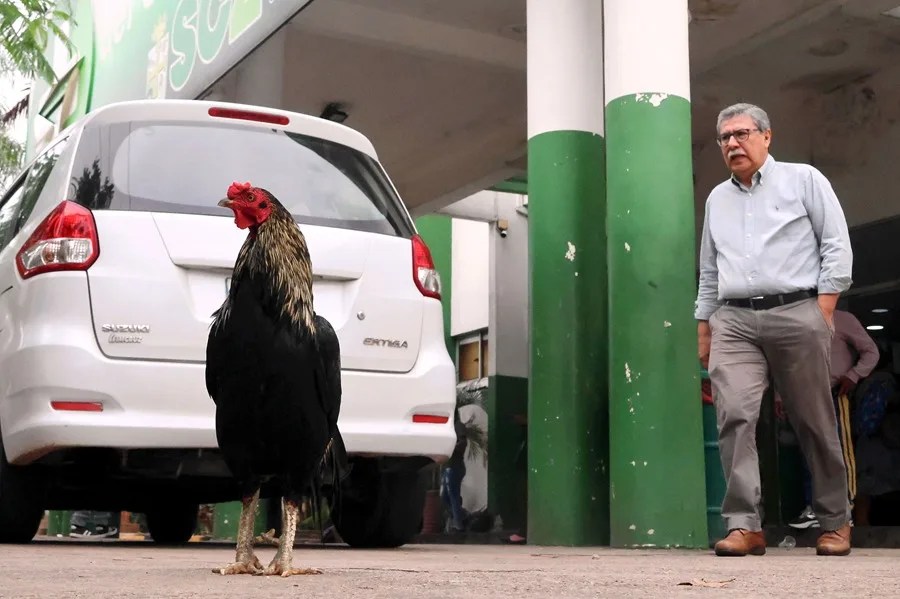
The bird himself resists an overly sweet portrait. His robust body carries slender golden feathers across the back and dark green plumage elsewhere. A flattened comb and developed spurs give him a formidable appearance. People who know him say he generally keeps them at a distance, except when someone needs to trim those spurs.
The Price of Staying Put
Belonging has occasionally required a defense. Gamón recalled a woman who arrived, claimed Martin was hers, and insisted on taking him away. According to the hospital employee, the woman asked for about 500 bolivianos to let him go. Staff organized a collection so that the rooster could remain where they believed he belonged.
The figure is revealing because of the response it prompted. Five hundred bolivianos was the woman’s demand, not an established valuation of the bird. The workers answered a private claim with shared responsibility. Their attachment acquired a practical form: people were prepared to contribute money to prevent his removal.
That episode also exposes a tension in Martin’s unusual position. He lives in a public setting and moves freely around the entrance, yet people regard him as someone under their protection. The account does not resolve the woman’s claim of ownership. It establishes that hospital workers refused to treat his presence as disposable.
Later, a man grabbed Martin and tried to leave with him without consulting anyone, clinical records worker Grover Saucedo told EFE. Hospital visitors joined employees in stopping him. Saucedo calls the rooster a hospital “employee” and describes him as “untouchable.” The honorary job comes with an informal network of defenders.
His daily survival unfolds through smaller encounters, too. Customers at nearby food stalls give him bread crumbs or rice. Trees offer places to retreat, and the iron street barrier becomes a perch. The setting is distinctly urban: hospital doors, roadside meals, and passing vehicles share the public space where this animal has established his routines.
A Familiar Face in Uncertainty
The story takes a less comforting turn. Someone brought a hen to keep Martin company, Saucedo told EFE. After chicks were born, the hen and her young disappeared. The account leaves their fate unexplained. Martin remained. Even within a community determined to protect him, the companionship arranged for him proved temporary.
The comparison with Hachiko supplies a familiar framework for such losses. The Akita’s owner, University of Tokyo professor Hidesaburo Ueno, died in 1925. The dog continued returning to Shibuya station for nine years. A bronze statue commemorates that journey, part of the city’s public memory.
Bolivia has its own variations. In Cochabamba, Hachi, also known as Huachito, reportedly lived for at least six years on the avenue where his owner died in a traffic accident. In El Alto, Orejas became known for remaining outside the hospital where his owner had been admitted and subsequently died.
Those durations give the stories their force. Six, eight, or nine years stretch devotion beyond a single moving scene into something people can encounter repeatedly. Yet comparisons between the animals cannot establish identical motives. What connects these accounts most securely is how communities interpret persistence and attach a shared meaning to a particular place.
At an oncology hospital, that place carries particular weight. People arrive because illness has interrupted ordinary life. A recognizable animal at the entrance belongs to a steadier rhythm: walking, feeding, finding shelter. For staff and visitors who see Martin as a symbol, his continued presence offers something familiar in a setting defined by uncertainty.
Martin’s memories remain his own. The people around him have made their attachment visible: feeding him, watching over him, and stopping others from carrying him away. Whatever first kept the rooster at the hospital door, a community now helps keep him there.