Jamaica Welcomes Tourists While Hurricane Melissa’s Survivors Still Wait to Go Home
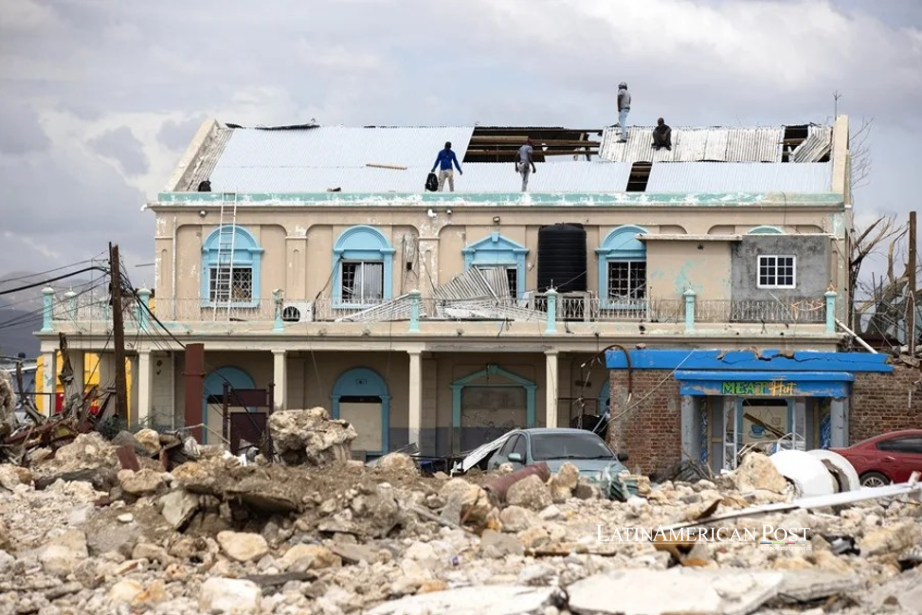
A year after Hurricane Melissa devastated Jamaica, reopened hotels and international pledges coexist with families rebuilding homes and incomes. Its uneven recovery exposes a regional challenge: how to restore livelihoods without financing today’s repairs at the expense of tomorrow’s security.
Four Months Under a Tarp
Damion Brown spent four months beneath a tarpaulin on the ground where his house had stood.
The 63-year-old resident of Mount Peto was inside when Hurricane Melissa arrived on October 28, 2025. “I had to take shelter in my neighbors’ home,” he told EFE by telephone, his voice unsettled by the memory. United for Jamaica helped him build a livable structure.
His recovery had a different timetable from the reopening of roads or hotels. Surviving the storm was only the beginning. Afterward came the long interval between having somewhere to shelter and having somewhere to live.
Melissa killed 45 people in Jamaica and affected roughly 1.6 million, more than half the population. EFE reported that 24,000 families lost their homes and about 90,000 houses suffered severe damage.
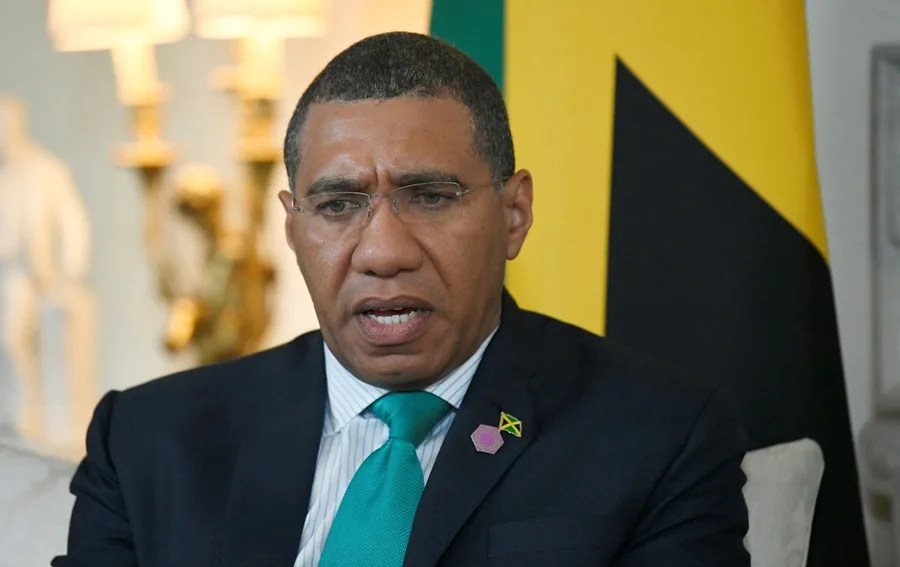
Kebre Treston, who leads United for Jamaica, told EFE that the government “could have done more” and still was not doing enough. Prime Minister Andrew Holness has acknowledged that recovery is taking too long for many families.
His government says more than 118,000 households have been assessed for assistance, with approximately half receiving support and the remainder expected to be reached by January 2027. That leaves roughly 59,000 assessed households awaiting assistance through that process. Receiving support, however, does not necessarily mean a home has been rebuilt.
The distinction matters politically. A government can report progress while a family still lives beneath a damaged roof. Public confidence depends on whether the next assessment produces a usable payment, available materials, and a safer place to sleep.
The Bill Beyond Broken Buildings
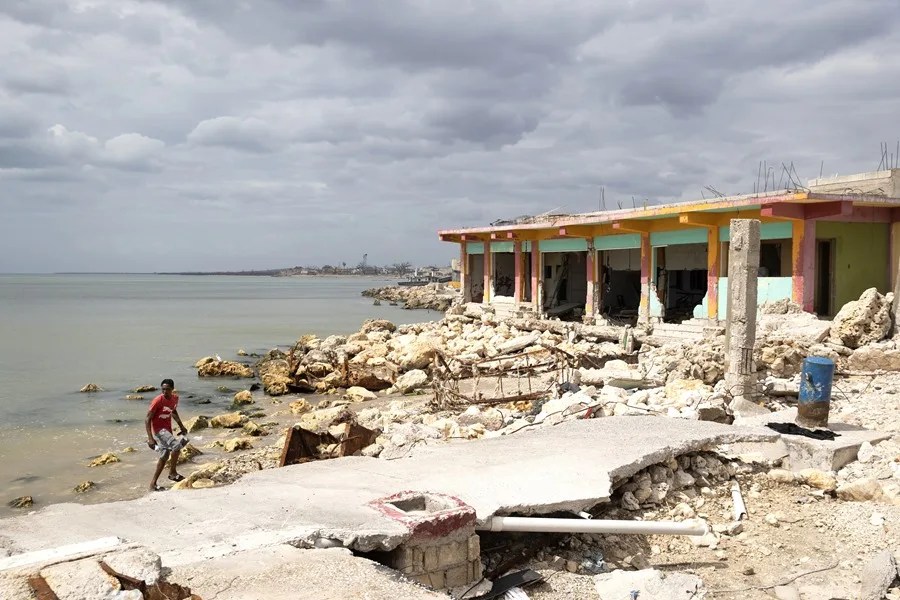
The economic accounting has changed as the damage became clearer. An early World Bank and Inter-American Development Bank assessment estimated $8.8 billion in physical destruction. In March, Jamaica’s Planning Institute reported broader damage and economic losses of $12.2 billion, equivalent to 56.7 percent of the country’s 2024 GDP.
That comparison measures the burden against the economy’s annual size; it does not mean annual production fell by 56.7 percent. Broken assets and interrupted earnings are related but different losses. A fisherman can lose a boat immediately and then lose months of income while waiting to replace it.
The distinction also complicates the celebrated $6.7 billion international support package. Announced as financing of up to that amount over three years, it combines public financing, grants and prospective private investment. It is not a donation already deposited in a reconstruction account.
Participating institutions sought to mobilize $2.4 billion in private investment. Such capital can help restore productive businesses, but investors require viable projects and returns. A household needing a roof does not necessarily have an income stream that makes its reconstruction commercially attractive.
Tourism’s recovery therefore matters, but it does not provide a complete measure of recovery. Reopened hotels restore jobs and foreign exchange, helping Jamaica pay for imports needed elsewhere in the economy. Yet the tourism worker’s repaired workplace and unrepaired home can exist simultaneously. Suppliers need functioning farms, transport and fishing livelihoods.
The Jamaica Red Cross and the International Federation of Red Cross and Red Crescent Societies report reaching more than 91,000 people. Their roughly $3 million in cash and vouchers went to 7,161 households, averaging about $420 per household. That average describes assistance across recipients, not an identical payment or the cost of rebuilding a house.
Cash gives families room to decide whether food, medicine, or repairs come first. Its usefulness depends on functioning markets. Where materials are unavailable, or transport remains expensive, purchasing power alone cannot complete reconstruction.
A Regional Warning With Practical Stakes
Latin America should care because Jamaica exposes the gap between financing an emergency and financing a recovery. Caribbean and Central American communities face overlapping vulnerabilities: exposed coastlines, fragile housing and livelihoods concentrated in activities that storms can interrupt at once.
Jamaica had prepared financially. Its catastrophe bond paid $150 million after Melissa, showing that prearranged insurance can release money quickly. But even a full payout covered only a small fraction of the damage. Preparation shortened the wait for liquidity but did not eliminate the much larger rebuilding problem.
Regional development banks already have a direct stake through the reconstruction package. Their choices will influence whether rebuilding strengthens public infrastructure or leaves future budgets carrying obligations that compete with maintenance and social services. Borrowing can finance protection, but repayment terms and project quality determine how durable that protection becomes.
The human stakes extend beyond balance sheets. IFRC official Jamie LeSueur told EFE that children face lasting developmental consequences and described creating 68 spaces for them. Safe places to play and receive support address needs that a repaired power line cannot resolve.
The IFRC’s next phase, through October 2027, emphasizes restoring agricultural and fishing livelihoods. Households earning again can support local shops and depend less on emergency transfers. It also recognizes that recovery requires more than replacing possessions.
For the wider region, Jamaica’s experience argues for financing that reaches vulnerable households, stronger construction, and sustained support after international attention fades. Brown’s four months under a tarp supply the simplest test of success. The next family should spend less time waiting for a home.