Can Bukele Make Safe Streets El Salvador’s Most Unlikely Export to Haiti?
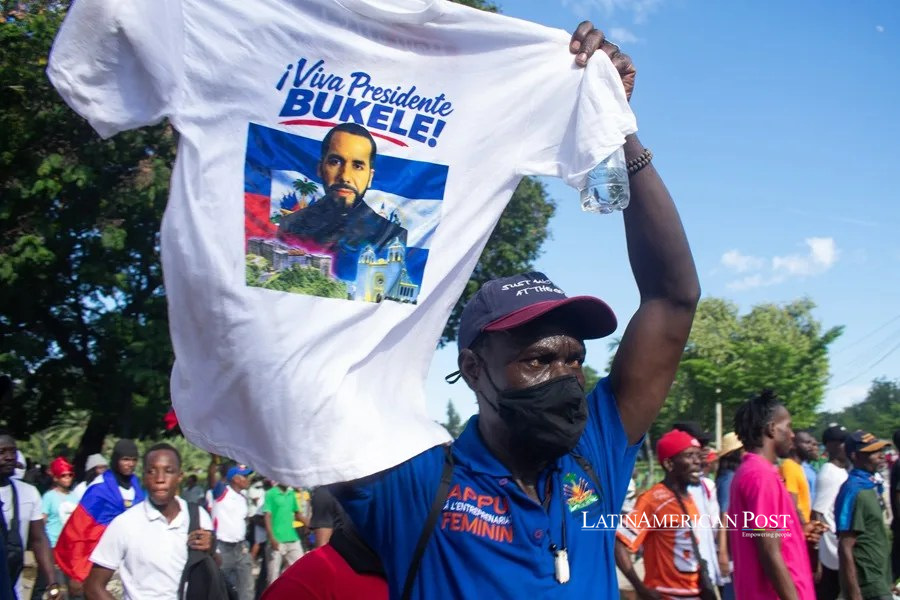
At a march in Port-au-Prince, Haitians wore Nayib Bukele’s face on their shirts and called for their own prime minister to resign. El Salvador’s president sent soldiers to find four missing men. Residents want the roads back from the gangs.
Four Men Still Missing
Marie Michelle Dorville, a street vendor in the Haitian capital, joined the crowds on Tuesday. Gang members had killed her partner, she told the Associated Press, leaving her to raise three children. She wanted the gangs gone for good “so everyone can have a normal life.”
The next day, November 18, marchers carried tree branches from Delmas through Pétion-Ville toward the office of Prime Minister Alix Didier Fils-Aimé, EFE reported. The date mattered to Sonson Dumé, an opposition spokesman. At Vertières on that day in 1803, Haitian soldiers defeated French colonial forces and opened the way to independence.
Dumé urged Bukele to keep his troops in Haiti. On that much, at least, he agreed with the man he wanted out of office. Fils-Aimé had publicly thanked the Salvadorans for helping Haiti regain territory.
The four missing men were Salvadoran aviation technicians with the Gang Suppression Force backed by the United Nations. Gunmen ambushed their vehicle outside the capital on October 18. Haitian police found it burned. By November 18, the men were still missing.
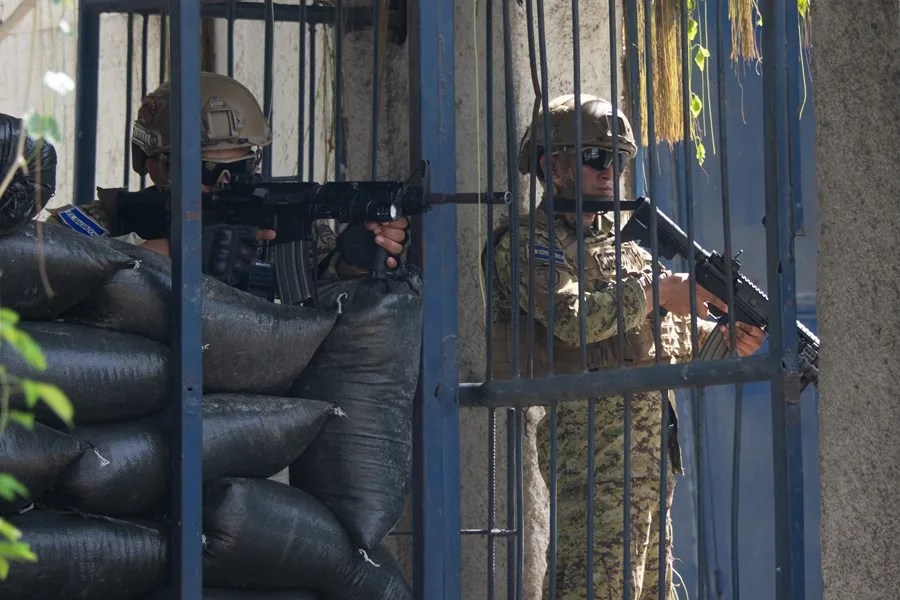
Bukele had sent more than 2,000 troops, most operating outside the international force’s chain of command. Salvadoran officials said the soldiers would come home once they found the men. Haiti’s justice minister wanted them to stay at least through the repeatedly postponed elections, now scheduled for July 2027. The terms of the agreement between the two governments remain private.
Haitian forces and their partners have since reclaimed a police post and a power plant. At its hospitals in Tabarre and Cité Soleil, Doctors Without Borders treated 30 people wounded by gunfire or explosions between October 18 and 26. Some gunshot patients spent hours getting past blocked roads and bridges.
What a Pupusa Seller Got Back
In San Salvador, Arnulfo Mazariego sold sodas and pupusas, thick stuffed tortillas, at a street stand. For years, MS-13 took about $250 from him every month. After Bukele’s crackdown, the gang stopped collecting. In 2024, Mazariego told NPR what he had done with the money. He paid for eye surgery.
President Francisco Flores sent police and soldiers after suspected gang members in 2003 under his Iron Fist plan. Judges released most detainees, often for lack of evidence. A 2012 truce between MS-13 and Barrio 18 brought the daily homicide count down from roughly 14 to fewer than six. Shopkeepers still paid extortion. After the truce collapsed, El Salvador recorded 6,656 homicides in 2015. At that pace, the 82 killings El Salvador reported for all of 2025 would once have taken less than five days.
Homicides had already fallen from 2,398 in 2019, the year Bukele took office, to 1,147 in 2021. From there, the official toll fell another 93 percent by 2025. Suppliers began delivering to neighborhoods they had been unable to enter. In Las Margaritas, where residents once needed a gang’s permission to have relatives over, families could decide for themselves who came through the front door.
The mass arrests began under emergency powers granted in March 2022. By late 2024, Bukele himself said authorities had released 8,000 innocent people. Some families went from prison to prison asking where a son or daughter was being held.
Honduras tried emergency powers under President Xiomara Castro in December 2022. Its homicide rate fell from about 38 per 100,000 people that year to 26 in 2025. El Salvador reported 1.3 that year, though its figures exclude suspected gang members killed in clashes with security forces. In Honduras, killings also fell in municipalities outside the emergency zone. Gangs in the cities kept collecting from businesses even as the death toll dropped.
When the Troops Go Home
Haiti has its own history with outside help. In 2007, Haitian police and United Nations troops under Brazilian military command pushed gangs out of strongholds in Cité Soleil. Aid workers could get back in. Across Haiti, reported kidnappings for ransom fell from 506 in 2006 to 227 the following year. The mission ended in 2017. Today, armed groups again collect tolls on the roads that bring food into the capital.
At the November march, opposition organizer Girot Frantz warned that gangs could rebuild because they had allies inside public institutions. A trucker who pays to pass a checkpoint has to recover that money somewhere. By the time a sack of rice reaches a market stall, the family buying supper can be paying a gang it has never seen. Keeping that road open takes Haitian police who can stay and prosecutors free to pursue whoever financed the gang.
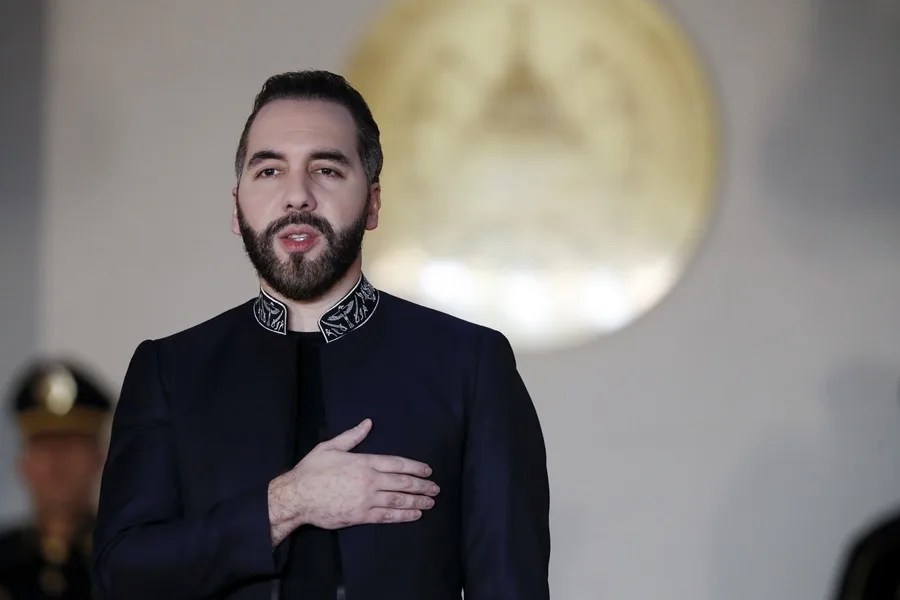
Bukele replied to the marchers in Haitian Creole. For a president seeking a third consecutive term in February, footage of Haitians chanting his name could double as a campaign ad.
In Port-au-Prince, Haitian and Salvadoran forces helped recover the Sylvio Cator soccer stadium, where gang control had kept the national team from playing its home World Cup qualifiers. For now, the Salvadorans use it as a base. A home game there would be cause for celebration. The walk home after the final whistle ought to be the least memorable part of the day.