Three Jurisdictions, One Rope as Mothers Search for the Missing in Mexico
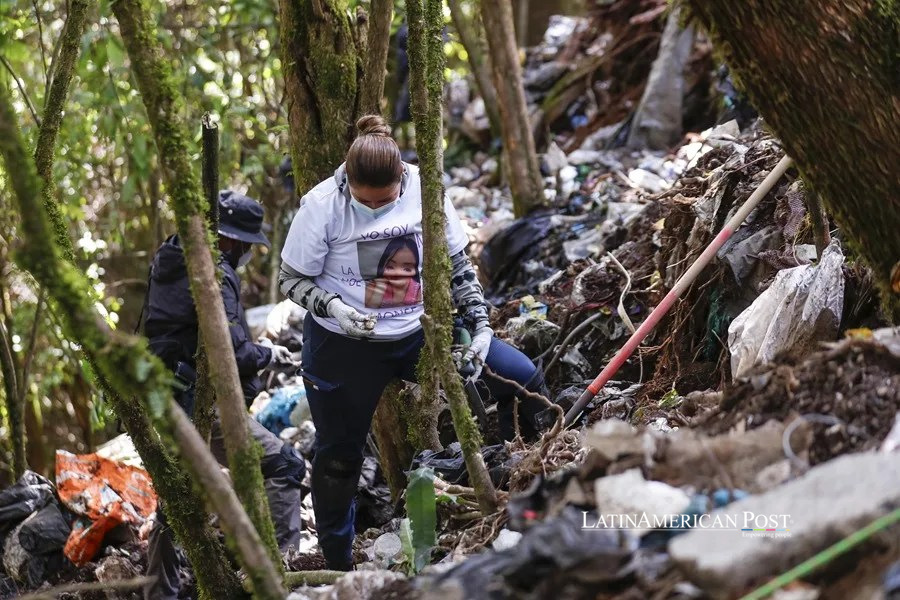
At a roadside ravine in Huitzilac, families found possible human skull fragments while searching for Mexico’s disappeared. The mothers who led the search say too few officials came to help and fear a forensic backlog could keep relatives waiting longer.
The Faces at the Roadside
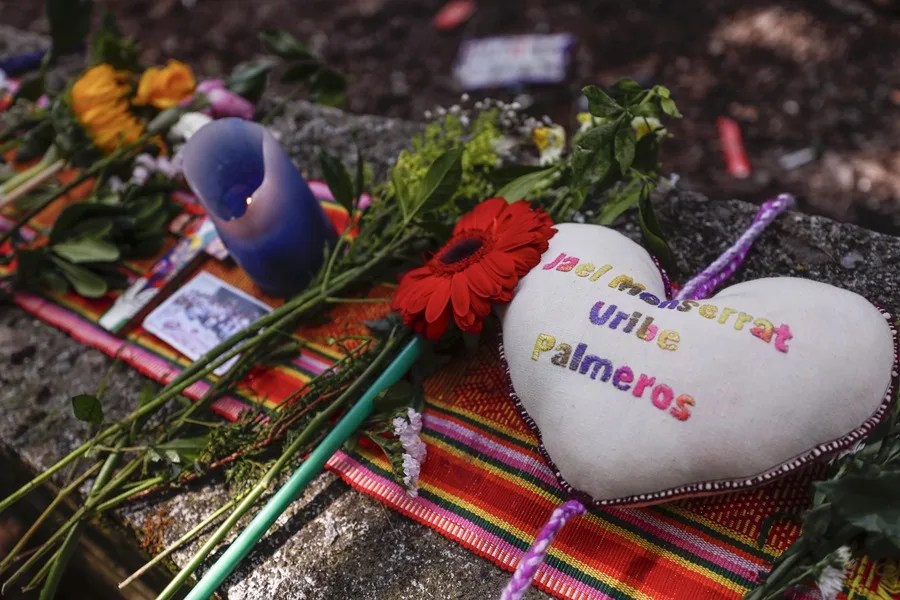
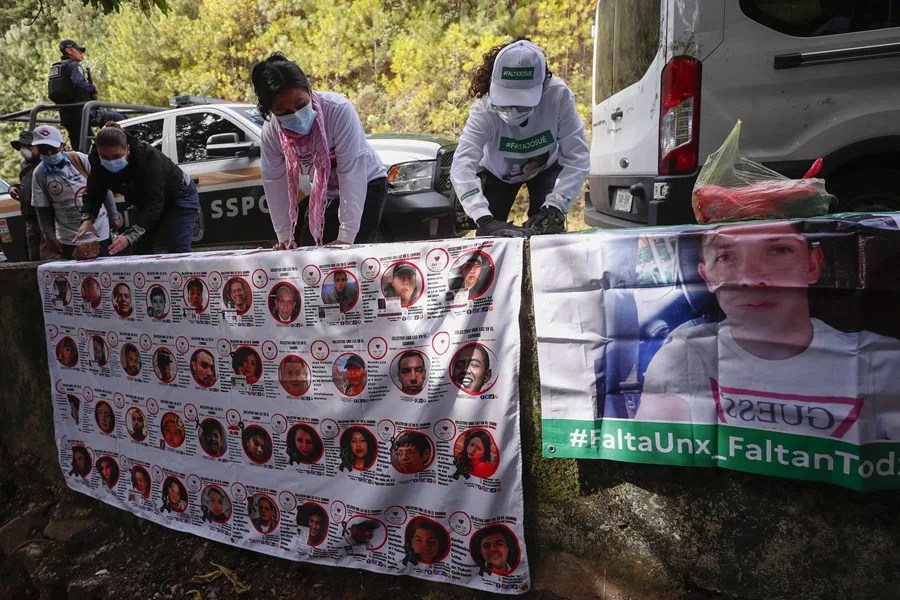
Some of what the families brought to Huitzilac stayed at the top of the slope. They set out flowers and candles beside posters bearing the faces of people they hoped to find. The garden shovels went down into the ravine with them. By then the families had already lost time waiting for the official convoy to reach this stretch of road about 37 miles south of Mexico City.
The mothers of Una Luz en el Camino led the search. Rubén Albarrán, the singer from the Mexican band Café Tacvba, was among those who joined them. Wearing gloves and knee pads, searchers held on to a safety rope as they made their way down the trash-strewn embankment. A powerful smell on the slope came from a dead goat.
It took two teams to search one patch of ground. One dug in the ravine while the other sifted buckets of soil at the top. With help from forensic personnel, they separated animal remains from bone fragments that warranted a closer look. A bucket that appeared to hold nothing but dirt still had to go through the sieve.
By day’s end, Jaqueline Palmeros, the collective’s founder, reported 15 new bone finds. Among them were fragments that appeared to come from a human skull. Searchers had found dozens of potential clues in the area since the previous week, including a whole skull. Several fragments can come from a single bone. There was no way at the roadside to turn the day’s tally into a count of people.
Who Showed Up in Huitzilac
Huitzilac lies in Morelos, near the point where its boundary meets those of Mexico City and the State of Mexico. A highway ran nearby, but there was no cell service in the ravine. No surveillance cameras covered the area. While the families worked, they could hear distant blasts.
Daniela González has been looking for her son since 2022. She told EFE the families understood the risks of going out there. “We know this is a hot spot,” she said. She questioned whether authorities had the training or the commitment to keep them safe and said the protection they had that day fell short.
Palmeros was careful about where she laid the blame. Personnel from Mexico City had come. “Other institutions that should be here” were absent, she told EFE. An agency recording its field visits could accurately count Huitzilac as a day it sent personnel. For a woman holding a shovel on the slope, what mattered was whether enough people had come to search the ground and keep everyone safe.
Mexico lists more than 135,000 people as missing or unaccounted for. In a crisis tied to organized crime and impunity, thousands of families have taken up the work of searching. The national figure conveys something of the scale of the disappearances. It leaves out much of what happens while a name stays on the list. A son can remain a single entry for years while his mother puts in day after day on ground like this.
The Wait After the Dig
Once the soil has been sifted, the families depend on work that must continue elsewhere. Specialists still have to establish whether the fragments are human and whether there is enough evidence to identify anyone. Palmeros worries about a forensic backlog. With each visit, the women can add to the material awaiting examination. They have little say over how soon an examiner will get to it.
“They are people who have a first name, a last name and a family looking for them,” Palmeros told EFE. An identification could mean a call to one of the families who put up the posters. It could also reach a household whose missing son or daughter has never appeared on a poster in Huitzilac. For that family, the call would settle whether to keep looking. What happened between the last time someone saw their relative alive and the day a volunteer sifted a bucket of earth would still require an investigation.
Inés has been searching for her son for eight years. She described to EFE the sadness of seeing where she and the other women had come to look for their children. She spoke of joy, too, at the thought that somebody might be found. The word she used in Spanish was personita, an affectionate diminutive. She could speak with tenderness about someone whose name she had no way of knowing.
“I keep going because if I don’t look for my son, no one will look for him,” Inés told EFE. She switched to the plural when she described how she gets through it. “Sometimes we cry together. We get together and talk about everything we’re going through.” Eight years into the search for her son, she said of the people searching beside her, “We become like a family.”