Chile Took Sweden’s Toxic Waste, and Arica Is Still Paying Compound Interest
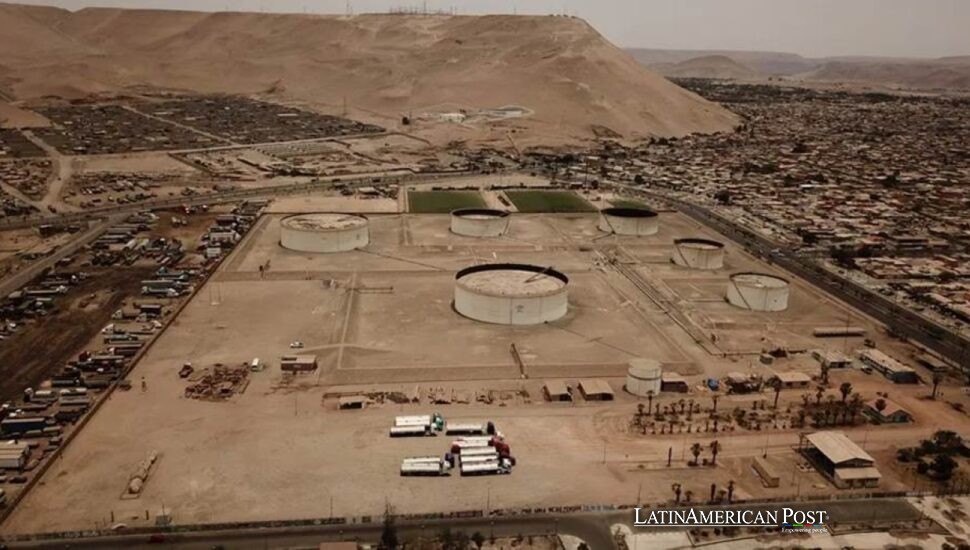
In northern Chile, a chemist who grew up beside Swedish mining waste is testing what decades of cleanup actually accomplished. His findings reopen Arica’s unfinished reckoning with contaminated ground, broken promises, and families still fighting for protection under Chilean law.
A Childhood Becomes Evidence
Diego Ayala was 10 when his family moved to Sica Sica, a neighborhood in Arica, in 2007. The waste had arrived long before him. He grew up near the legacy of more than 20,000 metric tons of Swedish mining residues, then became an environmental chemist and made that ground the subject of his undergraduate thesis.
His education at the University of Chile was supported by the very law created to assist people affected by Arica’s contamination. There is a pointed symmetry here: a measure intended to repair the damage helped train someone capable of asking whether the repair had worked.
“Remediation was carried out, but we don’t know whether it worked,” Ayala told EFE. He wants a broader investigation, not a declaration that every intervention failed.
Ayala told EFE that his annual examinations since 2014 have not detected toxic metals. That is welcome news about one person, not a substitute for examining the surroundings where other families continue to live.
Between 1984 and 1985, Swedish mining company Boliden shipped the residues to Chilean processor Promel for the proposed recovery of gold and silver. Described as metal-bearing sludge, the material was left exposed near Sica Sica. Social housing followed near contaminated land beginning in 1989, including Los Industriales and Cerro Chuño.
The chronology matters. Chile declared a sanitary and environmental emergency in 1996, roughly 12 years after the shipments began. The Polymetals Law arrived in 2012, another 16 years later, promising health monitoring, educational assistance, and relocation support.
What began as a transaction between companies became an obligation spanning generations. Sweden supplied the industrial waste; Chilean decisions placed vulnerable families near it. Explaining the disaster requires both sides of that history, rather than treating poor housing choices as a misfortune residents brought upon themselves.
Seventeen Samples, Uncomfortable Questions
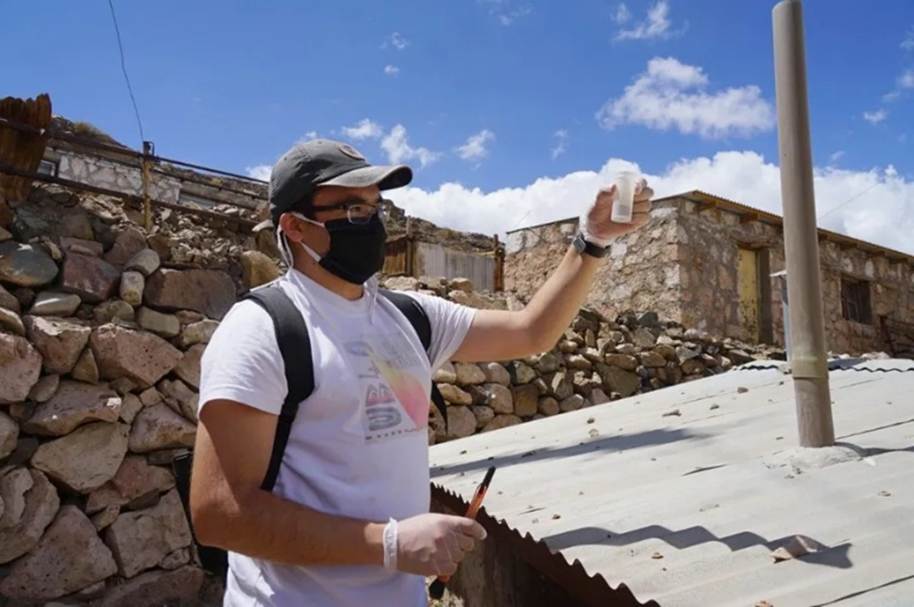
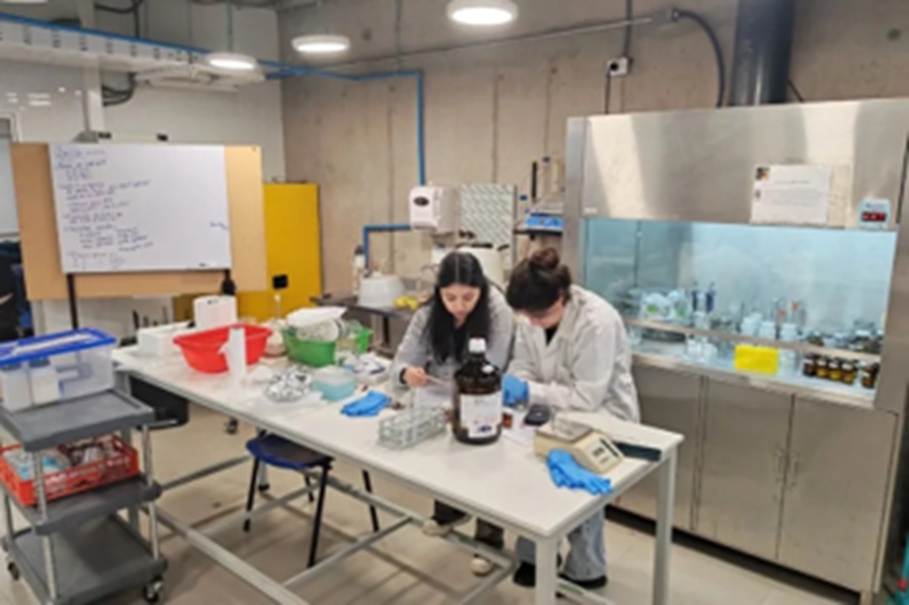
Ayala’s research, published in CLEAN: Soil, Air, Water, analyzed 17 surface-soil samples. He contrasted that scale with more than 300 samples in the government’s 2009 intervention. His total is less than 6% of that earlier count, limiting how confidently findings can describe the whole city. Without matching locations, methods, and timing, those totals cannot become a reliable before-and-after scorecard for the city’s cleanup.
The laboratory found separate maximum concentrations of 47 milligrams of arsenic per kilogram of soil, 487 milligrams of lead, and 1,740 milligrams of zinc. These are localized peaks, not citywide averages. Nor does a concentration in soil establish how much entered someone’s body.
University of Chile researcher Carlos Manzano told EFE that lead, arsenic and zinc showed a geographic pattern associated with the old disposal areas, while other contamination reflected newer sources. That pattern supports investigating a toxic legacy. It does not conclusively identify the origin of every sample.
Chile’s lack of binding national soil-contamination limits by land use adds another difficulty. Researchers must consult international benchmarks, which cannot automatically account for northern Chile’s geology or local exposure conditions. Exceeding a screening value is a reason to investigate, not a diagnosis.
The distinction cuts both ways. Scientific caution does not justify declaring a neighborhood safe without adequate evidence. A stronger assessment would repeatedly sample suspect locations and connect environmental findings with health surveillance, testing whether contamination remains accessible through dust or other pathways.
Nor has all official research stopped: the Environment Ministry documents a separate soil-sampling campaign led by the Metropolitan Technological University in 2025. The question is whether successive investigations produce comparable, public evidence of lasting protection, rather than another collection of measurements families must struggle to interpret.
The Children Beyond the Cutoff
In 2021, United Nations human rights experts estimated that 12,000 people had been affected and reported deaths, cancers, respiratory problems, miscarriages, and congenital disabilities. That warning describes a grave history; it is not a count of illnesses established by Ayala’s 17 samples. Mothers formed Mamitas del Plomo in 2019 to press for children they say remain outside protections because they were born after 2012. Their 2024 lawsuit accuses the Chilean state of inaction and failure to fulfill legal duties amid persistent contamination. The dispute reached the First Environmental Court.
A birth date may organize an administrative register. It cannot establish when contaminated ground stopped posing a risk. Where exposure continues, a remedy designed for an earlier generation must account for the children who followed.
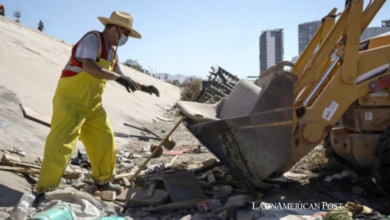
Cerro Chuño shows how unfinished repair can reproduce vulnerability. Vacated homes were occupied again, including by migrants. Evictions in the latest intervention began July 25, 2026; demolition followed September 2. Regional authorities say the first phase covers 220 of 705 targeted houses, fewer than one-third.
The full eviction and demolition program is budgeted at 10 billion Chilean pesos. That is a public bill for clearing buildings, not proof that the soil beneath them is safe. Removing residents must therefore be paired with preventing renewed exposure, not merely preventing renewed occupation.
Ayala describes his work to EFE as a first stone toward deeper investigation. The ambition is modest enough to be unsettling. Arica should not need a child of the contaminated neighborhoods to grow up, qualify as a scientist, and ask whether the ground is safe.
Also Read: Honduras Farm Planted Sunflowers for Cows and Harvested 70,000 Annual Visitors Instead