Dreams on Hold: Waiting for Home After Colombia’s Devastating Earthquake
Three months after Colombia’s magnitude 7.4 earthquake, two homeowners in Manizales face different futures. One still hopes his apartment can be repaired. The other knows hers must come down and is waiting to see how much her insurance will cover.
The Silence at Escalinata
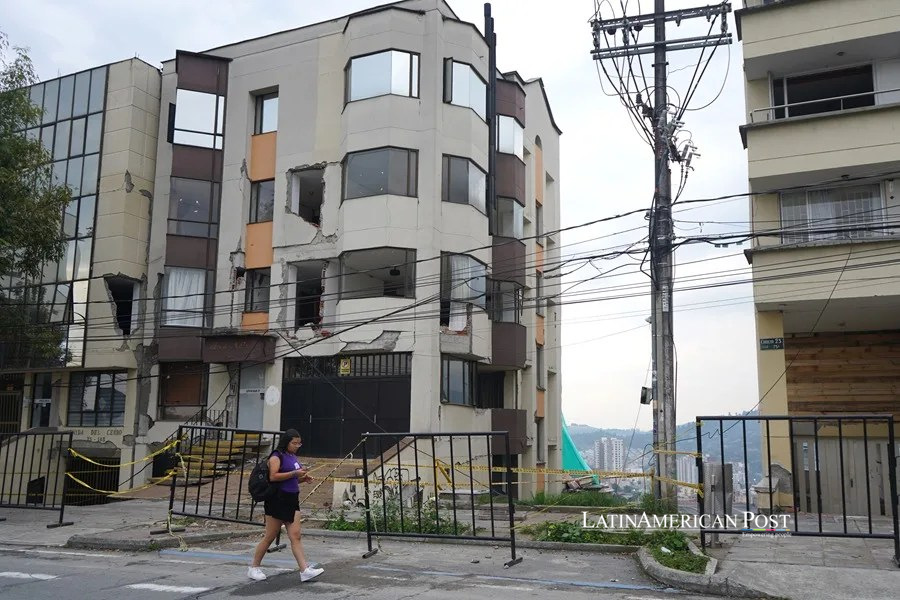
Jorge Iván Hurtado told EFE it is the silence that brings back the earthquake. His apartment in the Escalinata building in Manizales is quiet now, the beds, sofa, and refrigerator covered in dust from the rubble. The August 10 quake left deep cracks in the walls. Hurtado had just bought the place. He never got to move in.
At 61, he is waiting for local authorities to tell him whether Escalinata “has to be demolished or can be repaired,” he said. If repairs are possible, he can plan for a first night there. If the building comes down, he fears losing everything he invested. It is a particular bind for an apartment owner. He bought one part of a building whose fate has to be decided as a whole.
The quake killed at least 335 people across Colombia. In Manizales, a city in west-central Colombia, about 22,000 families were affected, and 60 buildings collapsed completely. A single collapsed apartment building can displace dozens of people. Escalinata adds nothing to the collapse count, even as its owners may face the expense of living elsewhere while they wait for news about their building.
Eight Orders in One Neighborhood
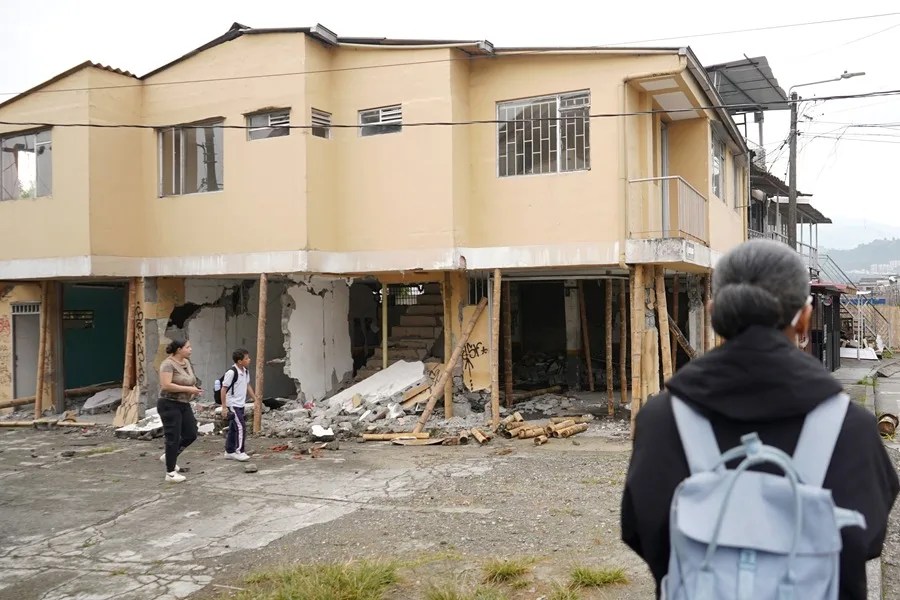
City hall added two buildings to its demolition list at the end of October, bringing the total to 15. Eight are in Milán, the neighborhood where Hurtado bought his apartment. That gives one neighborhood more demolition orders than the rest of the city put together. Demolition crews have already taken down a building in the Vélez neighborhood. In Milán, counting the orders is easier than telling owners when the crews will reach them.
Carlos García Guerrero, who until recently was planning secretary for the department of Caldas, told EFE that many buildings in the area were undergoing a “vulnerability study.” Determining whether structural repairs will suffice or demolition is necessary can take “two to three months,” he said. That is time spent on the technical assessment itself. For the families, the wait began on August 10, regardless of when an engineer could start work on their building.
Humberto Hurtado, a private civil engineer hired to conduct such assessments, told EFE that “the process is slow.” The analysis is detailed, and before demolition can proceed, the municipality has to issue a formal resolution. He has a separate concern about the buildings the city has already condemned. Too little demolition work has been carried out, he said, and Milán looks much as it did in the days immediately following the earthquake.
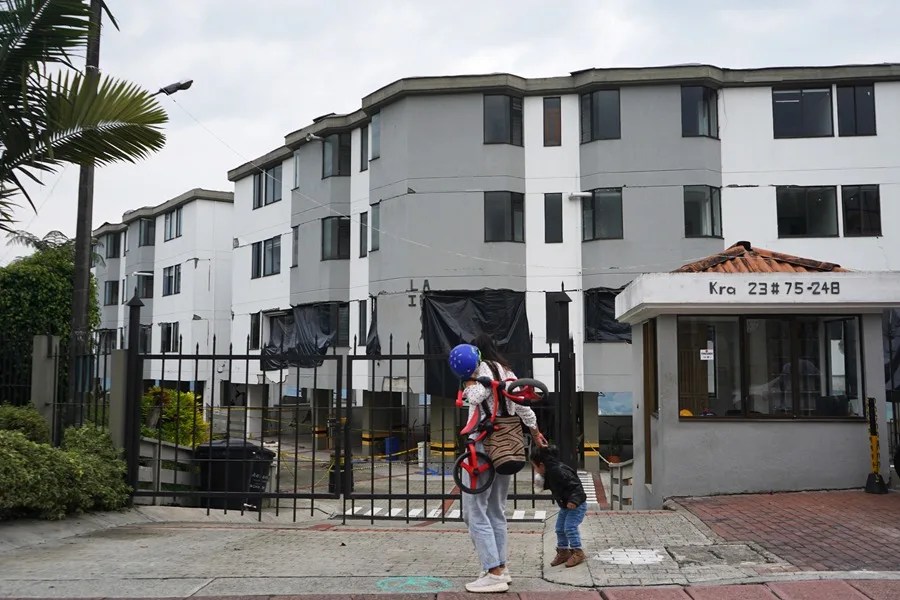
Claudia Leguimazón owns an apartment in Los Árboles, another building in Milán. She lived there. Her building has a demolition order, so she already knows the answer Jorge Iván Hurtado is waiting for. “I’m going to lose the apartment altogether, and that’s very hard,” she told EFE through tears. She hopes her insurance and the help offered by city hall will give her something to put toward starting over.
The Limits of Six Payments
The city offers 300,000 Colombian pesos a month for up to six months. If Leguimazón receives every installment, the total will be 1.8 million pesos. A single technical study can last the equivalent of a third to a half of that entire aid period. A household can budget for the next few weeks based on a monthly payment. Buying or building a comparable home requires knowing how much money will be there after the sixth one.
Roughly 70 percent of buildings in Manizales are uninsured, García told EFE. His estimate covers the city’s buildings as a whole. To find out how many of the 22,000 affected families can count on insurance, officials would have to look at the coverage on the properties that sustained damage. Even for an owner with a policy, the payout will help determine whether she can afford to live in the same neighborhood again.
García said the gap was forcing officials to rethink subsidies for buying new homes. He acknowledged how hard it would be to help people buy or build something equivalent to what they lost. A subsidy might get a family to another address while leaving it with substantial debt. For an owner who put years of earnings into the first place, that debt would be part of the earthquake loss, too.
Jorge Iván Hurtado has spent most of his working life in the informal economy and expects to retire without a pension. At 61, he has money tied up in a home that may yet shelter him in old age. If the city ultimately orders the building demolished, he will have fewer working years in which to put that kind of money together again.
His mother died two weeks after the earthquake. She was 92. He believes the stress she endured after the quake contributed to her death. A decision on Escalinata would settle only part of what August 10 left him. “What’s happened with my apartment has been very hard on me,” he told EFE. “I need some time to feel better mentally.”