Swedish-Mexican Latin Grammy Nominee Sofia Monroy Finds a Sad Man in ‘Woman’
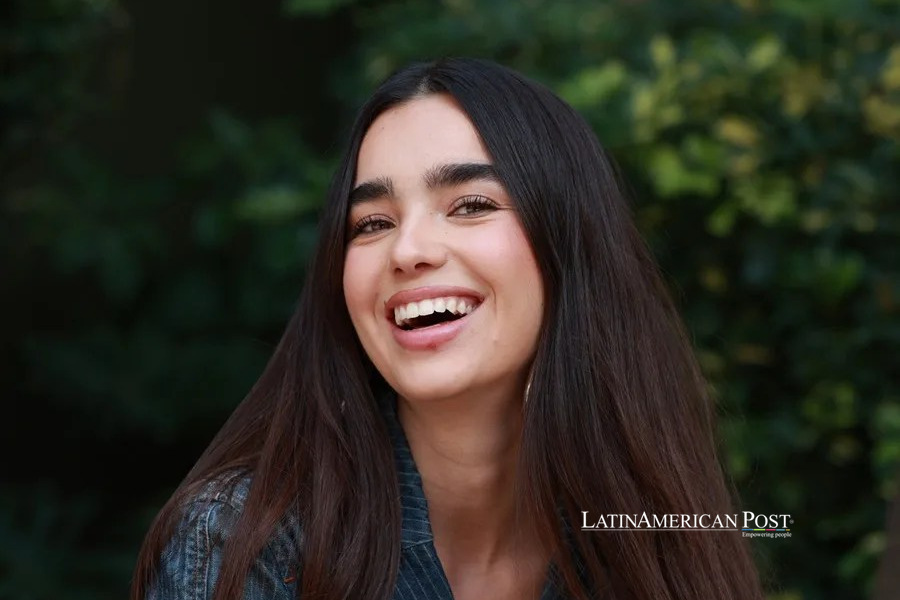
Sofia Monroy heard Mexico in her father’s restaurant in Sweden before she could speak Spanish. Now a Latin Grammy nominee for Best New Artist, she sings in two languages on WO[E]MAN, an album that owes as much to her mother as to her father.
A Restaurant Called Tapachula
Tapachula is a city in Chiapas, down near the Guatemalan border. For a girl growing up in Luleå, in northern Sweden, it was also the name of Dad’s restaurant. Her father liked Luis Miguel and Alejandro Fernández. At Tapachula, those big voices were familiar to Sofia Monroy long before she had enough Spanish to explain what either man was singing about.
Swedish women were in her ear, too. Monroy counts Robyn and Zara Larsson among her favorites, along with the voices she knew from ABBA and Icona Pop. All four made English records that people far beyond Sweden knew by heart. When Monroy started writing songs about ten years ago, English was the language that landed on the page. She already knew what singers from her part of the world could do with it.
Monroy had a practical explanation when EFE interviewed her in Mexico City. About ten million people understand Swedish, by her reckoning. She also had a more personal one. “I’ve never been one to follow the rules, so I never wanted to sing in Swedish,” she said. Now 27, she wants to write more in Spanish. She likes hearing how far Latin rhythms travel, and working in the language excites her.
Three years ago she left Luleå for Mexico and began learning Spanish from scratch. By then she’d spent roughly seven years figuring out what made a line work in English. As a beginner, she could come to a Spanish word; as an experienced songwriter, she could hear the melody it had to fit. That was the work behind Morena, her 2025 debut. She wanted to make songs that could tell her something about her own place in the country her father came from.

One Letter Changes the Question
“My dad died when I was eleven, and my mom had to work and take care of four kids,” Monroy told EFE. To the kids in that house, the person who brought home a paycheck and the person they depended on for care had the same name. Monroy says she grew up with little sense that certain kinds of work belonged to men and others to women. She carried a question from that household into the studio. What does it mean to be a woman?
She fit that question into six letters. Take the bracketed E out of WO[E]MAN, and you have “woman.” Put it back, and there’s “woe” alongside “man.” The man was there all along. The extra vowel tells you how he feels. “I realized there’s a sad man inside me who puts certain ideas in my head,” she told EFE. In the Spanish she learned as an adult, he has a plain enough name, “hombre triste.”
She worked those ideas into eleven songs and a short film directed by Jesús Soto Fuentes and Manuel Gómez González. A single track can land on a playlist and reach a listener who never hears the rest of the album. The film gives that listener another way into the whole project. “I’m neither Mexican nor Swedish, and this is the first record where I embrace that duality,” she told EFE.
Her phrase for the feeling is “alma dividida,” a divided soul. She thinks of the aunt or uncle who moves away and how far a family’s idea of home has to stretch. The internet suits her when she’s the one picking the music. She can call up a song in Arabic or French and feel it without speaking either language. As a musician, she feels the pressure to give the songs she sends back out a tidy label of their own.
New to Whom?
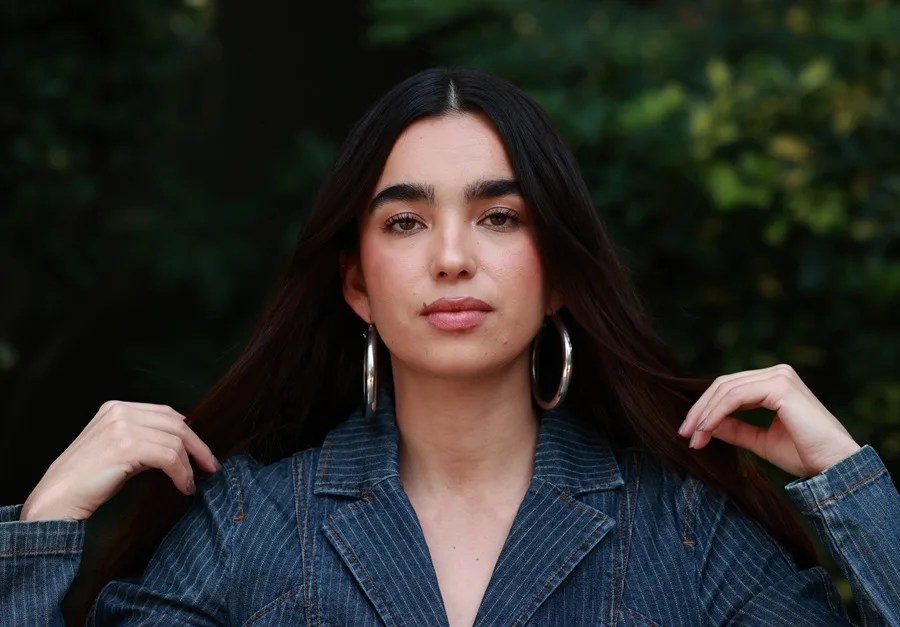
Six of the eleven Best New Artist nominees at the 2026 Latin Grammys in Las Vegas on November 12 are women. Among them is Delilah, a Mexican American artist in whom Monroy recognizes something of her own divided soul. The “new” part depends on who’s listening. Monroy has made two studio albums. Another nominee, Arath Herce, is up for Best Singer-Songwriter Album. A listener who comes across either musician through the awards gets the pleasure of a discovery. For a songwriter, that introduction can take a decade.
Across 60 categories, songwriter Edgar Barrera leads with ten nominations. Karol G is one of four acts with seven apiece. Her album Tropicoqueta appears twice on the list of nominees, once alongside Jorge Drexler for Album of the Year and again among urban albums. Monroy reads her corner of the ballot another way. Five other women have found audiences for music they make on their own terms. In a polarized world, she considers that a kind of counterculture.
Her delight came out in Mexican Spanish. “Qué chido,” she told EFE, that so many “mujeres chingonas” are making the music they please and people like what they hear. How cool to be among such badass women. The daughter who grew up listening to Luis Miguel at her father’s restaurant has found plenty of uses for the language she learned in Mexico. This time she wanted to cheer in it.