Cartagena Counted 87 Hostages. Who Was the Man Police Killed?
A widow says her husband went to buy buñuelos. Cartagena’s mayor says he led a supermarket siege. A hostage mistaken for a kidnapper offers a firsthand account of the man who gave the orders and what happened when police arrived.
Two Men Out for Breakfast
At 8:12 on Tuesday morning, Indira Lambis heard from her husband on WhatsApp. As she recalled it, Jailer Humberto Muñetón Zapata said he was stopping at Éxito for buñuelos, the little round cheese fritters Colombians buy for breakfast. Afterward, he would drive her to work. When he stopped answering, she knew where to look for the car. He had parked it where he usually did when they shopped.
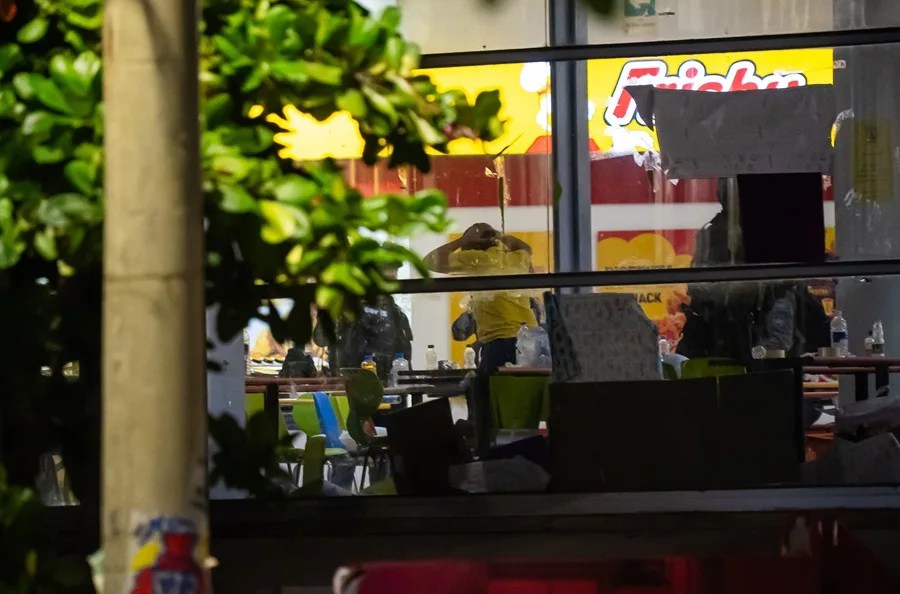
Someone else had gone to the same Cartagena supermarket for bread. Carlos Tapia had just left the gym. In the bakery section, he noticed how empty the place was. Two men went by with a security guard. They wore uniforms marked “Police,” though they didn’t look right to him. They saw him on his phone and kept going. He was on his way out when one of them pointed a gun at him and told him to get down.
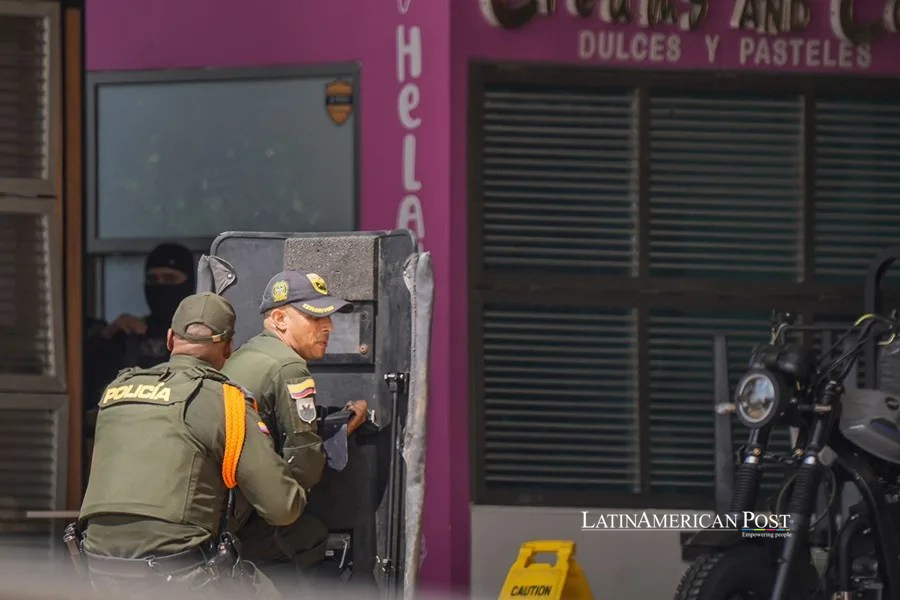
For nearly 17 hours on November 24 and 25, shoppers and employees were held at the Éxito in La Castellana. Prosecutors put the number at 87. Police and soldiers ended the siege early Wednesday. Tapia came out alive, his hands cuffed. Lambis kept looking for her husband among the people being released. On Wednesday afternoon, his family identified his body at the forensic institute. He was 51, the only person killed in the operation.
Lambis insisted her husband had no criminal ties. She told local reporters he was an industrial engineer who drove for a ride service between contracts. They lived two blocks away. Éxito was where they paid bills and bought groceries. Mayor Dumek Turbay said Muñetón had helped try to rob an armored cash truck, then led the men who took the hostages. He cited security cameras, drone footage and survivors’ testimony.
The Hostage in Handcuffs
By the time the men made their demands, the enterprise barely resembled the robbery authorities say they had attempted. Prosecutors say they wanted seven billion pesos, nearly $2 million, two armored vehicles and a clear road to Barranquilla. Two men from Medellín, Juan Camilo Torres Manco and Jhon Albeiro Mejía Blandón, have been charged with aggravated kidnapping for extortion. Both denied the charges.
Tapia spent about five hours in a chair facing what he thought might be explosives. His captors put on music. He tapped along with his fingers, asked for something to read, and got through portions of three books and an architecture magazine. From outside the store, the demands might have sounded like the work of men with an elaborate plan. From his chair, Tapia could see some of them getting drunk. He kept reading because it gave him something else to think about.
Later, videos of Tapia in handcuffs circulated online identifying him as a kidnapper. He told El Espectador he discovered that around 5 a.m. on Wednesday. On the question of who led the siege, this wrongly identified hostage offered some of the strongest evidence supporting the authorities. Two captors had taken off their uniforms, he said. The man who gave the orders kept his on. Tapia said he was close by when officers called on that man to surrender and heard the shots that followed.
The Defense Ministry said the dead man had been armed, guarding hostages and dressed like the other captors. Turbay had also said kidnappers changed clothes to blend in with civilians. Tapia’s account reconciles the apparent contradiction. It also explains why one image from the store could be so misleading. Anyone who saw only the video of Tapia leaving saw a man in handcuffs. The pictures captured his story about 17 hours later.
What the Cameras Could Show
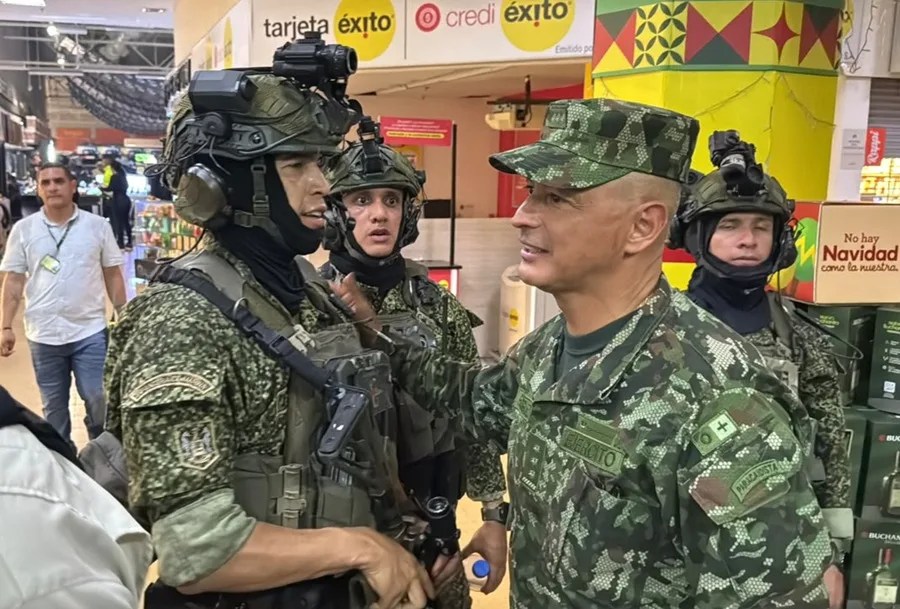
On Thursday, Noticias Caracol reported obtaining video showing a man holding a hostage at gunpoint as officers took control. Another survivor, Daniel Díaz, told the broadcaster he could hear an officer urging the man to let the hostage go. Díaz had seen who gave the orders during the siege. He also said the captors kept their faces covered. At the crucial moment, he was crouched down, listening. He looked back and saw the man fall.
What could the guns fire? Prosecutors said they recovered pellet guns and weapons designed to fire less-lethal rounds. Ballistics tests would establish whether any had been altered to fire live ammunition. A person on a supermarket floor had no way to settle that question. Neither does a viewer watching footage on a phone. At a hearing, a prosecutor said officers fired when Muñetón tried to attack them near the cell phone displays. Investigators still have to establish which weapon he held and what he did with it.
President Abelardo de la Espriella released a video showing Muñetón’s body and praised the operation as a demonstration of what happens when criminals challenge the Colombian state. His predecessor, Gustavo Petro, invoked the 1985 Palace of Justice siege in Bogotá, where cafeteria workers and visitors disappeared after security forces retook the building. By the time prosecutors announced the ballistics tests, one president had claimed a victory, and another had suggested that police killed a hostage.
Lambis had asked something simpler around noon Wednesday, while she was still searching. She had spoken to one police unit and then another. She had seen a photograph of a man on the floor. She wanted an official to tell her what had happened to the husband who had promised to drive her to work. “No matter how harsh the answer,” she pleaded, “please make it official.”