Paraguay Floods Put Families on the Move and Border Life on Hold
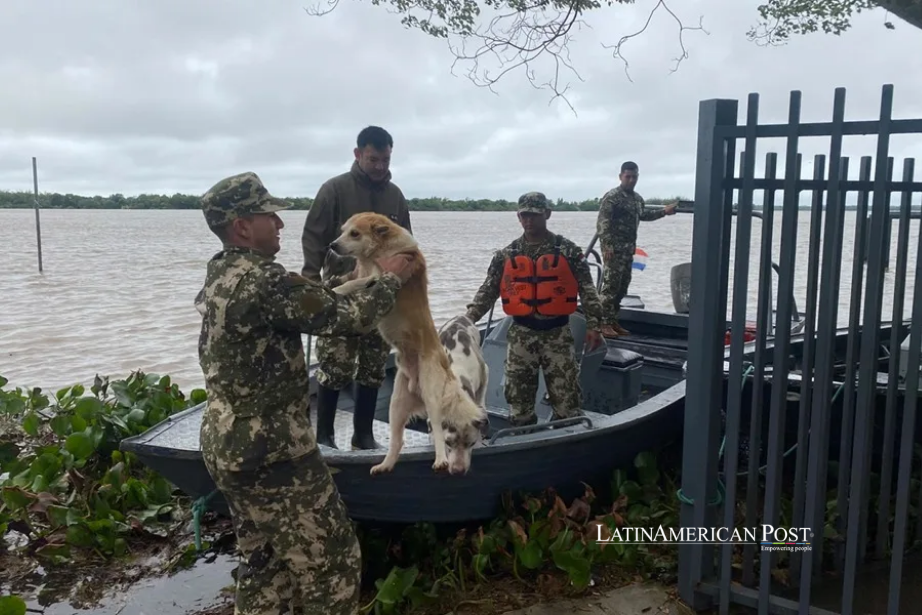
Paraná River flooding has forced more than 600 families from their homes in Paraguay, while 14 migration posts suspend operations. Behind the evacuation figures lies a regional emergency linking flooded neighborhoods, shared hydroelectric dams, and the routines of border communities.
Only the Roofs Remain Visible
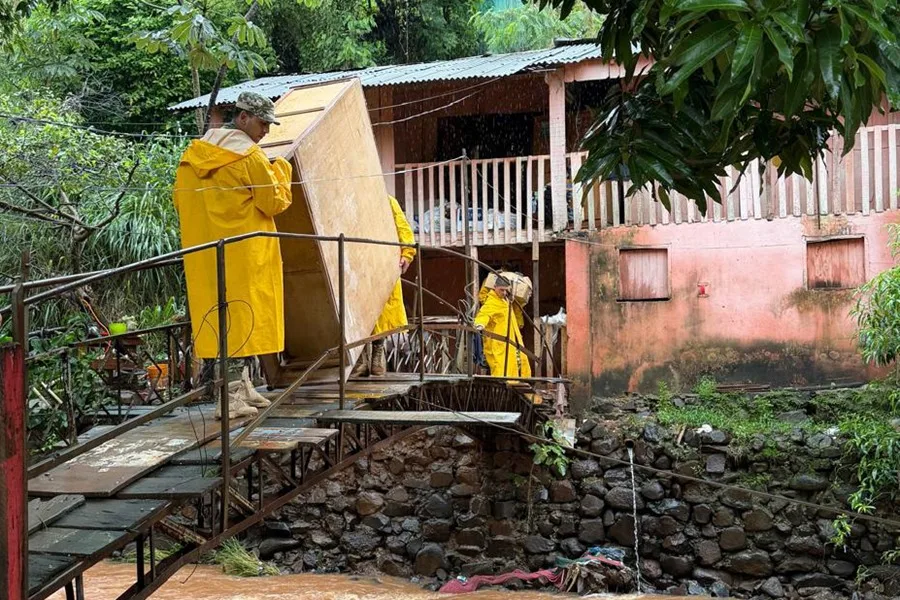
In some flooded neighborhoods of Alto Paraná, a roof is the last visible sign of a home. The rooms beneath it have disappeared under the river. Arsenio Zárate, Paraguay’s emergency secretary, described the scene to EFE: “In some, you can see only the roof.”
By Wednesday, October 14, more than 600 families had been evacuated along the country’s eastern and southern river communities. Authorities linked the heavy rains to El Niño. Zárate called the flooding cyclical, a familiar emergency that has again made ordinary homes uninhabitable.
The largest reported concentration was in Alto Paraná, bordering Brazil, where more than 300 families left at least 10 neighborhoods in Ciudad del Este and neighboring Hernandarias. About 200 more were evacuated in Ayolas, in Misiones, and roughly 50 in Cerrito, in Ñeembucú.
Another 50 families were evacuated in San Cosme y Damián, which lies in Itapúa. The locations therefore span four departments, showing how widely the emergency stretches along the Paraná corridor.
Those figures explain the total without producing a precise census. The three smaller groups add up to about 300 families; Alto Paraná’s tally takes the combined count above 600. They are families, not individuals, and no reliable head count can be calculated without household information.
Ayolas’s reported evacuation burden was four times that of either smaller district. That difference matters for shelter capacity and food deliveries, although numbers alone cannot capture a family’s medical needs or whether relatives can offer somewhere safe to stay.
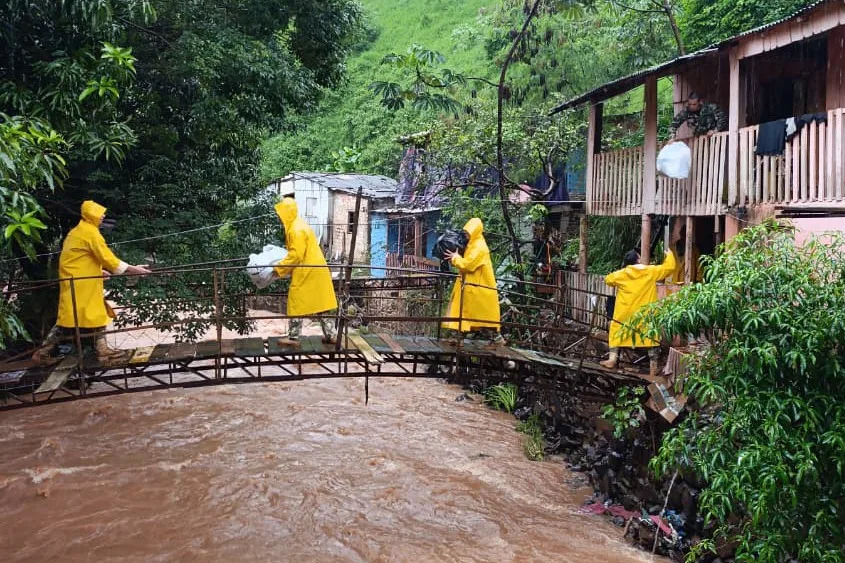
In Ayolas, Yacyretá described temporary shelters providing food, protection, and medical attention, with volunteers helping evacuations and preparing meals. The response rests on institutions but also on people doing the immediate work of getting neighbors through another night.
The River Beyond the Gates
The water connects Paraguay’s emergency to two neighboring countries through infrastructure they jointly administer. Itaipú is shared with Brazil; Yacyretá with Argentina. Both were managing rising inflows as communities along the same river moved out.
Itaipú initially warned that the Paraná could reach 121 meters above sea level on Wednesday. A later update said it had passed that elevation during the afternoon. That measurement identifies the water’s height against a reference level, rather than the depth of flooding inside houses.
Without an earlier reading at the same location, it cannot tell readers how far the river rose. Nor does one reading describe every affected town. For residents, the useful warning must connect the gauge to particular streets, homes and evacuation routes.
Itaipú opened its central spillway channel on Tuesday and reported closing it again Wednesday, with releases continuing through another channel. Yacyretá had opened its main reservoir gates Monday. Both operators were managing excess water through spillways as rains increased pressure on their reservoirs.
The figures behind Itaipú’s operation show why gate counts are an incomplete explanation. It reported spillway discharge increasing from 10,500 to 11,300 cubic meters per second between 11 a.m. and noon, a rise of approximately 7.6%.
The volume discharged matters more than whether one channel or two carries it. Itaipú said its reservoir helps regulate downstream flows within operating limits. Heavy rain across the reservoir area and the Yguazú tributary’s basin makes the wider watershed essential to understanding the flood.
That is also the challenge for public communication. A technically controlled release can coexist with inundated neighborhoods. Dam safety and household safety are connected responsibilities, but success at the first does not establish success at the second.
Borders Close Before Waters Recede
The disruption extends beyond homes. Paraguay’s migration authority suspended operations at 14 river control posts across Alto Paraná, Ñeembucú, Itapúa and Misiones, affecting routes shared with Argentina and Brazil.
Its October 13 notice said all authorized river crossings in Itapúa were temporarily closed. It also described suspended ferry and launch services and halted operations on the Argentine side at affected crossings. The obstruction involves the transport itself, alongside the administrative posts.
For border communities, that can turn a routine journey into a search for alternatives. The available figures do not establish how many travelers were stranded or how much commerce was lost. Fourteen closed posts measure disruption points, rather than its full economic cost.
The geography nevertheless shows why national relief cannot work in isolation. Paraguay may evacuate a neighborhood while neighboring authorities suspend a crossing and binational operators manage reservoir flows. Those decisions need compatible information and timing, even though different institutions make them.
The government had warned in July of a strong El Niño extending from August 2026 through March 2027. The current emergency thus falls inside an anticipated period of risk, raising questions about how forecasts become shelter plans, transport arrangements and protection for repeatedly exposed neighborhoods.
Itaipú identifies major regional floods in 1983, 1992 and 2014. That history gives authorities experience to draw on, while underlining how emergency rescue and safer housing address different stages of repeated exposure.
Calling floods cyclical describes their recurrence. It leaves open the harder question of what changes between them. For the families now displaced, the next meaningful milestone will be somewhere safe to live and a credible answer about returning home.