Bolivia’s Coca Dilemma: Tradition, Trafficking, and the Push for Tougher Laws
Bolivia’s expanding coca fields have exposed a difficult divide between ancestral livelihoods and cocaine trafficking. With cultivation exceeding the legal ceiling by 14,400 hectares, some growers now want prison sentences for unauthorized planting, testing the limits of community oversight nationwide.
The Leaf and the Livelihood
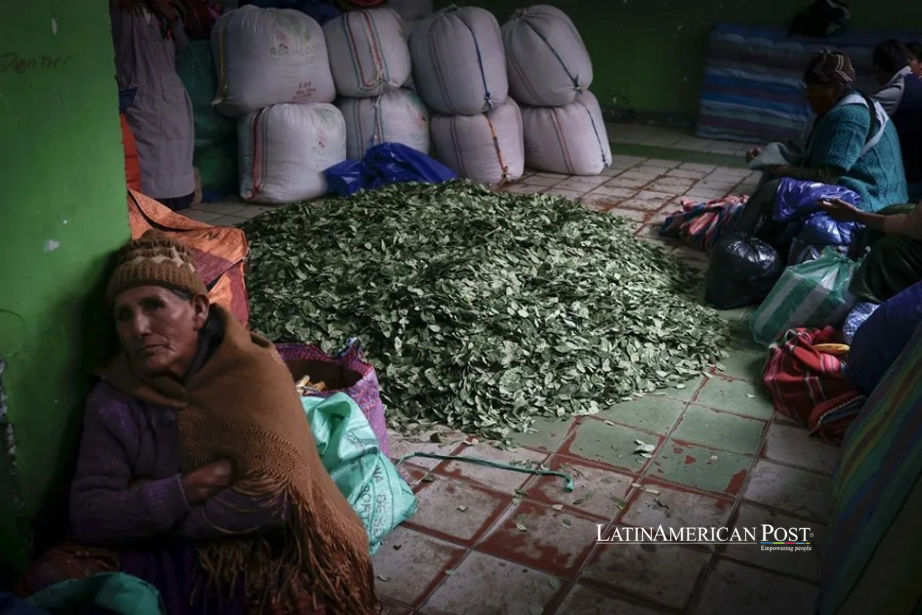
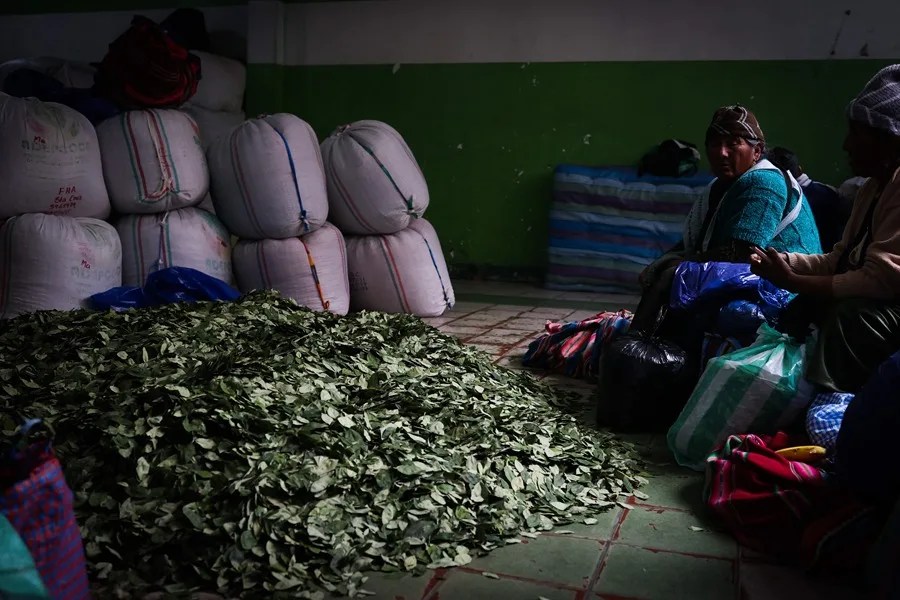
In La Paz’s coca market, Aymara women sell a leaf that pays for everyday necessities. For families in Los Yungas, the subtropical growing region in La Paz department, coca is work, income and inheritance. That makes the latest demand from their producers’ association striking: send people to prison for planting the same crop in places where cultivation is prohibited.
Daynor Choque, president of the La Paz coca growers’ association, Adepcoca, told EFE that thousands of producers depend on the plant for access to health care, education and employment. His argument underscores the human stakes of the debate. Treating the entire crop as a criminal commodity would threaten households whose livelihoods are grounded in a constitutionally protected tradition.
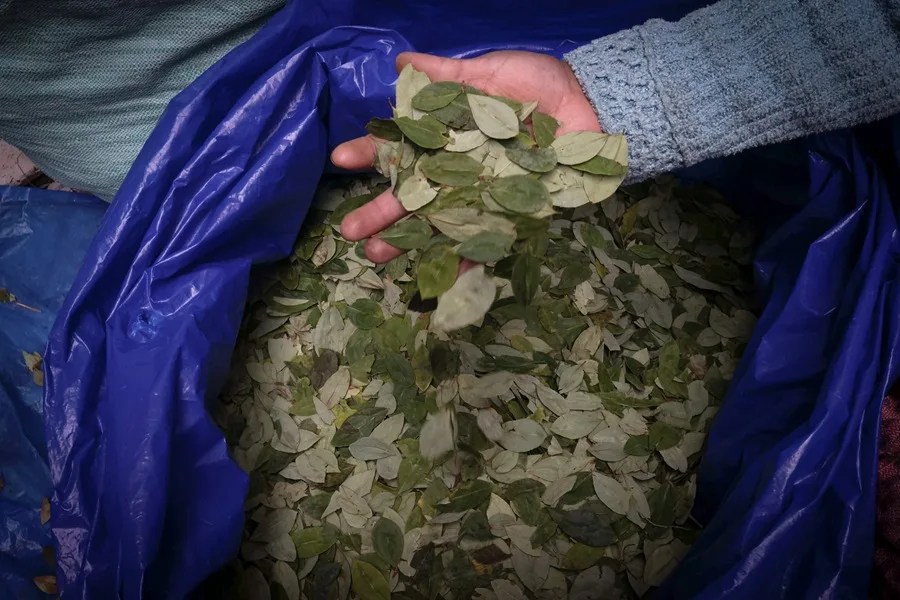
Bolivia’s Constitution recognizes coca as cultural heritage and a renewable natural resource, declaring that the leaf in its natural state is not a narcotic. Its legal economy encompasses infusions, flour, baked goods, cosmetics and medicines. Acullico, the traditional practice of chewing coca, also carries a social meaning that cannot be captured by measuring acreage or counting seizures.
Choque described it to EFE as a symbol of unity and reciprocity at assemblies and festivities. Bolivia marks that tradition each January 11, commemorating its 2013 return to the United Nations drug convention with a reservation allowing acullico domestically. The distinction is politically consequential: protecting Indigenous practice while restricting illicit supply requires the state to distinguish activities involving the same plant.
The Map Behind the Surplus
The United Nations Office on Drugs and Crime recorded 36,400 hectares under coca in 2025, up 7 percent above the statutory ceiling of 22,000 hectares, leaving 14,400 hectares over the limit. Put another way, cultivation stands roughly 65 percent higher than the authorized national maximum. The excess represents nearly two-fifths of the total planted area.
Those figures measure land, rather than the volume of cocaine produced. Yields, lawful consumption and diversion into illegal processing are separate questions. Even so, the regional breakdown makes clear that expansion is uneven. Coca cultivation in the Trópico de Cochabamba rose from 14,275 to 17,460 hectares, up 22 percent, while Los Yungas contracted by about 4 percent.
Los Yungas fell from 19,230 to 18,430 hectares, a loss of 800 hectares. Cochabamba’s increase was 3,185 hectares, almost four times that reduction. A shrinking regional total does not establish that every remaining plot is authorized. It does, however, show why growers facing contraction might view restrictions on expansion elsewhere as economically important and legally necessary.
The geography also carries political history. Los Yungas farmers cultivated coca before Spanish colonization. Cultivation expanded in the Trópico during the 1980s, and the region became the union and political stronghold of Evo Morales, president from 2006 to 2019. Any attempt to control production consequently touches organizations whose influence rests on defending growers and their livelihoods.
Former Interior Minister Saúl Lara told EFE that more than 90 percent of production in the Trópico goes into cocaine paste and cocaine hydrochloride. That is his assessment; the cultivation totals alone cannot substantiate that percentage. His broader warning identifies two intertwined enforcement problems: excess coca production and the criminal processing that converts part of the harvest into drugs.
Prison Meets the Supply Chain
The government’s new antidrug policy addresses cultivation and transnational organizations. Mónica Mendoza, the United Nations drug agency’s representative in Bolivia, told EFE that the country had become an operational center for cartels. Lara also described a transit route carrying drugs from Peru through Bolivia toward Brazil and Europe. Controlling domestic fields therefore addresses only one component of a much larger business.
Choque’s proposed law would impose five to eight years in prison for cultivation in unauthorized places, including protected areas, and punish unauthorized sales. It remains a proposal. Its significance lies partly in who is demanding punishment: a growers’ leader arguing that illicit expansion endangers the ancestral value of the crop his members depend on.
“State policies are not working,” Choque told EFE, also criticizing the community oversight required under Bolivia’s coca law. That admission challenges the idea that producers can contain expansion through collective discipline alone. Moving toward imprisonment would place greater responsibility on public authorities to establish where cultivation is permitted, demonstrate violations, and enforce restrictions consistently across politically organized growing regions with competing economic interests and loyalties.
Prison terms, however, would reach only as far as enforcement does. A grower planting outside an authorized zone and an organization financing laboratories or coordinating international shipments occupy different positions in the trade. A credible strategy would need to establish those connections. Otherwise, more severe penalties for planting could coexist with criminal networks retaining their money, processing capacity and routes.
Promoting coca’s legal derivatives, by itself, does not establish how much surplus legitimate demand could absorb. That would require reliable national consumption figures alongside estimates of industrial demand. Bolivia’s challenge is to preserve an ancestral livelihood while making cultivation limits enforceable and trafficking costly. For the market vendors in La Paz, the distinction determines whether their leaf remains an ordinary source of income or carries an ever heavier criminal shadow.