Latin America Hears Pope’s Silence Plea as Phones Feed Addiction, Steal Sleep

Pope Leo XIV asked Catholics to turn down screens for Lent, make room for silence, and visit the lonely. In Latin America, where phones book clinic visits, the request collides with evidence linking use to addiction, poor sleep, and obesity.
A Lenten Call for Quiet
On Sunday in St. Peter’s Square, during the Angelus, Pope Leo XIV made a request that sounded almost old-fashioned because it was so plain. Give space to silence. Turn off the television a little. Turn off the phone a little. Then do something that cannot be refreshed or scrolled: dedicate time to people who are alone, especially the elderly, the poor, and the sick.
It was framed as penance, but not the kind that shrinks a person. These acts, he said, “far from impoverishing our humanity, enrich it, purifying it and strengthening it on its path toward a horizon.” The point was not deprivation for its own sake. The point was attention. “Along with prayer and works of mercy,” he urged Catholics to “give space to silence, let us turn off a little the televisions, the radio, and the mobile phones.”
Then he pushed it into the places where habits actually live. Families. Workplaces. Communities. “Let us listen to one another,” he said, and spend time with those who are alone. He also asked Catholics to renounce what is superfluous and share “what we save with those who lack what is necessary.”
Silence is a sensory word. You feel it in the room the moment a device goes dark. The trouble is that for much of Latin America, the phone is not just the noisy thing you should put down. It is also the tool that keeps life stitched together, especially when public systems run thin.
So the Pope’s appeal lands in the region like a small stone dropped into deep water. The ripples touch faith, yes. They also touch on public health, the shape of modern work, and how loneliness is managed or ignored.
In Latin America, smartphone adoption is high, with over ninety percent coverage in some areas, according to the notes. That fact alone changes the meaning of “turn it off.” It is not simply a moral instruction. It becomes a negotiation between what people need and what they cannot stop doing.
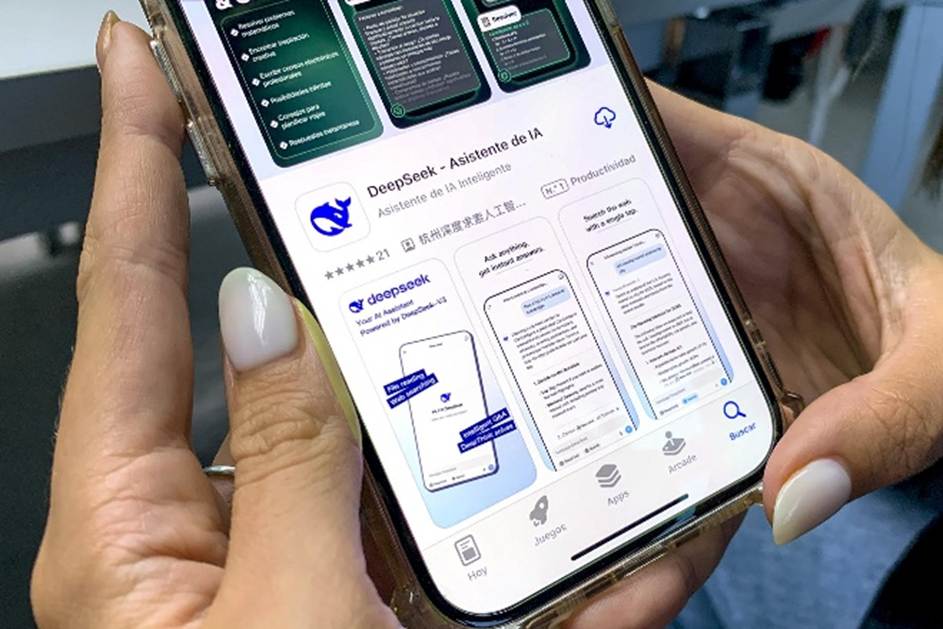
A Health Tool That Turns Into a Trap
Start with the good news, because it matters. Phones have become a bridge to care. Sixty-five percent of patients use smartphones for health information, and about one-third use them to arrange clinic visits, according to the Journal of Medical Internet Research. Those are not marginal behaviors. They are daily routines, especially in the wake of the pandemic surge in phone-based health services described in the notes.
In Colombia, telemedicine contacts rose from 1.4 million to 101 million in 1 year, according to the notes. In Uruguay, mobile tracking was used to monitor eighty-six percent of early COVID-19 cases, the notes add. Mobile health programs in Honduras, Mexico, and Bolivia have used weekly calls and apps to help patients manage diabetes, high blood pressure, and depression. In Brazil and other countries, apps are increasingly used to support the diagnosis of non-infectious diseases such as hypertension and chest pain, according to the Inter-American Development Bank.
This part of the story complicates the Pope’s instruction. In a region where a clinic visit can begin with a thumb on glass, silence becomes both a virtue and a hurdle.
But the same device that helps people find care can reshape their bodies and minds in quieter, uglier ways. A significant thirty-two point five percent of medical students in Latin America show signs of mobile phone addiction, directly linked to poor sleep quality, reported the Journal of Medical Internet Research. Another multicenter study described in the notes found an average poor sleep score of 7.26 among medical students across six Latin American countries, measured by the Pittsburgh Sleep Quality Index.
Sleep is not a lifestyle accessory. It is a foundation. When it goes, everything else strains.
Overuse is also associated with headaches and musculoskeletal pain, with fifty-one to fifty-two percent reported in some studies, according to the Journal of Medical Internet Research. The language here is clinical, but the lived experience is familiar: the stiff neck, the sore shoulder, the posture that collapses without you noticing until the day ends.
Then there is the weight of the risk. Overuse is associated with sedentary behaviors leading to a forty-three percent higher risk of obesity among heavy users, reported the Journal of Medical Internet Research. Using a smartphone for five or more hours daily increases the risk of obesity by forty-three percent, according to the American College of Cardiology, as cited in the notes. The notes connect that pattern to sedentary behavior and increased consumption of sugary drinks and fast food.
The everyday observation is almost too ordinary to register. People look down. A lot. Not because they are weak, but because the device is designed to keep them there.
And in parts of the region, the scale of time matters. In countries like Peru, users spend an average of nine hours daily on apps and social media, according to the notes citing ScienceDirect.com. Nine hours is not a habit. It is a climate.
The phone can even be a safety hazard. Distracted, excessive use is linked to increased accident risks, according to the Journal of Medical Internet Research. It is not difficult to imagine how. The screen pulls attention away from what is right in front of you, and real life does not pause when you glance down.

Silence as a Public Health Argument
The Pope’s appeal is religious language, but it echoes something public health researchers have been warning about for years. Not because faith and medicine are the same, but because both are concerned with human limits. Attention is limited. Sleep is limited. The body is not an endless resource.
What this does is open a policy question that is easy to dodge and hard to resolve: how do institutions and communities encourage less harmful phone use without cutting people off from care, information, and connection?
The notes offer one practical benchmark. Experts suggest reducing non-work screen time to under two hours daily to mitigate risks, according to Reid Health. That is not a commandment. It is a line drawn to protect sleep, posture, and mental health without pretending the phone can disappear.
The Pope, in his own register, is asking for something similar. Not a bonfire of devices. A little less. A little quieter. More listening. More time for the elderly, the poor, and the sick: less superfluous consumption, and more sharing.
There is a Latin American edge to this that feels particularly sharp. The region’s reliance on phones is tied to real needs, including access to health services. Yet the region’s vulnerabilities, including structural inequality and persistent violence and poverty in many places, also mean the costs of addiction, poor sleep, and obesity land unevenly. The people most likely to rely on a phone for access can also be the people least able to absorb the health harms that come with constant use.
So the Pope’s Sunday message does not float above the region as a spiritual abstraction. It drops into the middle of a daily contradiction. Phones can connect. Phones can isolate. Phones can help you schedule care. Phones can erode the sleep that keeps you well enough to seek care in the first place.
The wager here is not whether Latin America will abandon smartphones. It will not. The wager is whether the region can build habits and public conversations that treat attention like a shared resource, not a private failure. Whether silence, even a small slice of it, can be reclaimed as something practical. Something humane. Something that, as the Pope put it, enriches rather than impoverishes.
Also Read: Uruguay Virtual Game School Reduces Need to Relocate for Tech Careers