How Digital Innovation Is Transforming Entertainment in Latin America and Beyond
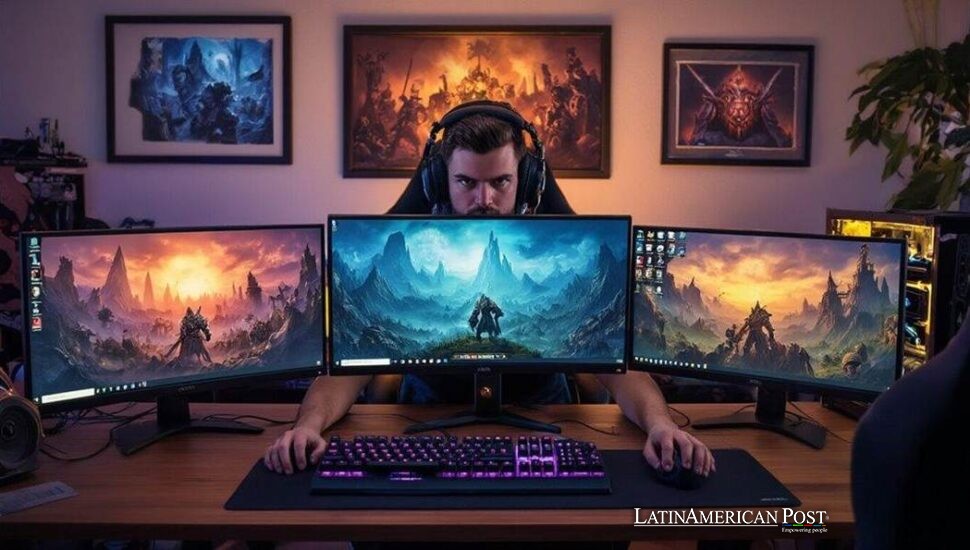
Digital innovation is transforming entertainment faster than any previous technological shift. Across streaming platforms, interactive media, and online gaming ecosystems, the industry is moving away from passive consumption toward structured, performance-driven experiences.
Traditional entertainment relied heavily on chance. Viewers tuned in at fixed times, players joined random matches, and outcomes were unpredictable. Digital platforms have fundamentally changed this model.
Algorithms now curate content. Platforms track engagement. Services are optimized to reduce friction, randomness, and wasted time. Entertainment is increasingly engineered rather than improvised.
This shift is especially visible in online gaming. In high-difficulty environments like World of Warcraft’s Mythic content, random participation often leads to failure. Structured digital services — including mythic boost solutions — reflect a broader industry trend: replacing randomness with engineered success through coordination, data, and expertise.
Gaming as the Blueprint for Modern Digital Entertainment
Online games have become a living laboratory for digital innovation. They combine real-time interaction, complex systems, social coordination, and performance measurement.
Modern players no longer simply play. They:
- optimize builds and strategies
- analyze logs and performance data
- follow meta changes
- invest in services that improve efficiency
These behaviors mirror trends across the wider entertainment industry:
- viewers demand on-demand content and skip ads
- users expect seamless UX and predictable outcomes
- communities value expertise and structure over chaos
Gaming services, coaching, and guided experiences are no longer exceptions — they are part of the new standard.
Latin America and Latino Audiences in the Digital Shift
Digital entertainment growth is increasingly driven by Latin America and Latino audiences worldwide. These communities are among the most active adopters of mobile gaming, streaming platforms, and online multiplayer ecosystems.
For many users in Latin America, structured digital services solve real problems: limited free time, unstable schedules, and fragmented online communities. Optimized entertainment experiences offer reliability and consistency that traditional, unstructured models often fail to provide.
As a result, professionalized gaming services, curated content platforms, and performance-driven entertainment models are gaining traction across these markets.
Why Unstructured Participation Is Losing Relevance
Unstructured participation increasingly leads to frustration across digital entertainment.
In gaming, it shows up as failed PUG runs.
In streaming, it appears as irrelevant recommendations.
In live digital events, it results in poor production quality and weak engagement.
Audiences are moving away from:
- unclear expectations
- inconsistent quality
- wasted time
Instead, they choose platforms and services that deliver clarity, reliability, and optimized experiences.
The Professionalization of Digital Entertainment
Digital innovation has blurred the line between hobby and professional service. Content creators operate like production studios. Esports teams resemble traditional sports organizations. Gaming carries, coaching, and curated play sessions follow the same logic.
These services succeed because they:
- reduce learning curves
- eliminate unnecessary failure
- compress time investment
- deliver predictable outcomes
Entertainment becomes efficient — not just enjoyable.
Technology, Data, and Coordination at the Core
This transformation is powered by technology. Voice communication tools, performance analytics, real-time monitoring, and platform integration allow entertainment experiences to be coordinated with precision. In modern digital ecosystems:
- data replaces guesswork
- systems replace improvisation
- structure replaces chaos
Entertainment becomes measurable, repeatable, and scalable.
Time as the Ultimate Digital Currency
Time has become the most valuable resource in entertainment. Users are increasingly willing to pay — with money or attention — to avoid inefficiency.
Skipping tutorials, accelerating progression, unlocking content faster, or accessing premium guided experiences are all driven by time optimization. Gaming services illustrate this perfectly: a few coordinated hours can replace days of trial-and-error.
This mindset is spreading across entertainment platforms globally, including fast-growing markets in Latin America.
The Future of Entertainment for Global and Latino Audiences
As digital innovation continues, entertainment will become:
- more personalized
- more outcome-focused
- more service-oriented
Audiences will expect not just content, but solutions — experiences designed to meet specific goals with minimal friction.
Gaming, streaming, virtual events, and interactive media are converging into a unified ecosystem where structure, expertise, and technology define success.
How Digital Innovation Is Refining Entertainment
How digital innovation is transforming entertainment in Latin America and beyond isn’t about removing fun — it’s about refining it. By reducing randomness, leveraging data, and introducing professional frameworks, modern entertainment delivers better experiences in less time.
From gaming services to global streaming platforms embraced by Latino audiencesworldwide, the future of entertainment is engineered, optimized, and predictable — and users are already choosing it.