Bolivia Gives Departed Pets Their Day of the Dead and Dinner Too
In La Paz, Bolivia, a Day of the Dead altar for pets brings Mexican remembrance into Andean tradition, giving grieving families bread, kibble, and a public place to acknowledge companions whose absence can feel much larger than their small bodies.
A Place for Missing Paws
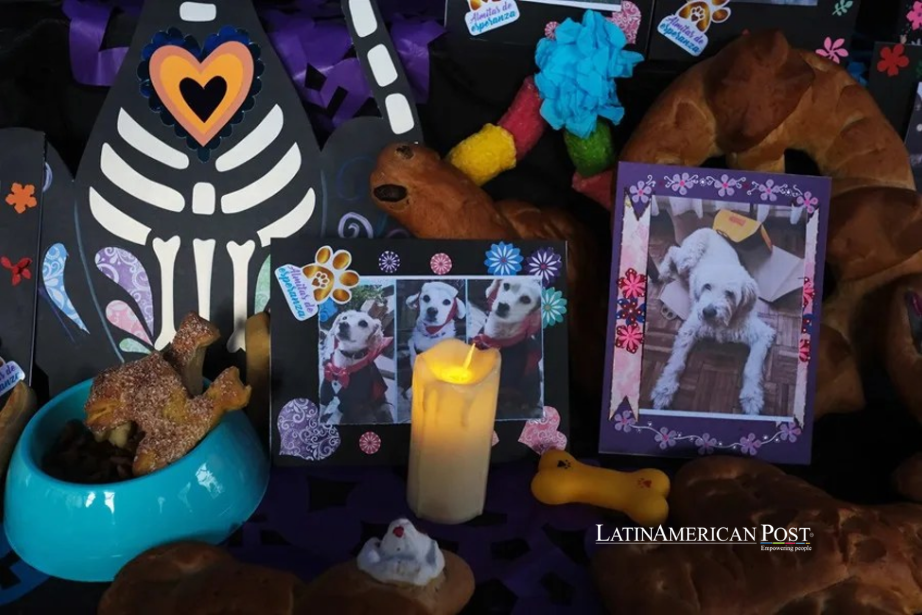
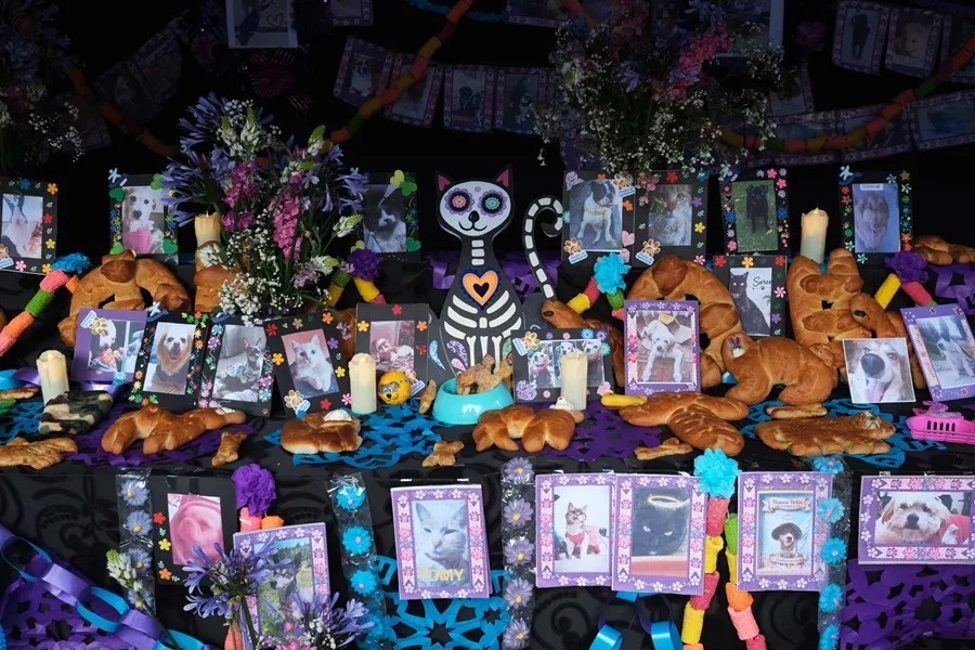
The bowls held kibble. Rubber balls sat among colored ribbons, photographs and drawings of dogs and cats. At the altar the La Paz city government organized on Tuesday, remembering the dead meant setting out what they might once have wanted. The guest list extended beyond dogs and cats to include parrots and hamsters.
Each picture had a decorated frame. Some carried a name; others showed an animal beside its owner, preserving both the relationship and the face. Residents brought additional photographs to the display. Municipal workers handed small bags of kibble to people who approached to pray. Neighbors could stand before private keepsakes together.
“Our pets, who accompany us for so long and whom we love like family, also deserve a commemoration, a recognition,” council member Ángela Calabi told EFE. Her explanation located the tribute in an ordinary obligation: years of companionship deserve an answer after death.
The ceremony borrows Mexico’s Day of the Dead for Pets, but its language is distinctly local. In Bolivia’s Todos los Santos tradition, families welcome departed souls at noon on November 1 with food and drink, then bid them farewell with prayers the following day. The table makes an invisible visit tangible.
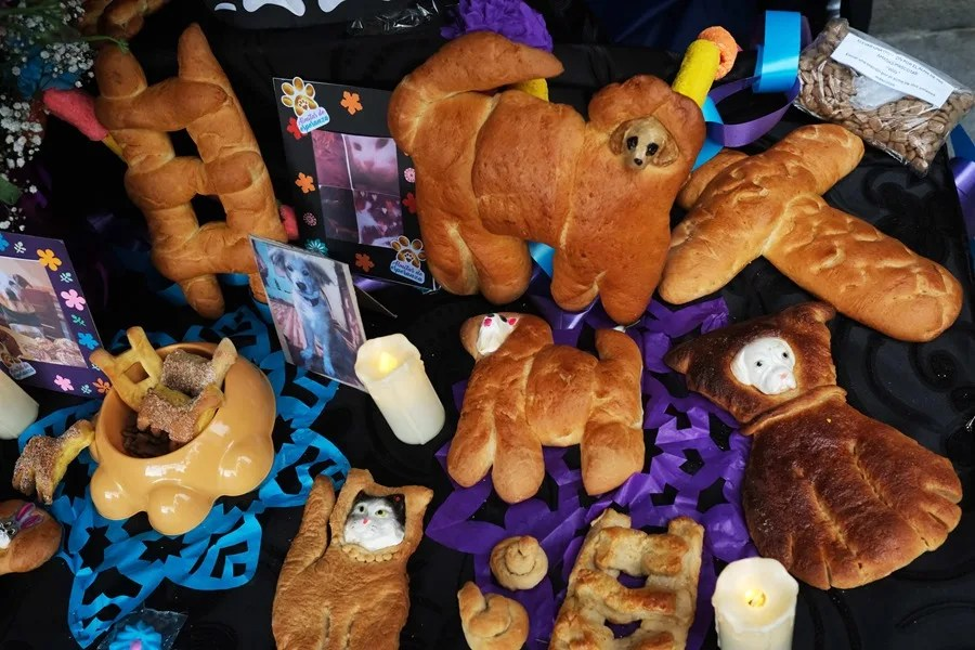
Here, the t’antawawas, traditional breads shaped like people for the annual observance, acquired animal counterparts called “t’anta Guau Guau.” Even the name carries a bark. Bread, hospitality, and an Andean understanding of remembrance turned a borrowed commemoration into something new. Pets received a place within an existing grammar of family mourning.
When Grief Gets a Witness
The altar’s psychological force lies partly in what a pet leaves behind: a routine with nobody left to receive it. Feeding, walking, cleaning, and greeting organize a relationship through repetition. After a death, the urge to perform those tasks can outlast their purpose. A bowl of kibble on an altar gives that impulse somewhere to go.
The offering lets care take a different form without promising that sorrow will disappear. Someone who can no longer feed an animal can still prepare something in its memory. Loss remains irreversible, while affection retains an action. For a person accustomed to being needed, that small act can make helplessness less absolute.
The question of permission also arises. Calling an animal family does not guarantee that everyone will take its death seriously. A mourner may feel compelled to justify the sadness or embarrassed by how intense it is. Calabi’s public recognition offers a different response: the relationship itself is enough to warrant remembrance. Nobody needs to rank a hamster against a dog.
The photographs deepen that recognition. Names distinguish one animal from another; portraits with owners place companionship inside a human biography. These are particular losses, with particular histories. Bringing those images together offers recognition without requiring strangers to explain everything. A person can approach with a picture and let it speak.
Giving mourning a date also creates a return. Bolivia’s annual welcome and farewell to souls supplies a rhythm for revisiting absence. Adapting that rhythm to pets makes room for continuing attachment within a communal calendar. Remembering can become something people prepare for together, rather than a feeling each household must find language for alone.
What the Photographs Can Tell
Calabi told EFE that organizers expected about 150 photographs and received substantially more. That gap is revealing, but its meaning has limits. Without a final tally, the percentage above that estimate remains unknown. Photographs also cannot establish how many households participated, how many animals each family remembered, or how representative the gathering was of La Paz.
The firmer conclusion is narrower: demand for inclusion exceeded the municipality’s forecast. The event’s third consecutive year also shows continuity, although it does not establish how quickly participation has grown. Calabi said organizers anticipate a larger altar with more photographs each year. That is a plan and an expectation, rather than a measured trend.
Municipal involvement gives those numbers political meaning. By organizing the tribute, La Paz officials recognized pet bereavement as worthy of shared space and public attention. The materials carried that recognition in accessible forms: photographs, bread, toys, and food. Participation centered on bringing a memory to a common altar, without an elaborate individual monument to make a relationship visible.
The exchange between Mexico and Bolivia is equally specific. The Mexican custom provides an occasion; the Andean altar gives it a recognizable structure. Bread shaped like an animal makes the adaptation visible and edible. This is how a borrowed ritual can take local root: people find familiar gestures within it and use them to address a loss their existing ceremonies can now hold.
For the people arriving with photographs, the tribute offered something less abstract than cultural exchange or municipal policy. There was a place to put the picture. Food was set before it. And other people were willing to recognize why these small preparations mattered. Around that table, a life measured in meals, greetings, and daily company could still receive an answer from the people left to remember it.