Stuck for Years: Bogotá’s Night-by-Night Housing Trap
Behind Bogotá’s tourist streets, daily rental rooms shelter more than 12,000 people whose unstable earnings make every bedtime a financial deadline. An EFE report shows how for aging workers living alone, these supposedly temporary lodgings have become permanent addresses without the security that permanence promises.
A Decade of Paying for Tonight
Germán Ricardo Cano’s room has no window. Clothes hang from its walls, an old television occupies its familiar place, and a license plate from a car he once owned survives among the belongings. Outside, Bogotá’s historic center offers visitors the pleasures of looking backward. Inside, Cano, 57, keeps fragments of a life that included an apartment, a job, and more company.
After losing his job and seeing his daughters leave for the United States, he moved into a pagadiario, a lodging paid for each day. A friend had suggested it. Ten years later, he pays 15,000 pesos nightly, about $4. Each morning he heads out seeking work assembling aluminum and glass display cases or picking up shifts in cafeterias.
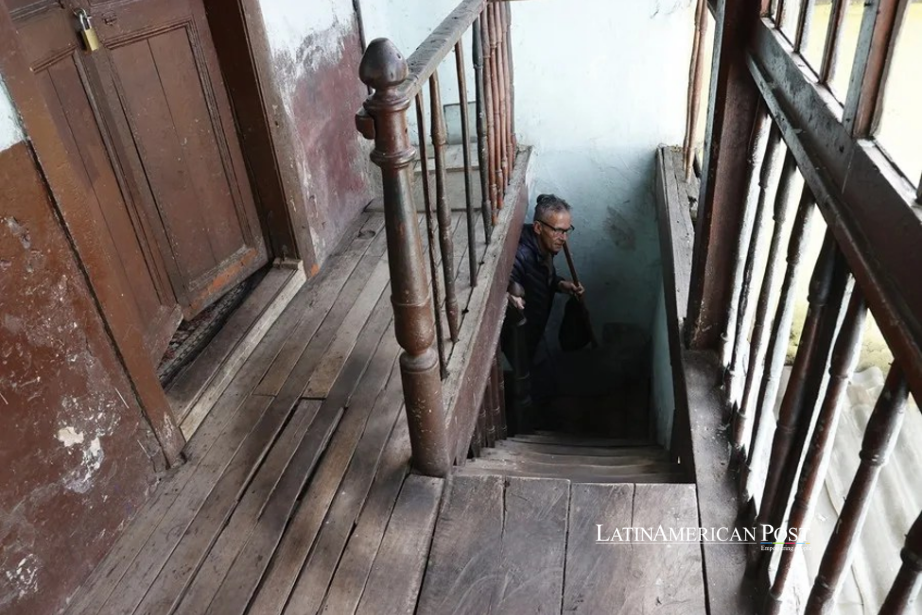
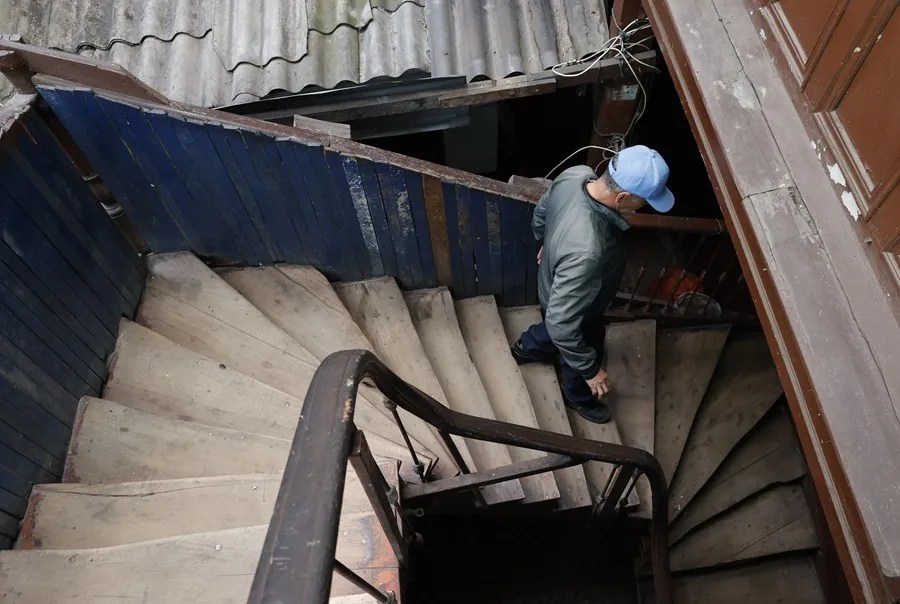
The house stands roughly a block from the seat of national government. Its colorful facade gives way to creaking stairs, damp walls, and rooms secured with padlocks. Light reaches the interior through a courtyard. That proximity makes the inequality unusually legible: governing institutions and residents struggling to finance another night occupy almost the same patch of the capital.
Cano’s rate adds up to 450,000 pesos over 30 nights. Paying in small installments does not make the cumulative obligation small. It simply matches the collection schedule to uncertain earnings. The arrangement solves tonight’s problem while leaving tomorrow’s untouched, a precarious fit for workers whose jobs arrive intermittently but whose need for shelter never takes a day off.
These lodgings vary considerably. Some charge 8,000 pesos a night for rooms with bunks that accommodate as many as 10 people; others resemble hotels. Officials describe a population largely comprising migrants, LGBTQ people, and people with disabilities working informally. Their circumstances differ, but unstable income repeatedly turns an emergency housing option into an enduring way of life.
The Body Pays the Difference
Hugo Alberto Sanabria Carreño leaves before sunrise to sell word search booklets and school supplies on public transportation. At 67, with a disability and limited mobility, he tries to earn enough before midday. Afterward, he eats at a community dining hall and rests. Moving through buses leaves his knees and ankles swollen and painful.
His body therefore sets a ceiling on his earnings, even as the room requires another payment. Rest protects his health but consumes time he might otherwise spend selling. For an older informal worker, that calculation is punishing. A sore ankle is also an economic event, narrowing the hours available to meet a bill that keeps returning.
Sanabria has spent seven years as a pagadiario. His two sisters live more than 450 kilometers away, and contact is limited. At Christmas, he shuts himself in with the television. Cano’s daughters are abroad; Sanabria’s sisters are elsewhere in Colombia. Family exists, but distance leaves these men handling the daily mechanics of survival largely on their own.
A few doors away, Gustavo Zuluaga, 69, lives among compact discs, dolls, pictures and a stereo. He has worked on the street for more than half a century and lived here for a decade. Selling Colombian souvenir magnets and hats to foreign visitors puts him inside the tourist economy, where somebody else’s optional purchase helps finance his most essential expenses.
Zuluaga reports days yielding 30,000 or 40,000 pesos, others only 10,000, and some nothing. For someone paying Cano’s rate, a 30,000-peso day would send half the proceeds toward lodging alone. At 40,000, the share would still approach 38 percent. A 10,000-peso day would leave a shortfall before food or transportation is even factored in.
Help Reaches the Doorway
A monthly government payment for older people with scarce resources helps Zuluaga cover expenses. So does lunch at a community dining hall from Monday through Saturday. Such assistance reduces what he must find on the street. It also shows how several modest supports must work together: a room, a meal, and the physical capacity to keep selling sustain a balance vulnerable to interruption.
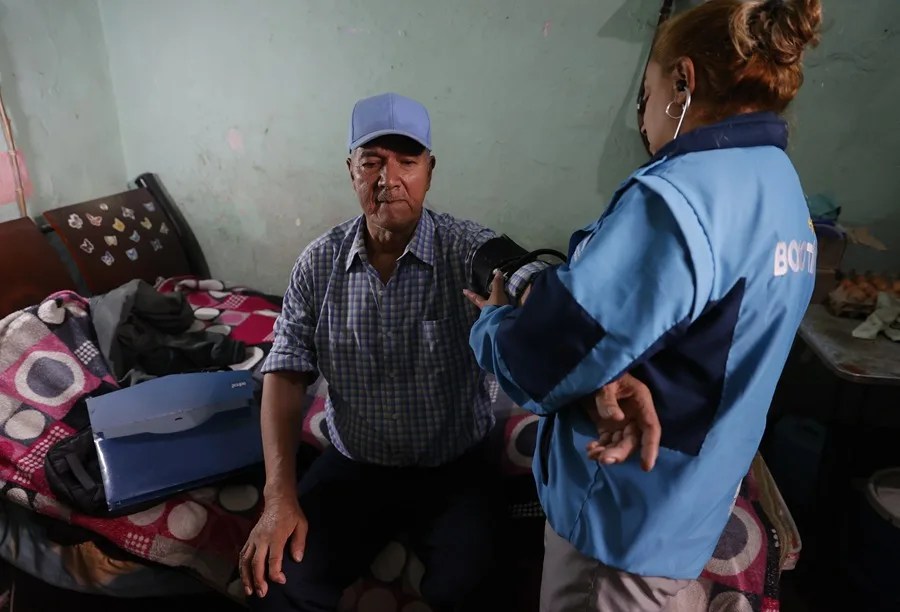
For the past year, Bogotá’s health and social integration departments have visited pagadiarios to identify needs and connect residents with services. Teams can arrange medical appointments, follow up when people encounter obstacles to care, and detect mental health concerns. Free psychological support can involve several individual or family sessions, offering a point of contact in lives often organized around solitary rooms.
Participation is voluntary, and distrust keeps some residents from accepting help. That matters for a policy reaching people who may have spent years managing alone. An offer of care requires a relationship before it can become an appointment kept. Repeated visits and practical help with paperwork or access barriers can make public services tangible, especially for someone whose painful legs already make leaving home an ordeal.
Outreach can ease isolation and untreated illness. The daily housing bill remains. Cano’s decade, Zuluaga’s decade, and Sanabria’s seven years expose the weakness in calling these arrangements temporary: the label describes how rent is collected far better than how long people stay. Within walking distance of national power, their housing security is renewed in increments of one night, by workers whose ability to pay must be rebuilt every single morning.