Tijuana River Pollution Sends North America a Bill It Cannot Dredge Away
Tijuana’s sewage crisis exposes a border economy built around moving goods while leaving communities to absorb pollution. As environmental groups demand enforceable trade commitments, dredging alone cannot make chronic wastewater discharges acceptable or relieve either government of its legal obligations.
The River Keeps the Receipts
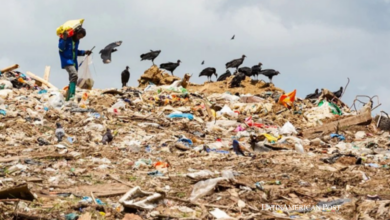
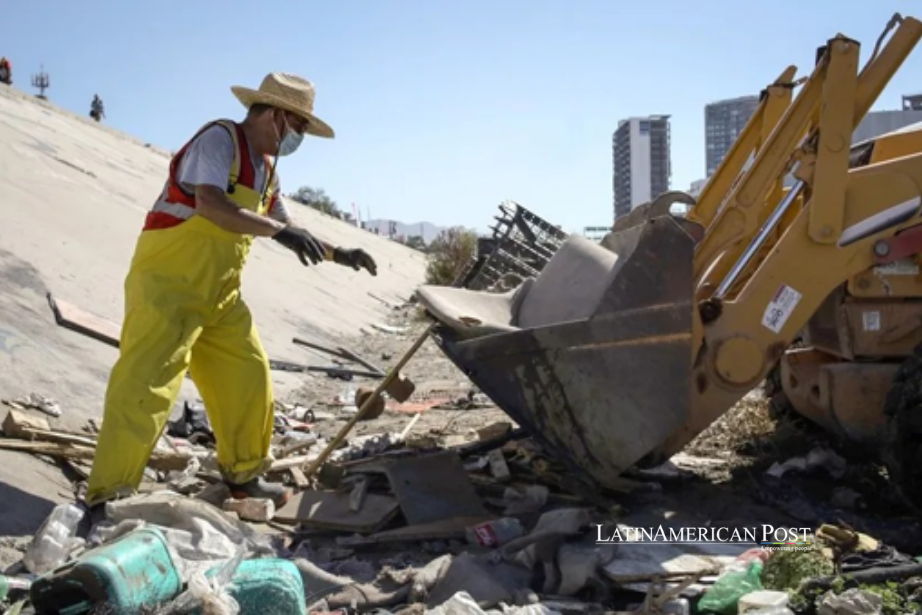
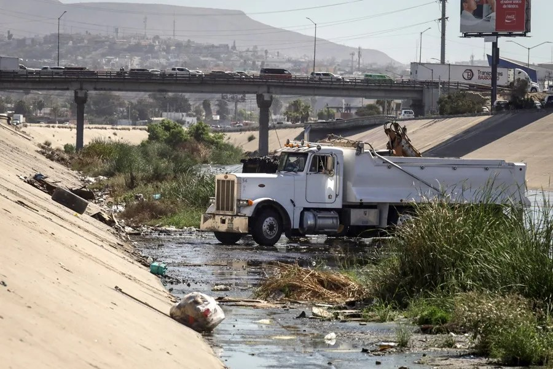
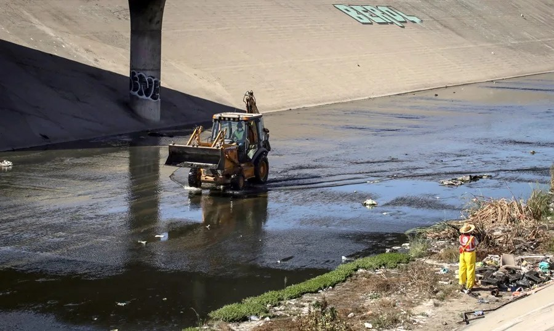
The excavator is doing necessary work. Along the Tijuana River’s concrete channel, crews remove accumulated sediment before heavy rain turns obstructions into flooding. But the machine can’t fix the system behind this emergency: a shared watershed that serves as a disposal route while governments advertise the next cleanup.
“We have to tackle it in pieces,” Fay Crevoshay, policy and communications director at Costa Salvaje, told EFE. She warned that rain could mobilize trash accumulated across Tijuana, carry it across the border, and deliver it to the Pacific. “We’re in a hurry,” she said. The urgency is understandable. Waiting leaves the next storm to perform the collection.
Mónica Vega Aguirre, director of Tijuana’s state water utility, told EFE that crews had removed 4,000 cubic meters of sediment and cleared several kilometers of channel. That is preventive work. It is not evidence that sewage treatment has improved.
Four thousand cubic meters equals four million liters in volume, but these are excavated deposits, not four million liters of disinfected wastewater. Converting them into tons would require knowing their density. Without the total accumulated volume or the rate of new deposits, the figure cannot establish what proportion of the problem has been solved.
The distinction is not pedantry. Clearing a channel can protect nearby homes while letting contaminated water keep flowing downstream. The operation worth opposing is not responsible dredging. It is the continued use of a river as a substitute for functioning sanitation, with cleanup totals offered instead of demonstrable reductions in pollution.
Pollution Is Not a Permitted Shortcut
San Diego Coastkeeper has taken the enforcement question to the Commission for Environmental Cooperation. Its petition alleges that Mexico has failed to apply environmental laws governing wastewater management, including investigating violations and requiring corrective action. Those are allegations, not a judgment declaring every facility or discharge illegal.
The distinction should sharpen the demand for evidence, not dissolve it. Authorities should disclose discharge permits, monitoring results, and enforcement decisions. Where operations violate applicable limits, correction should be compulsory. Public necessity cannot make a prohibited discharge lawful simply because repairing the system is expensive.
The North American trade agreement, known as USMCA, already prohibits sustained or recurring failures to enforce environmental laws when they affect trade or investment. It recognizes reasonable enforcement discretion, not an unrestricted exemption. The agreement also requires measures against marine litter. Environmental protection is therefore part of the bargain, not an optional addition requested by inconvenient activists.
The commission was established alongside NAFTA in 1994. Thirty-two years later, communities still insist that continental commerce include functioning sanitation. That is not an extravagant demand. It is overdue.
A citizen petition can create an investigative factual record, not automatically trigger a fine or shutdown. A separate government dispute process can reach a trade panel. Confusing those mechanisms would promise residents remedies the petition itself cannot deliver. That is precisely why demands for measurable commitments during the agreement’s review deserve support.
The legal goal should be compliance, not television-ready punishment. Closing essential infrastructure without a functioning alternative could worsen sewage releases. Enforceable repairs and operating requirements must therefore accompany sanctions where warranted. The question is how to end unlawful pollution without making neighboring families pay for another institutional failure.
The Bill Belongs on Both Sides
Nor can Washington treat this as a morality play about Mexican irresponsibility. In August, Coastkeeper and the Coastal Environmental Rights Foundation settled litigation over alleged Clean Water Act violations at the U.S.-operated South Bay International Wastewater Treatment Plant. The groups reported an overhaul, a 40 percent capacity expansion, and more than 18 months of compliance with ocean discharge limits.
That improvement deserves recognition. It also makes a useful argument against resignation: infrastructure performance can change. Capacity, however, is not the same as water actually treated to standard. An expanded plant matters only within a network whose connecting pipes and pumps remain operational.
Both countries have agreed to infrastructure projects, and their 2025 arrangements explicitly addressed maintenance and future population growth. The next trade commitment should reinforce that work, not launch another disconnected promise. Construction deadlines need operating budgets behind them; a completed plant without dependable maintenance is merely a future emergency.
This is the economic argument that belongs at the negotiating table. Sanitation costs do not disappear when governments postpone them. They shift to communities living beside polluted channels and businesses that depend on usable coastlines. Calling production competitive while excluding those burdens from the calculation makes neighbors subsidize the apparent bargain.
Business participation should therefore mean more than sponsoring a cleanup photograph. Firms should meet their own discharge obligations and contribute fairly to infrastructure serving them. Public investment should protect households without adequate services, rather than shifting the entire bill onto people with the least ability to pay.
Crevoshay’s approach, working through the watershed piece by piece, offers a practical starting point. But each piece needs someone answerable for results. Residents deserve evidence that less pollution reaches their neighborhoods and beaches, not another photograph of machinery moving mud before the rain.