Bogotá Builds Mountains of Trash While Its Rural Neighbors Keep Losing Ground
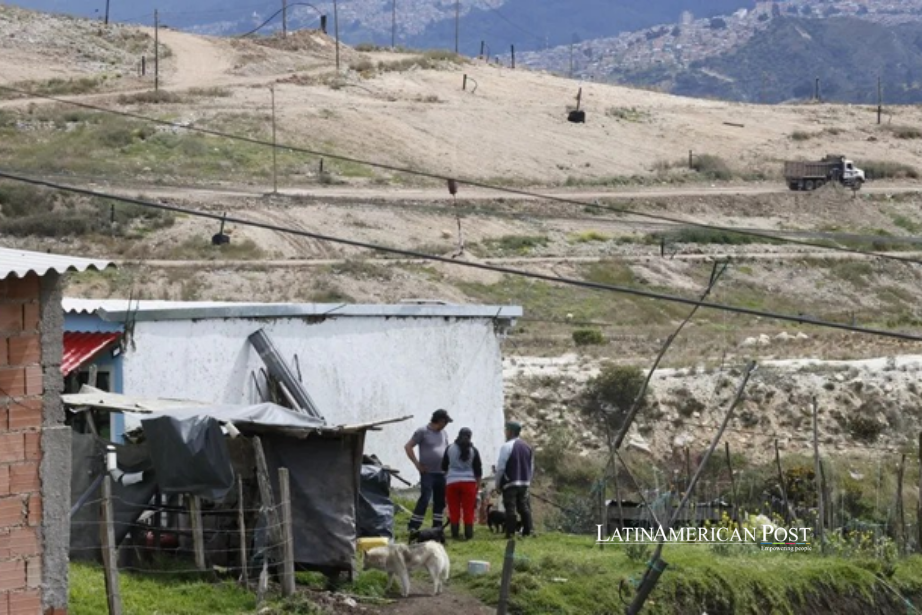
At Bogotá’s Doña Juana landfill, thousands of tons of waste arrive daily while neighboring families battle flies and odors. The city cannot keep calling this essential infrastructure without answering whose health, livelihoods, and environmental rights make its urban convenience possible.
Lunch Comes With Uninvited Guests
Brigitte Castiblanco cannot always leave a cooking pot uncovered. When the flies arrive, even preparing a meal becomes a defensive exercise. “You cannot eat in peace,” she told EFE. She has lived in Mochuelo Alto for 43 years, long enough to remember playing where Bogotá now buries its refuse.
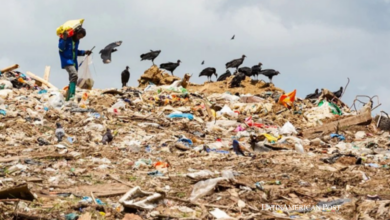
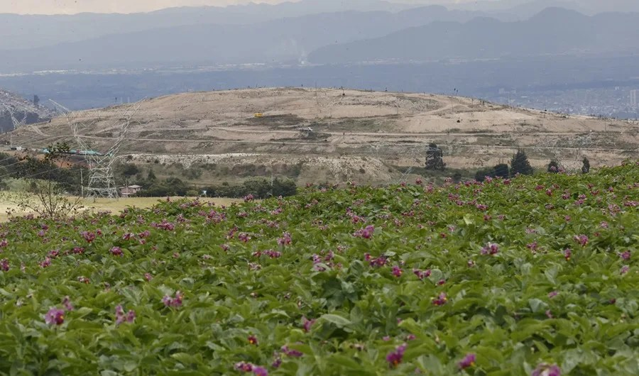
The village once looked toward Monserrate, the church overlooking the capital from its eastern hills. A mountain of garbage has swallowed that view. Since opening in 1988, Doña Juana has transformed the landscape beside homes and crops. Neighbors call the roughly 600-hectare facility their “bad neighbor.” It receives waste around the clock.
At the local school, teacher Francy Gómez told EFE that flies gather when hot lunches arrive. She also described adhesive traps catching bees and butterflies alongside their intended targets. In recent weeks, weather conditions have reduced the flies. During outbreaks, she associates them with inadequately covered garbage; the strips require daily replacement.
That variation matters. Empty traps on a favorable day do not establish that the problem has disappeared. Neither do residents’ accounts establish a particular disease. What they describe is already serious enough: a public sanitation system that forces neighbors to struggle to protect their own meals.
The capital gets its garbage collected. Mochuelo Alto gets the consequences. Calling that arrangement efficient depends on whose kitchen you leave out of the calculation.
A License Is Not Immunity
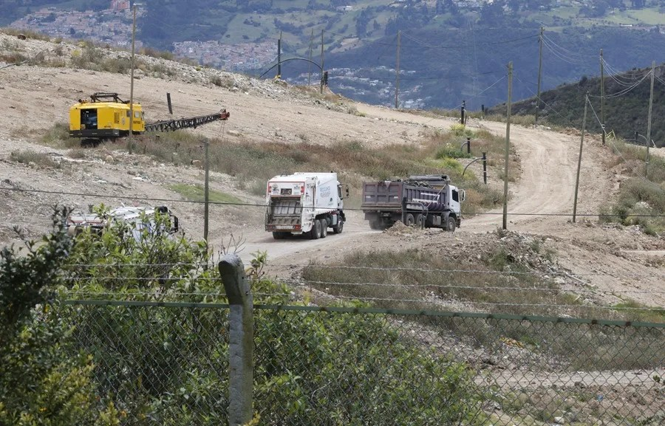
Doña Juana is an engineered landfill, not simply an uncontrolled dump. Waste is spread, compacted, and covered with clay. Drains collect leachate, the liquid generated by decomposing refuse, for treatment before discharge into the Tunjuelo River. Those systems matter. However, their existence cannot substitute for evidence that they work.
Andrea Pérez Cadavid, the operator’s manager, told EFE that odors are inevitable and described efforts to mask them using catalysts and rice vinegar. Weekly flytrap distributions address another complaint. Neither intervention answers the larger question: whether surrounding families receive effective protection rather than supplies for enduring the problem.
Colombia’s Constitution makes that distinction consequential. Article 79 protects a healthy environment and community participation in decisions affecting it. Article 80 requires the state to prevent and control environmental deterioration. Those obligations cannot be satisfied merely by pointing to the capital’s need for somewhere to send its trash.
Scrutiny extends beyond testimony. A 2022 Environment Ministry resolution recorded noncompliance with discharge standards and insufficient leachate treatment capacity. That historical finding does not establish today’s conditions. It does make independently verified water testing a more credible answer than assurances that treatment infrastructure exists.
The reporting does not prove that every current landfill operation is unlawful. But a license is not immunity from environmental limits. Colombia’s Constitutional Court has recognized that otherwise legitimate economic activity may require restriction when pollution exceeds tolerable limits. Bogotá cannot make necessity a standing exemption from accountability.
Seventeen Years for Whom
The scale becomes clearer through arithmetic. At the reported 6,700 metric tons daily, Doña Juana receives approximately 2.45 million annually. Pérez told EFE that more than 60 percent is organic material, equivalent to over 4,020 tons daily. Another reported category, potentially recoverable material, represents about 16 percent, or 1,072 tons.
These percentages are not guaranteed recovery rates. Contamination and processing capacity matter, and you should not add categories without confirming their definitions. Still, diverting half the organic fraction would remove more than 30 percent of the incoming mass. That addresses the source; masking odors merely disguises it.
Households should separate waste, as Pérez urges. But sorting is useful only when collection and processing preserve that effort. The city should finance reliable organic collection and treatment while ensuring recycling workers benefit from recovery. Telling residents to sort better cannot become another way for institutions to evade responsibility.
The surrounding fields still produce food and flowers; small businesses and community tourism persist. This is not vacant land awaiting the capital’s next solution. It is a working countryside, and treating it as expendable means discounting livelihoods that don’t come with a municipal contract.
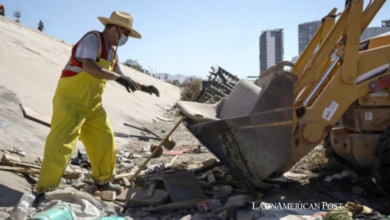
Javier, who withheld his surname from EFE, embodies the difficulty. A landfill machinery operator since 2011, he returns home to cultivate tomatoes and flowers with his brothers. The operation provides income and supports another livelihood. An honest transition must protect workers rather than force them to choose between wages and a healthier neighborhood.
Pérez estimates another 17 years of useful life. At unchanged intake, that would mean roughly 41.6 million additional metric tons. This is a scenario, not an established capacity or legal authorization. For a child eating lunch in Mochuelo Alto, seventeen years could mean reaching adulthood beside the same growing problem.
Bogotá’s proposed Doña Juana Innovation Park should therefore face a simple test: less burial, demonstrated environmental compliance, and meaningful decisions shared with neighbors. A new name is not remediation. Expansion should not proceed without lawful authorization and effective safeguards; proven violations should trigger enforceable corrective action.
Bogotá should phase out this dependence on mass burial, not buy seventeen more years of it. Rural families deserve enforceable protection, rather than another generation of advice about covering their pots.