Solar-Powered Solutions Face Uphill Battle in Havana’s Mounting Garbage Crisis
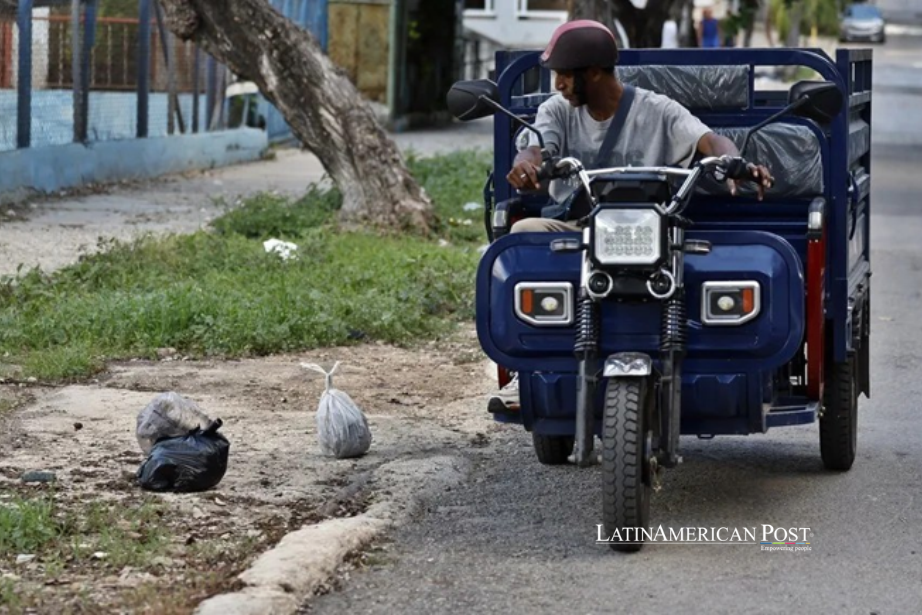
In Havana, solar-powered electric tricycles are collecting garbage left behind by fuel shortages. Cuba’s small sanitation experiment offers work and cleaner streets, while exposing the limits of private initiative in a city overwhelmed by failing services.
From Spare Rooms to Garbage Runs
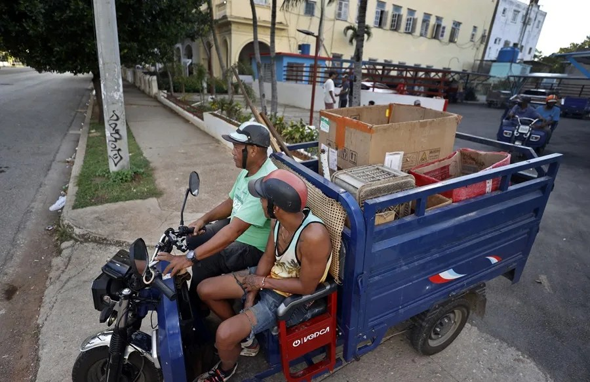
Ana Román once made her living renting rooms to foreign visitors. At 58, with tourism collapsing around her, she has found another way to earn: helping drivers collect garbage from businesses and homes in Havana.
“It is quite hard work, quite demanding,” she told EFE. She also complained about residents’ careless behavior, although many neighbors thank the crews for coming.
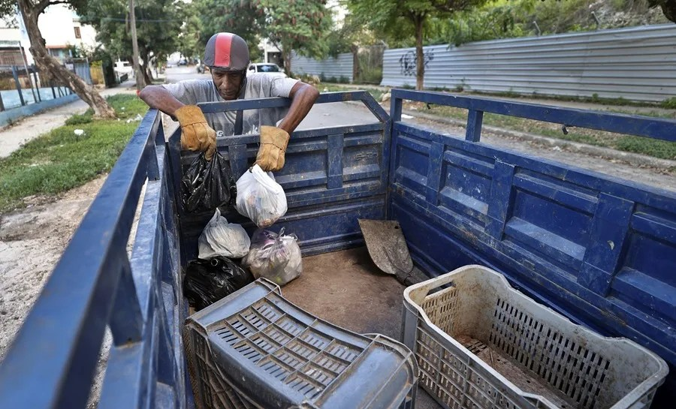
Her new employer, El Rampeño, operates about 15 electric tricycles around La Rampa in El Vedado. Since July, the vehicles have collected waste twice daily, starting at 8 a.m. and 8 p.m. Their customers include private restaurants, shops, markets and the Hotel Nacional de Cuba.
A collection trip can take a couple of hours. Sometimes the accumulated rubbish makes the job longer.
Román’s change of occupation gives the project a meaning beyond cleaner pavements. The same economic crisis that eroded her former livelihood has created urgent demand for her new labor. Tourism’s retreat and sanitation’s deterioration meet in one working life.
She earns approximately 15,000 pesos, equivalent in EFE’s report to about $18 at the informal exchange rate or $125 at the official rate. That nearly sevenfold difference reflects competing currency valuations, not two different paychecks. Neither dollar figure alone explains what her earnings can buy locally.
The distinction matters when describing the service as cheap. Local authorities set the household charge at approximately 100 pesos, about 12 cents at the informal rate. For residents earning pesos, affordability depends on their income and how often they must pay, details the reported tariff does not provide.
Sunlight Solves Only One Problem
Yasier Hernández, the project’s 35-year-old leader, showed EFE a charging station equipped with 60 solar panels and battery backup. The installation helps keep the vehicles running through blackouts that can exceed 20 hours daily.
An electric vehicle plugged into an unreliable grid would merely exchange one interruption for another. Generating electricity locally, with batteries storing power for later use, addresses that vulnerability. The practical achievement is keeping a collection schedule when both fuel supplies and public electricity can fail.
Hernández told EFE that the operation employs 40 people across collection, commercial, and administrative work. It grew from an enterprise established two years ago in Villa Clara, originally focused on textiles, protective equipment and specialized work clothing.
That background suggests adaptation rather than a sanitation system designed from scratch. A business has moved toward an unmet need, assembling vehicles, workers and its own power supply around a service the state struggles to deliver.
But its independence ends at the unloading point.
Hernández wants to expand across more of El Vedado and has asked the local government for additional containers where crews can deposit the waste. That request identifies the next constraint. Clearing a restaurant doorway doesn’t complete the disposal process; rubbish still needs secure storage, onward transport, and a suitable final destination.
If those stages stall, faster neighborhood collection can relocate the accumulation rather than eliminate it. More tricycles would not automatically solve that problem.
The scale is sobering. Official figures put Havana’s daily solid waste generation at roughly 30,000 cubic meters, equivalent to 210,000 over a week. That is waste produced, not rubbish left uncollected. Without published load and collection volumes, authorities cannot assign the 15 vehicles a credible share of the city’s needs.
Who Pays for Cleaner Streets
The weakness predates this experiment. In 2023, authorities acknowledged that less than 40 percent of Havana’s collection equipment was operational. More than six in ten units were unavailable then, though this historical figure doesn’t describe today’s fleet.
It reveals how deeply the service had deteriorated before electric tricycles arrived. Fuel shortages compound a system already struggling with equipment and insufficient containers.
The health stakes extend beyond an unpleasant walk. Cuba’s reported 2025 dengue and chikungunya epidemic involved 81,909 infections and approximately 65 deaths. Those national figures cannot be attributed entirely to garbage or used to measure the health impact of one neighborhood project.
The connection is nevertheless concrete. Discarded containers that retain water can provide breeding sites for mosquitoes transmitting these diseases. Regular removal can reduce such habitats, alongside reliable water management and mosquito control.
El Rampeño also raises a political question familiar across Latin American cities: how to deliver commercially viable services to households and streets that cannot attract paying customers.
Its routes principally serve businesses, while household prices remain locally regulated. This arrangement is negotiated between private capital and public authority. Its broader value will depend on whether expansion improves coverage beyond the most attractive collection routes.
Solar equipment and batteries also require maintenance and eventual replacement. A durable service must finance those costs while paying workers adequately, supplying crews with suitable protective equipment and keeping household charges manageable. Sunshine does not remove the bill.
Román offers a more immediate measure. “Everyone and the little markets thank us very much,” she told EFE.
For now, gratitude follows a completed collection. Turning that relief into dependable sanitation will require the rest of Havana’s waste system to keep moving after her tricycle has left.