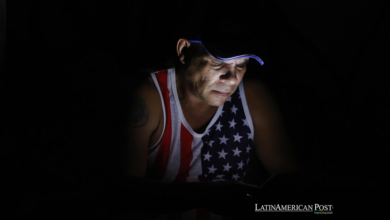
Cuba’s Blackouts Leave Havana Thirsty as Pumps Fall Silent Again
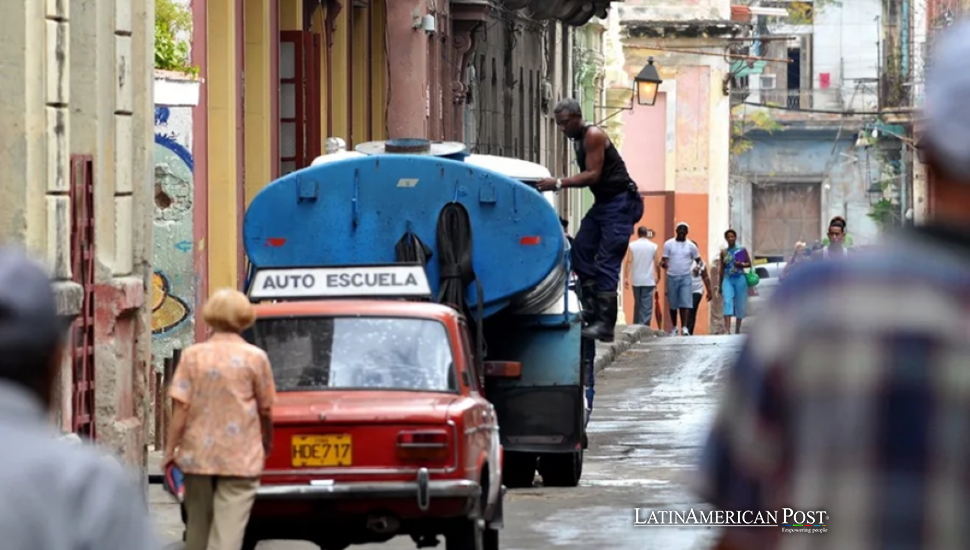
Cuba’s electricity crisis is now arriving through Havana’s faucets. As prolonged blackouts disable pumps and aging pipes fail, nearly two million residents face an emergency that exposes how energy scarcity, underinvestment, and geopolitical pressure converge inside a glass of water.
When the Pumps Go Dark
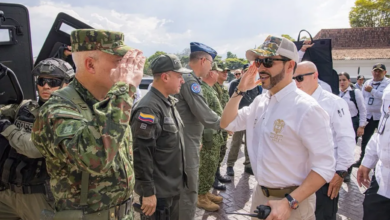
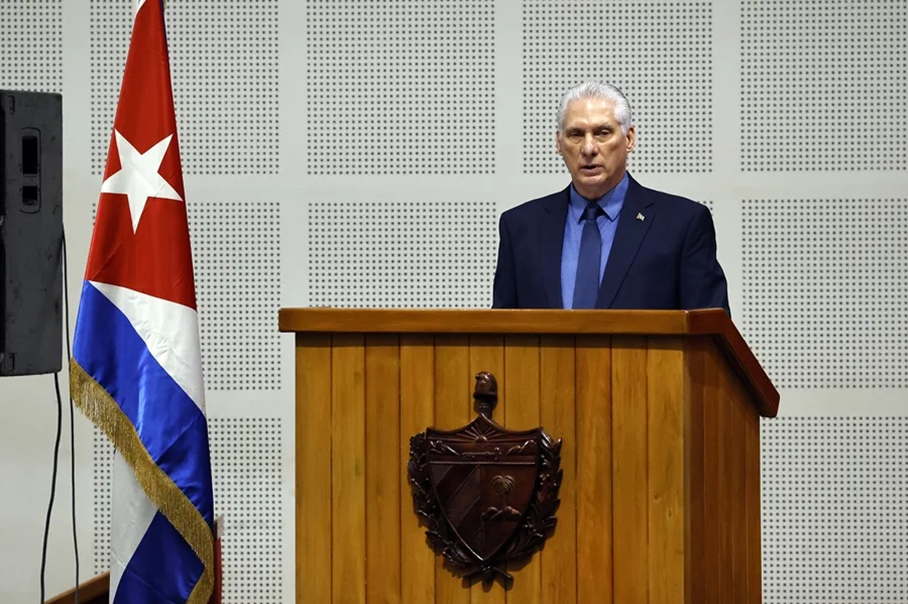
At Paso Seco, one of the strategic sources feeding Havana, President Miguel Díaz-Canel stood beside ministers and inspected the machinery that keeps a capital alive. The problem was painfully domestic. When electricity disappears, water often follows.
Díaz-Canel called for the supply crisis to be resolved “in the shortest possible time,” according to a Presidency report carried by EFE. Officials said they were reviewing the strategy under prolonged blackouts and recovering motors needed to move water through the system.
“This is one of the most critical issues in a city where almost two million people live,” the government acknowledged.
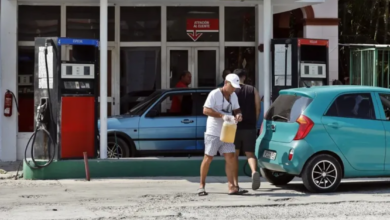
That sentence contains the scale of the emergency, but not its texture. A blackout can be counted in hours. Thirst accumulates in buckets beside kitchen doors, unwashed clothes, toilets that cannot be flushed, and calculations over which container must be saved for drinking.
Havana’s water crisis is not separate from Cuba’s electrical collapse. Pumping stations need power to extract, pressurize and redistribute water. Low voltage and repeated outages strain motors. When equipment breaks, weak pressure leaves neighborhoods at the end of the network waiting longer.
A serious failure last week forced the state company Aguas de La Habana to shut down a main pipeline serving the Central System. Six municipalities were affected, close to half the capital. One damaged conduit became a citywide lesson in how little redundancy remains.
The government is repairing and salvaging motors as an immediate response. Solar panels are supposed to become the longer-term answer at pumping points. That shift could reduce dependence on an unstable national grid, but it also reveals the vulnerability. Havana is trying to keep water moving while redesigning the energy source beneath it.
Two Million Lives Behind the Numbers
The emergency extends beyond Havana. Antonio Rodríguez, president of Cuba’s National Institute of Hydraulic Resources, said in May that about 2.7 million Cubans faced aggravated difficulty receiving water. He cited the energy blockade and recent executive orders imposed by the United States, according to EFE.
Those pressures are real within the government’s account. The inability to obtain financing, the withdrawal of suppliers and obstacles to purchasing equipment directly affect a hydraulic system dependent on imported components, replacement parts and fuel. Sanctions do not need to mention a water pump to make one harder to repair.
Yet the official description also points inward. Cuba’s hydraulic infrastructure suffers from insufficient investment, deferred maintenance, broken mains and worn equipment. Those failures accumulated over years. External pressure narrows the country’s choices, but it does not erase the responsibility to explain how scarce resources were allocated and why essential systems reached such fragility.
The most honest reading is not a contest between two convenient stories. Washington’s measures can obstruct financing and suppliers while domestic underinvestment allows networks to deteriorate. Ordinary Cubans experience both causes as one result. The faucet stays dry either way.
Scarcity also magnifies inequality, even in a system built around universal provision. A household with a rooftop tank can endure longer. A family able to buy delivered water has options. Residents on upper floors, older people carrying containers and neighborhoods reached only after pressure weakens bear a different burden.
This is how infrastructure becomes political without a speech. Water pressure determines whose day is consumed by waiting. A city may promise equal access, but the physical network creates its own hierarchy when supply becomes intermittent.
Less water also means harder choices around cooking, cleaning and sanitation. The shortage enters schools, clinics, workplaces and apartment courtyards. It turns care work, already largely invisible, into a heavier physical task.
Solar Power Meets Rusted Pipes
Cuba’s hydraulic authorities say they want 52 percent of the country’s 3,300 pumping stations supplied by renewable energy. If completed, that would cover about 1,716 stations, leaving roughly 1,584 dependent on other sources.
The arithmetic is encouraging and sobering. Solar power could protect many pumps from blackouts, lower fuel dependence and give isolated systems more autonomy. For a country with severe generation deficits, that is not a cosmetic environmental project. It is an attempt to keep a basic service alive.
But panels cannot seal a fractured pipeline. They cannot restore pressure lost through deteriorated networks, replace every damaged motor or compensate for years of incomplete maintenance. Energy independence at the pump is only one layer of a hydraulic system stretching from source to household.
There is also a question of pace. Díaz-Canel asked for the problem to be solved quickly, but infrastructure rarely obeys political urgency. Motors can be recovered in days. Solar installations, financing, spare parts and major conduit replacement require sustained planning. The danger is that provisional measures become permanent while emergency language substitutes for structural repair.
Paso Seco offers a stark image of the country’s predicament. A strategic water source is being protected through rescued machinery today and a hoped-for renewable network tomorrow. Between those timelines stand almost two million people in Havana, and millions more across Cuba, measuring state capacity by the sound inside a pipe.
Water exposes the real architecture of power. It reveals which systems are maintained before they fail, which neighborhoods are reached first, and whether governments can convert public recognition into reliable service.
In Havana, the next test will not arrive in a communiqué. It will arrive quietly, when electricity fails again. The question is whether the pumps keep turning.
Also Read: Panama Guards a Thirsty Canal as Trade and Threats Converge