Colombian Crackdown Meets Cúcuta’s Border Economy, Where Criminals Collect Their Own Taxes
Cúcuta’s militarization follows a candidate’s murder and a bombing, but the violence reaches beyond Colombia. Armed groups exploit routes into Venezuela, turning trade, movement and weak cooperation between governments into revenue while families bear the costs of competing criminal rule.
A City Under Orders
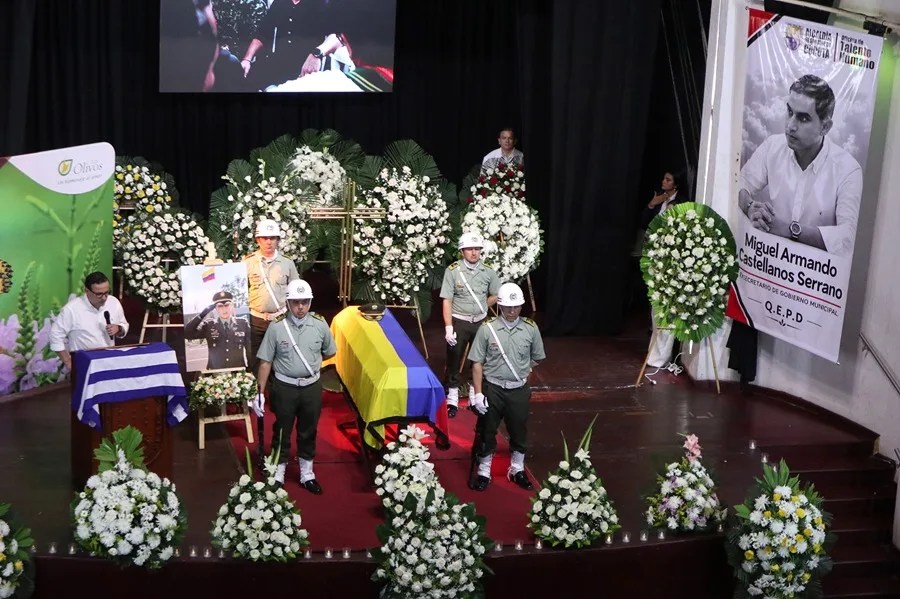
Miguel Castellanos Serrano was traveling without his bodyguards when gunmen killed him near a gas station on Monday. Three days later, relatives and friends said goodbye, and Colombia’s president ordered soldiers into the city Castellanos hoped to govern.
The retired police major and former municipal government secretary had worked on security, access to justice, and reclaiming public space. His killing struck at someone who understood how local authority worked. For other potential candidates, it raises a grim question: how safely can anyone challenge the people who exercise power outside elected institutions?
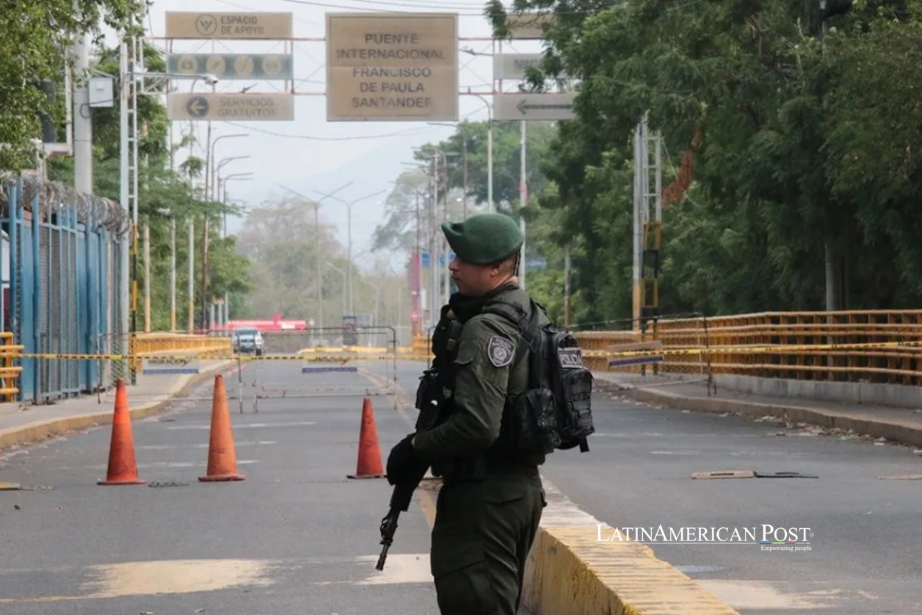
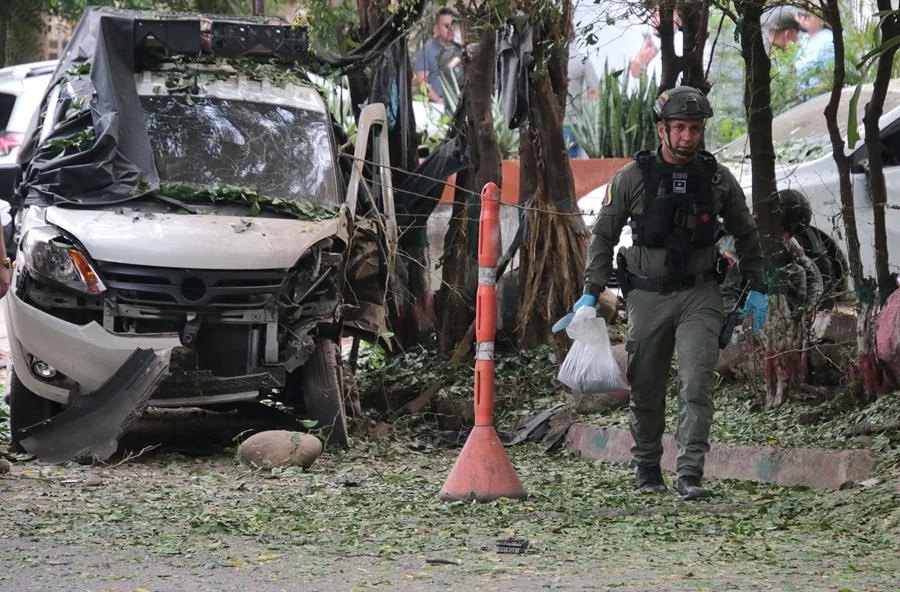
On Tuesday, an explosive device near an international bridge wounded at least four civilians and two police officers, according to EFE. The two attacks, occurring within days, brought violence into both political life and the infrastructure through which this border city conducts ordinary business.
President Abelardo de la Espriella announced Thursday that the militarization would be temporary. Additional army personnel will work with police, while the Esparta campaign and an urban security command begin operating November 3. He promised action against criminal finances and said he would visit the following week.
The new operation has a start date; military reinforcement has no fixed endpoint. Its stated duration depends on restoring order, leaving an important question about how that achievement will be measured.
EFE’s account does not identify who ordered either attack or establish that they shared a perpetrator. The border context helps explain the conditions in which violence thrives. It cannot substitute for evidence about these particular crimes.
The Border as a Business
Cúcuta sits beside Venezuela and close to Catatumbo, where armed organizations compete over coca production and trafficking routes. That geography connects rural drug economies with transport, commerce, and crossings. Whoever controls movement can extract money from it.
The scale matters. The United Nations drug office recorded 48,739 hectares of coca in its Catatumbo monitoring region in 2024, an 11 percent increase from 2023. That statistical region includes Norte de Santander and Cesar. It represented nearly one-fifth of Colombia’s 261,000 hectares, indicating the substantial economic stakes around routes serving the region.
Those figures measure planted land, not the quantity of cocaine passing through Cúcuta or Venezuela. Their significance is structural: an extensive production economy makes access to corridors valuable, encouraging armed competition over the territory between crops and markets.
The Venezuela connection also involves operating space. In June, conflict monitor ACLED described the National Liberation Army, or ELN, expanding on both sides of the frontier, supported by illicit economies and political protection in Venezuela. Separate jurisdictions complicate pursuit and investigation, particularly when cooperation between governments is weak. Pressure on one side can leave networks room to reorganize elsewhere.
Local commerce supplies another income stream. Colombia’s ombudsman warned in December 2024 that armed groups were extorting businesses across Cúcuta and surrounding municipalities. Its detailed alert described rural traders facing demands from rival organizations, and paying one exposed them to accusations of supporting an enemy. Authorities had received these warnings nearly two years earlier.
For a shopkeeper, that turns earning a living into a dangerous negotiation. Paying may purchase temporary permission to work without providing lasting protection. Refusing may bring threats. The same organizations producing insecurity sell security.
The ombudsman also identified gangs exploiting border crossings for trafficking and migrant smuggling. Migrants were among the populations especially exposed to victimization. The connection to Venezuela therefore concerns routes, armed organizations and protection failures spanning two countries, with vulnerable people caught inside that economy.
What Soldiers Cannot Settle
Military reinforcement can protect exposed locations and disrupt armed activity. After a killing and a bombing, immediate protection matters. But controlling a bridge approach does not automatically dismantle the people collecting extortion payments, arranging transport, or protecting illicit transactions farther away.
The wider conflict also reaches Cúcuta through displacement. Human Rights Watch reported in March 2025 that more than 56,500 people had fled fighting and abuses involving the ELN and the FARC dissident 33rd Front in Catatumbo. Some 20,300 had gone to Cúcuta, roughly 36 percent of that reported total.
That was a dated emergency snapshot, not today’s displacement count. It shows why the city’s security cannot be separated from violence in the surrounding countryside. Families arriving for safety need housing, work, and protection from recruitment. Their needs persist after checkpoints appear.
A durable response would connect street protection with investigations that follow money and identify those ordering violence. Cooperation with Venezuelan authorities matters wherever suspects, assets or routes cross the boundary. Such cooperation needs verifiable results and safeguards against corruption, rather than reliance on diplomatic declarations alone.
The government must also preserve lawful movement. If security restrictions make legitimate trade harder while clandestine routes remain available, armed intermediaries can gain customers and bargaining power. Border residents need a way to work without buying permission from criminals.
Castellanos’s family has already suffered an irreversible loss. For the city he wanted to lead, the meaningful test will come after the first deployment. Whether candidates can campaign, merchants can refuse extortion, and families can cross a bridge without another authority deciding the price.