Latin American Leaders Embrace Bukele’s Megaprisons. Who Holds the Keys?
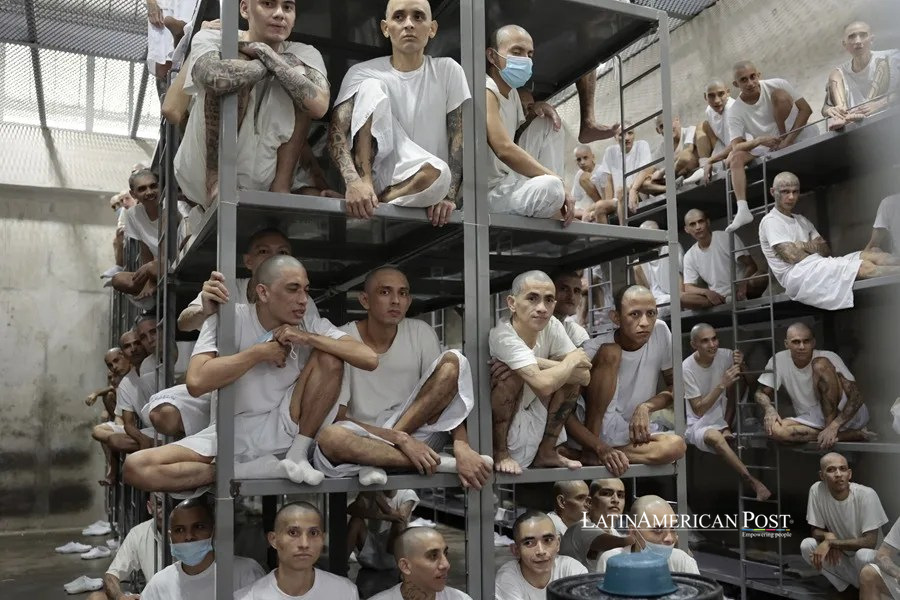
Since 2023, Latin American governments have proposed at least 16 megaprisons. El Salvador’s sharp drop in violence helps explain the appeal, but in countries where criminal groups first built their power behind bars, the number of cells tells voters little.
A Prison Fit for a State Visit
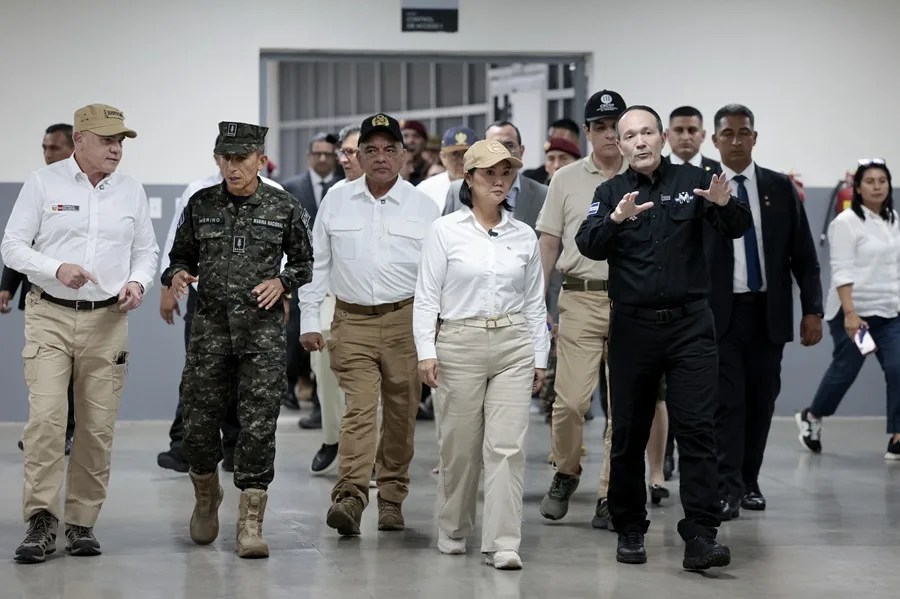
Days before taking office in Chile, José Antonio Kast went to a Salvadoran prison to “pick up ideas,” EFE reported. He left open which ones he might take home. In October, Peruvian President Keiko Fujimori made the same trip. El Salvador’s security and defense ministers escorted her through the Terrorism Confinement Center in Tecoluca. A facility built to hold prisoners had become a place to receive presidents.
What made Tecoluca worth the trip happened largely beyond its gates. Salvadorans saw violence fall sharply under President Nayib Bukele. For a shopkeeper accustomed to setting aside part of the day’s earnings for a gang, the prospect of taking that money home has an appeal few politicians need to explain. Bukele can show “a drastic drop in violence in a short time,” Juanita Goebertus, Americas director at Human Rights Watch, told EFE. She said his publicity operation showcases the prison while concealing abuses.
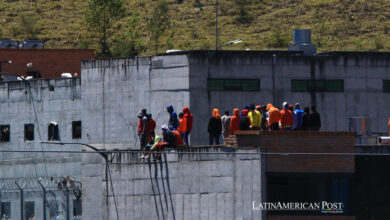
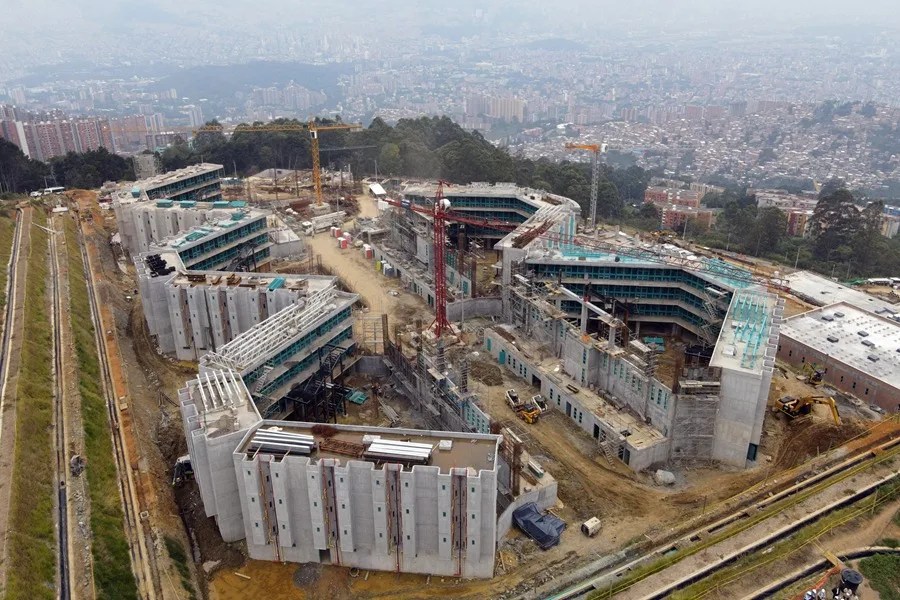
Costa Rica has opened a high-security prison inspired by Tecoluca, with space for 5,100 people. In Ecuador, the Encuentro prison began receiving inmates in November 2025. President Daniel Noboa has announced another facility for 15,000, nearly three times the capacity of Costa Rica’s. InSight Crime, which mapped the regional projects, found that many remain proposals or construction sites.
The distinction matters. An announcement earns a government credit for acting while the project still exists on paper. A president can tell voters exactly how many beds a prison will hold years before anyone can judge whether its opening made a difference to the shopkeeper who has to pay up on Friday.
When Power Follows the Prisoner Inside
Goebertus described El Salvador to EFE as a small country confronting gangs with limited resources, recognizable members and an intensely local grip on territory. Arresting the man who collects extortion payments can bring relief on a street where everybody knows him. It is a considerable leap from there to the assumption that more arrests will break the international business moving cocaine through Ecuador’s ports.
In Ecuador, Goebertus said, criminal organizations have the money to buy protection from police and judges. A prison sentence can remove a trafficker while leaving that protection available to his successor. Honduras faces a related problem in the documented ties between organized crime and members of its political elite. Honduras has adopted emergency powers, while Ecuador has deployed the military. Goebertus questioned whether either approach had delivered the promised reduction in violence.
Colombia brings another history to the debate. There, parts of a decades-old armed conflict have evolved into organized crime. A new prison gives authorities somewhere to send a convicted commander. It offers a rural mayor little help answering the question residents face the morning after an arrest. Who now has the power to tell people in town what to do?
Sometimes that power follows the prisoner inside. Brazil’s Primeiro Comando da Capital emerged in prison. Venezuela’s Tren de Aragua and Ecuador’s Los Choneros also built power behind bars, according to InSight Crime. Goebertus told EFE that leaders recruit fellow prisoners and exercise authority over them, often with guards’ complicity. Under those conditions, mass arrests give a criminal organization access to people who have little choice about whose company they keep or whose protection they accept.
What 8,000 Releases Can Tell Us
El Salvador’s own experience raises a question seldom answered on a prison tour. How does somebody who should never have been there get out? Authorities have detained more than 90,000 people under the state of emergency in effect since March 2022. Bukele acknowledges that about 8,000 people arrested under those powers have been released. In October, he said he was considering conditional release for a group that could include roughly half of those detained.
Those figures describe different decisions. Conditional release concerns the terms under which someone can leave custody. An arbitrary arrest raises the prior question of what entitled the state to take that person away. The figure of 8,000 tells Salvadorans how many people got out. It tells them little about how many had a chance to challenge the evidence or how long their families waited to learn what the accusation was.
Human Rights Watch says tens of thousands were detained arbitrarily. Goebertus told EFE that some arrests followed an anonymous phone call and others helped police meet arrest quotas. Some people looked suspicious to an officer. The crackdown has also brought allegations of torture and mistreatment in custody. “Among them are innocent people, even victims of the gangs themselves,” Goebertus said of those swept up.
For leaders coming home from Tecoluca, those victims deserve as much attention as the prison they toured. The shopkeeper asking police to stop a gang from taking his earnings and the father asking a judge to hear his side after an anonymous accusation can be the same man. He has good reason to care whether the police can make an arrest. He has just as much reason to care what evidence they have to bring to court the next morning.