A Home for Dignity: How a Cuban Shelter Restores Hope and Humanity
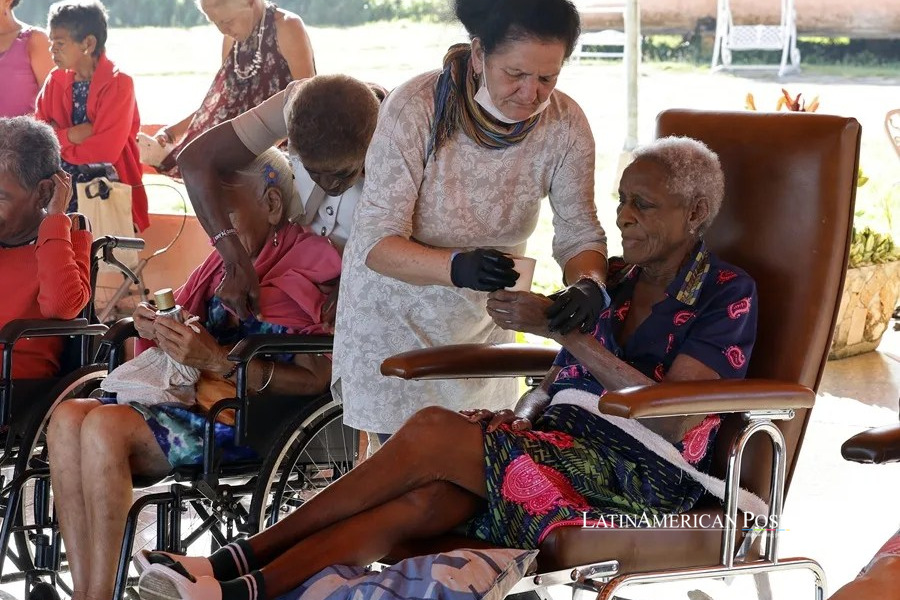
At the Quisicuaba shelter outside Havana, people who once slept on Cuba’s streets get regular meals and free medical care. Plans to expand the former school would give up to 580 people a place at the table each day.
Before Lunch in Artemisa
Yadelki Hernández was trying to track down a doctor. Several older residents were leaving for Havana to have their eyes examined, and she had to see them off. Somewhere in the middle of showing EFE around Quisicuaba, the shelter she directs, Hernández checked on lunch. It was cooking over charcoal. Her phone hardly let up.
About 12 miles from Havana, in the western province of Artemisa, a Cuban religious organization turned a former school into a home for people who had been sleeping on the streets. Most of its 318 residents in rural San Antonio de los Baños have lost touch with their families. Here, someone who needs help bathing can start the day freshly washed and in clean clothes, with breakfast and the day’s medicine waiting.
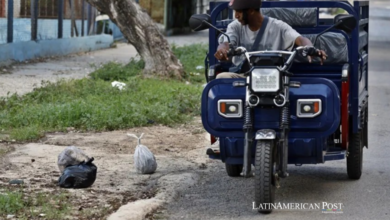
Homelessness has become more visible in Cuba as people on small pensions face food and medicine shortages. Conditions on the streets have grown less sanitary. For someone sleeping outside, getting a prescription at a free clinic still leaves the question of where to find the drug and how to keep track of the doses. Quisicuaba has a pharmacy on the grounds and staff who can help a resident take what the doctor ordered.
Hernández estimates that 85 to 90 percent of residents have some form of psychiatric disorder, roughly 270 to 286 people at the shelter. Many arrive hungry and in severe distress. Some are trying to find their way back into community life. For others, she told EFE, the commitment is to care for them for as long as they live. “We don’t worry about who they were, what they did, what happened in their past,” she said.
What Another Bed Requires
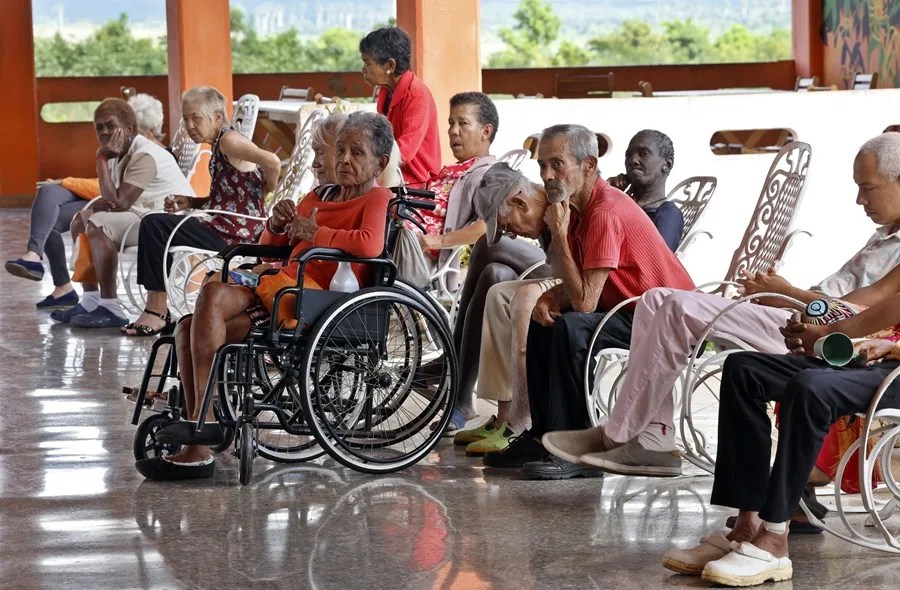
Hernández told EFE the need for places keeps growing. At Cuba’s only center of its kind, a bed can stay occupied for years for the best of reasons. Somebody who used to sleep outdoors has settled in. Even a resident well enough to live more independently may have lost touch with the relatives who could help make that move possible.
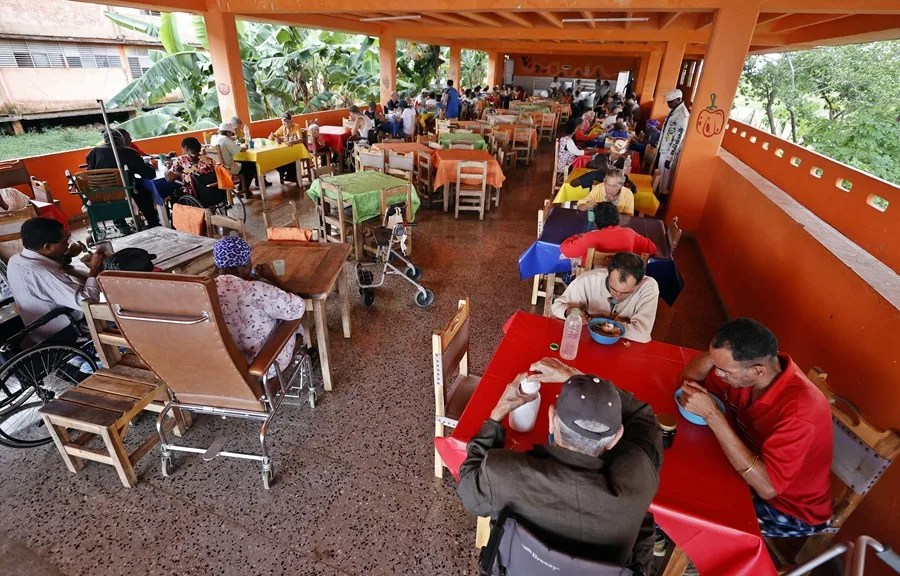
Quisicuaba employs 62 people. The psychiatrist who sees a resident and the assistant who helps that person bathe both count toward that total. Therapists plan activities around what each resident can manage. Anyone who needs a wheelchair gets one. The old school also has a laundry and a place to get a haircut. A person can run an errand on a day when she has no medical appointment.
The expansion would give Quisicuaba room for 560 to 580 people. At the upper end, that is 262 more residents than live here today. If staffing held steady, residents per employee would rise from about five to more than nine. That figure covers the entire workforce. Only some of those employees can be available at any given breakfast to sit with someone who needs a hand eating.
Each resident gets three meals and three snacks a day. That comes to 954 full meals before anybody counts the snacks. Fill all 580 places and the cooks would have another 786 meals to prepare every day. Quisicuaba has dozens of hectares where it produces food for the pot and charcoal for the fire underneath. That land helps sustain more than 30 projects run by what has become Cuba’s largest nongovernmental organization.
Most of the center’s equipment comes from donors abroad. Quisicuaba is working with donors in Spain to install solar panels at the residence. Growing some of its own food gives the shelter a measure of security when supplies run short. The aim is to gain some of that independence in electricity, too.
When the School Buses Stopped
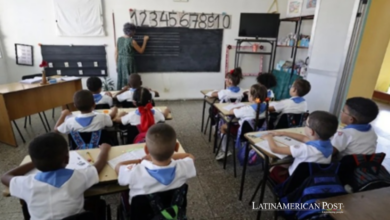
For nearby farming families, Cuba’s fuel shortage put the school year in doubt. School transportation stopped running. A child could still have a teacher and a desk at school and no way to reach either. Quisicuaba worked with education officials to open a small classroom inside the residence for pupils from preschool through sixth grade. While the buses were idle, the adults found a way to bring school closer to the children.
Another classroom serves as an annex of the University of Medical Sciences. Dozens of students come for practical training and exams. They can see what care requires in the long hours after a doctor has examined a patient and written a prescription. Hernández spoke to EFE about the affection those young people bring to the residence. She counts it among the things that keep the place going.
Hernández used the Spanish word conviviente to describe what a person becomes on moving into Quisicuaba. It means someone who lives with others. For the older residents she saw off to Havana, that word carries a small, practical certainty. They have an address to give the eye doctor and a place to come home to when the appointment is over.