Buenos Aires Gives Basque Pelota a World Stage and an Argentine Accent

Buenos Aires opened its first Basque Pelota World Championship with Euskadi beating Spain, but Argentina’s role reaches beyond hosting. Migrant traditions, homegrown innovations, and Latin American sporting strength explain why this European game feels so familiar across the Atlantic today.
A Victory Beyond the Scoreboard
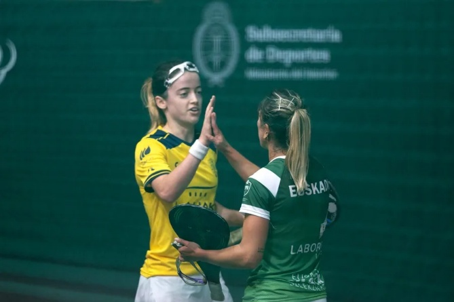
Nagore Martín had already lost the momentum once. Inside Buenos Aires’ National High Performance Sports Center on Thursday, October 15, Spain’s Maider Ardanaz Dufur had forced their opening match into a deciding set. The stands were full. Delegations cheered each point. Martín pulled four points clear and kept going.
Her 15-11, 8-15, and 10-4 victories gave Euskadi a winning debut in its first senior world championship, competing separately from Spain. The discipline was women’s rubber-ball paleta, played with a paddle on a 30-meter court. The result was intimate in scale, with two players answering each other, and politically significant.
The arithmetic makes the contest more revealing. Martín won 33 points to Ardanaz’s 30, just 52.4 percent of all points played. After two sets, she actually trailed 26-23 on aggregate. Winning ten of the final fourteen points turned that narrow overall balance into a decisive finish. This was recovery under pressure, not sustained domination.
Basque Deputy Premier Ibone Bengoetxea watched from the stands. Recognition by the international federation in 2024, following Spain’s 2022 sports legislation allowing certain regional federations international participation under specified conditions, had opened this door. Euskadi and Spain competed separately at the 2025 under-23 World Championships in Venado Tuerto, Argentina.
Now the senior encounter carried that institutional change onto the court. For Argentina, hosting it also placed a familiar immigrant inheritance at the center of an international argument about who gets to represent whom.

Why Argentina Has Home Advantage
Argentina is hosting because it has an established federation, suitable facilities, and a substantial place in pelota’s development. The Argentine confederation and international federation are organizing the tournament together. Buenos Aires supplies three venues, while Colonia del Sacramento, across the Río de la Plata in Uruguay, handles cesta punta.
That arrangement gives the championship a practical regional foundation. Pelota includes several games that require different courts and equipment. Sharing facilities across the river uses an existing sporting geography; it also spreads the event’s visibility beyond one capital. The schedule runs through October 24, with medal rounds beginning October 21.
This is also an institutional homecoming. Argentina, France and Spain founded the International Federation of Basque Pelota in Buenos Aires in 1929. Yet Argentina waited 74 years after the inaugural 1952 world championship to host the senior tournament. It had already topped the world championship medal table in 1962 and 1974.
That gap matters. Hosting has arrived long after sporting credibility. Argentina’s claim rests on generations of participation rather than a sudden attempt to import a spectacle.
Organizers announce 480 athletes from 15 delegations. Ten delegations represent Latin American countries, making the region two-thirds of the field by delegation count. That is not an athlete share or a prediction of medals. Still, it highlights something easily missed when attention settles on Spain and Euskadi: Latin America supplies most competing teams.
The competitive evidence goes further. At the 2023 Pan American Games, Mexico took six of pelota’s eight gold medals; Argentina won the other two. Mexico’s 75 percent share showed concentrated strength, while Argentina’s victories in both women’s and men’s trinquete doubles demonstrated depth across genders. Regional attachment has produced elite results.
A Game That Changed Continents
Among this year’s entrants, Argentina and Uruguay anchor the Río de la Plata tradition. Mexico brings its formidable court specialists, while Cuba and Costa Rica extend the competition’s reach through the Caribbean and Central America. Chile, Bolivia and Peru bring Andean participation; Brazil and Venezuela complete Latin America’s presence.
The game traveled with Basque migrants, with nineteenth-century migration especially important to its expansion around the Río de la Plata. People arriving from the Spanish and French sides of the Basque homeland carried recreation alongside work skills and family obligations. Argentina, Uruguay and Cuba became major destinations.
In Argentina, courts fitted into the everyday machinery of settlement. Urban trinquetes offered newcomers meeting places. Rural frontons stood beside pulperías, the combined stores and drinking establishments where people bought supplies and exchanged news. Playing could mean finding familiar company in a country whose distances made isolation an ordinary burden.
The sport also changed in American hands. Argentina developed pelota paleta, making the paddle game part of its own sporting identity. Mexico created frontenis, using rackets—these contributions to the international game show that migration creates new traditions while preserving old ones.
That history gives the opening result a particular resonance. A Basque team claiming its own representation defeated Spain in a country where Basque identity had survived through clubs, courts and descendants. But the host was also a competitor with its own achievements, innovations and expectations.
Argentina’s federation also helped advance Euskadi’s admission, presenting the proposal for consideration at the international assembly in 2024. The host’s role therefore extended beyond providing courts and welcoming visiting teams.
Over the coming days, the championship’s value will be measured in results. Its longer significance lies in whether those crowded stands translate into continued use of the courts. Martín’s final point belonged to Euskadi. The setting belonged to a much larger history that Latin America had helped write.