Ecuador War Creeps Across Farms While Washington Calls It Deterrence

Reports from Ecuador’s border suggest that what Washington calls anti-cartel support is landing as fear, bomb fragments, and trauma. Common Dreams and Stephen Prager trace a rural offensive whose cost may say more about the region than official slogans ever could.
A Doctrine With a New Name
In Washington, it arrived as testimony. In Ecuador, it appears to have arrived in the form of helicopters, fire, and men pulled from a farm.
That contrast is the whole story.
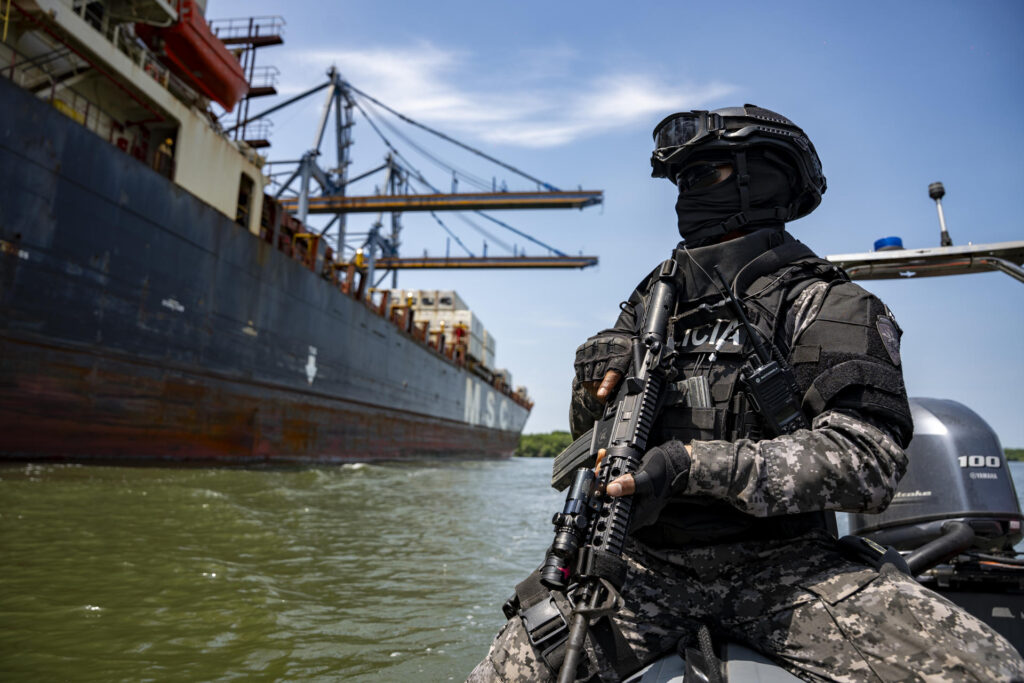
As Common Dreams and Stephen Prager report through congressional testimony, field reporting, and local interviews, the Trump administration is no longer speaking about anti-drug policy in the old clipped bureaucratic language alone. It is speaking in something harsher, more theatrical, and much more dangerous for a region that has heard these promises before. Joseph M. Humire, the acting assistant secretary for homeland defense and Americas security affairs, told the House Armed Services Committee that the United States had supported Ecuador, at its request, in “bilateral kinetic actions” against cartel targets along the Colombia-Ecuador border beginning on March 3. He called the broader campaign “Operation Total Extermination.”
That title matters because names are never neutral in this part of the world. Latin America knows what happens when security doctrine begins to sound absolute. Once extermination enters the vocabulary, restraint starts to look like weakness, civilian risk becomes easier to bury, and local geography can be rewritten overnight as a war zone.
Humire said the joint effort with Ecuador marked the start of a military offensive by Ecuador against transnational criminal organizations, backed by the United States, and that it would help set the pace for wider deterrence-focused operations against cartel infrastructure across Latin America and the Caribbean. He was not describing a one-off border episode. He was describing a model.
That model already seems to be taking shape. Common Dreams and Prager describe Ecuador’s operation as part of “Operation Southern Spear,” the administration’s bombing campaign in the Caribbean and eastern Pacific Ocean, aimed at boats accused, often with little evidence, of ferrying drugs to the United States. The latest of those bombings, the report says, killed at least two more people and brought the death toll since September of last year to at least 160.
That number sits in the background of everything that follows. So does the political setting. Ecuador’s right-wing president, Daniel Noboa, has aligned himself closely with Washington’s security instincts, and the border with Colombia is now being portrayed not as a complex social and criminal frontier, but as a battlefield that requires capabilities Ecuador did not previously possess. Humire himself said as much, telling Congress that the United States was providing Ecuador with “capabilities that they otherwise would not have.”
For a region with a long memory of outside-backed militarization, that sentence lands hard. It sounds less like support than like infrastructure for escalation.
The Farmers Inside the Target Zone
The sharpest evidence in Prager’s report comes not from Washington, but from San Martín, a rural town in northeastern Ecuador near the Colombian border.
Víctor Gómez, a journalist with Radio Sucumbíos, interviewed residents who said their community was attacked twice by Ecuadorian and American forces, on March 3 and March 6. Noboa publicly celebrated the attacks, saying the area contained a training ground for drug traffickers and reportedly the home of Mono Tole, the leader of the Colombian trafficking group known as the Border Commandos.
But Gómez described something much more ordinary and much more unsettling. There were, he said, “no trenches, no firing ranges, no traces of a clandestine military infrastructure.” What the Radio Sucumbíos cameras captured were horses, cows, and donkeys.
That contrast between what officials say and what villagers say they live among is where this story becomes painfully Latin American. A government points to a hidden enemy. A rural community is defined by livestock, labor, and daily life. Then the state arrives with guns anyway.
According to residents quoted in the report, military patrols landed on the riverbank on March 3 and launched what they described as an ambush against four farmers. One worker said soldiers tied his hands and feet, hung him up, submerged him in a bucket of water as long as he could stand it, kicked him, and struck him with the butt of a gun. Another said the soldiers were looking for someone the farmers did not know, demanding things they had nothing to hand over.
Then the house was reportedly set on fire.
The soldiers, according to local testimony, doused the main house and wooden kitchen with gasoline and burned them, destroying farm equipment in the process. When residents tried to approach and speak on behalf of their relatives, the farm owner said the commander would not let them near and that they were met with gunfire until the men were taken away.
That is the part that should stop any easy recitation of anti-cartel doctrine. Once the policy hits the ground, it is not being experienced as strategic deterrence. It is being experienced as the burning of a home, the rough handling of workers, and the transformation of a farm into a suspected target without proof that convinces the people living there.
The four farmers were reportedly flown by helicopter to Lago Agrio, the capital of Sucumbíos. There, one of the young men said he was taken into a small room and tortured. “They shocked us with that thing they called a taser,” he said. “They poured water on me and placed it on my ribs and asked us questions.” After finding no evidence of guilt, authorities released the four men near a hospital.
And then, three days later, the town says the planes came back.
This time, they bombed the ruins of the same house that had already been burned to the ground, and another abandoned house nearby. Video of the bombing was shared on social media by the Ecuadorian Armed Forces. The farm owner’s summary, as quoted in the report, is devastating in its simplicity. First, they burned it on the 3rd, and then on the 6th, they came to bomb it. “That’s what they did.”
He then asked the question that official war language rarely answers well. How can it be a training camp if this is a livestock area? “There is nothing to justify it, there are no training grounds, there is nothing.”
A Border Strike With Regional Consequences
The Alliance for Human Rights Ecuador has called for an investigation into what it described as “bombings, burning of homes, arbitrary detentions, torture, and threats against the civilian population,” acts it says amount to serious violations of international humanitarian law. That demand matters not only legally, but politically. It is the point where the region’s oldest argument returns. Who gets to define security, and who pays for it first?
In Latin America, the answer too often begins with the countryside.
The fallout from San Martín has already moved beyond Ecuador. Two weeks after the attack, an unexploded 500-pound bomb was found on a farm across the San Miguel River in Colombia’s Putumayo region. It was identified as a U.S.-made Mark-82. According to the New York Times, as cited in the report, had it exploded, it would have carried the force of 192 pounds of TNT and could have harmed people more than 1,900 feet away. Colombia’s president, Gustavo Petro, responded bluntly. “Ecuador is bombing us,” he said. Noboa denied it, insisting Ecuador was acting only in its own territory.
That exchange reveals the bigger danger. A supposed anti-cartel operation is no longer just a domestic matter in Ecuador. It is becoming a border crisis between neighbors, one layered with ideology, regional mistrust, and the possibility of deliberate provocation. Prager reports that, after the January abduction of Nicolás Maduro, leaks have suggested the United States may try to bring similar charges against Petro, another left-wing leader who has resisted cooperation with Trump. Petro denies the allegations. One unnamed official told Nick Turse of The Intercept that the attacks along the Ecuador-Colombia border increasingly look like a coordinated campaign to foment “discord” if not conflict in Colombia.
And Washington appears ready to widen the strategy further. Asked in Congress whether the Pentagon would be moving toward many more terrestrial strikes, Humire answered yes. He called the attacks “just the beginning” of a much broader campaign. He said the United States had entered agreements with 17 partner nations in the Western Hemisphere through the so-called Americas Counter Cartel Coalition.
That last phrase is worth lingering on. Partner nations may indeed want support. Humire said many are looking for it. But Common Dreams and Stephen Prager’s reporting make clear that the same cannot be assumed for the people caught in the crossfire. Gómez said the residents of San Martín are living with psychological trauma. According to the town’s vice president, Vicente Garrid, families are in constant fear that their homes could be targeted next.
That is how war enters the region now. It does not always arrive with occupation or formal declarations. Sometimes it arrives through a new doctrine, a renamed department, a border ally eager for harder methods, and a rural town whose ruined house gets bombed twice.
Also Read: Colombia Faces Escobar’s Hippos as Tourism Collides with Ecological Reality