Malvinas Oil Boom Promises Billions, but Where Will the New Workers Sleep?
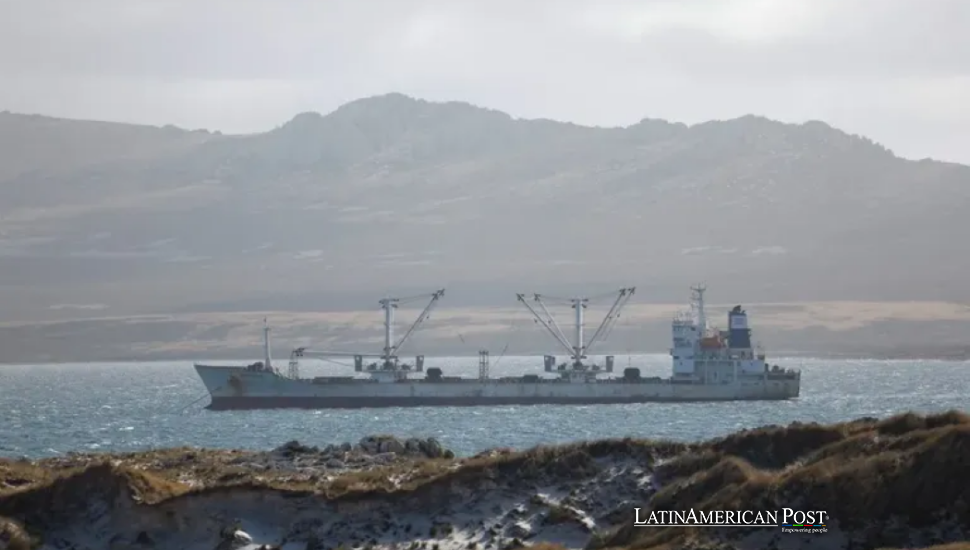
The Malvinas anticipate billions in oil revenue, but their immediate concerns include groceries and somewhere to sleep. As Argentina contests offshore development, islanders are preparing for pressures on housing, public services and a way of life already shaped by isolation.
First, Fill the Shelves
Lee Martin reaches for the supermarket to explain what oil could do to the islands. Hundreds of additional mouths mean more imported food, more storage and more transport. Supplies arrive by sea from Britain and South America, sometimes taking weeks or months. A larger order does not create another warehouse.
“Unfortunately, we cannot grow at the pace the oil industry wants us to,” the islands’ Chamber of Commerce executive secretary told EFE. His concern is not whether businesses want customers. It is whether they can serve them.
Sea Lion, a project developed by Israel’s Navitas and Britain’s Rockhopper, targets first production in March 2028. The field lies about 220 kilometers, or 137 miles, north of the Malvinas and holds an estimated 314 million barrels in proven and probable reserves.
Onshore, approximately 3,600 residents live in a fishing-dominated economy already short of housing and workers. For scale, 360 additional residents would increase the population by 10%. That is an illustration, not a staffing forecast, but it explains why a workforce modest by oil industry standards could stretch a community.
Argentina, which claims the British-administered islands, considers the project unauthorized. President Javier Milei has pursued sanctions and legal action, while Britain supports islanders’ right to develop resources. Operators expect no disruption from those measures. Martin identifies another possible obstacle to their timetable: the islands’ capacity to accommodate them.
At the United Nations General Assembly, Milei warned that companies operating around the islands would be excluded from Vaca Muerta, Argentina’s vast hydrocarbon formation. Britain rejected attempts to obstruct the offshore industry as unjustified interference. The competing positions leave companies with rival claims about whose authorization counts. For island businesses, however, neither a diplomatic assurance nor a legal threat answers Martin’s question about how much the local economy can physically deliver.
Big Money, Different Clocks
Project estimates put Sea Lion’s average annual contribution to island gross domestic product at $339 million, compared with an entire economy worth $386 million in 2024. The projected contribution equals almost 88% of that historical baseline. It conveys scale, not a guaranteed doubling of today’s economy.
The projected public return is different: approximately $4.8 billion over three decades. Dividing that total evenly gives $160 million annually, but neither the arithmetic nor the headline figure establishes when the money will arrive. Economic output and government revenue are not interchangeable, and neither is a household paycheck.
The immediate bills may arrive sooner. Shops need storage before they can stock more food. Additional homes require construction before workers can occupy them. A hospital or school needs capacity when people arrive, not after petroleum receipts have accumulated.
Island businesses also worry that competition for workers will raise wages and feed inflation, EFE reports. Higher pay could benefit employees while leaving small employers struggling to recruit. A household whose earnings do not rise could still face higher prices. The same boom can produce different experiences on the same street.
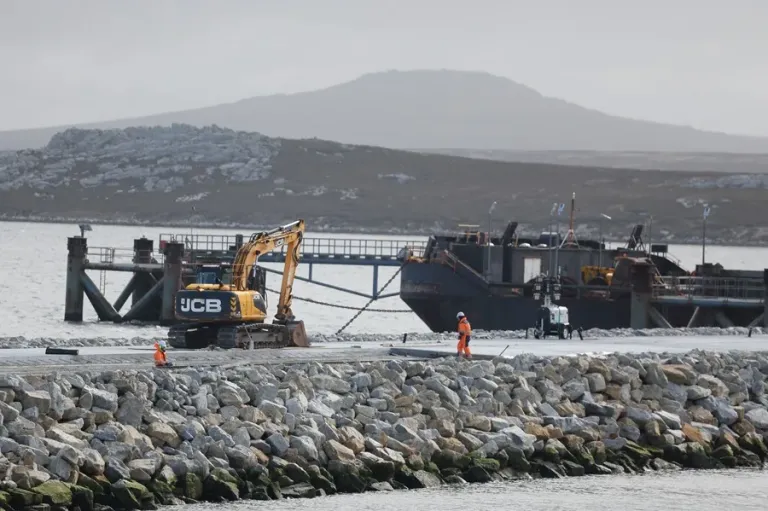
James Wilson, the island government’s natural resources director, told EFE that housing construction and upgrades to the port and power station are underway. Navitas must provide accommodation for its workers. Those responsibilities address immediate pressures, although company housing alone cannot expand every public service.
Keeping a Place Recognizable
Environmental concerns reach beyond the settlement. Falklands Conservation warns of spills and risks to penguins, albatrosses, and whales from increased shipping, underwater noise, and entanglement. In an economy built around fishing, the sea is both habitat and a source of existing income.
The organization estimates annual production emissions equivalent to about 60% of the islands’ current emissions. Added to an unchanged baseline, that would amount to roughly 1.6 times present emissions before offsets. The estimate concerns a future operation, not pollution already measured from producing oil.
Wilson says international standards will underpin regulation. Companies will have to finance an emissions-offset fund and carry insurance against spill costs and damage. Insurance can allocate financial responsibility; it does not prevent an accident. Likewise, offsetting emissions and avoiding disturbance to marine wildlife address different problems.
The social question is equally immediate. More than half the existing population is immigrant, according to EFE’s reporting. Preserving community identity therefore does not describe a place untouched by newcomers. It concerns how quickly an already diverse population can absorb another substantial change.
“We do not want to lose our essence,” Andrea Clausen, the government’s chief executive, told EFE. Wilson says authorities want to avoid transformations like those in Gulf states, where incoming workers greatly outnumbered local populations. That is the comparison guiding their plans, not a demographic forecast for these islands.
Much of Sea Lion’s workforce will remain offshore and rotate through the islands, with companies expected to minimize permanent onshore staffing. That may reduce housing pressure while also limiting how many new workers become year-round customers and neighbors.
Martin offers a different measure of change. “Come back in five years, and I guarantee you will not recognize this place,” he told EFE. Before then comes the less spectacular work: finding beds, unloading food, and keeping daily life functioning while an oil economy takes shape.
Also Read: Malvinas Needs Workers, but Its New Arrivals Are Building More Than Careers