Bogotá Gets into Character as SOFA Makes Cosplay a Language of Belonging
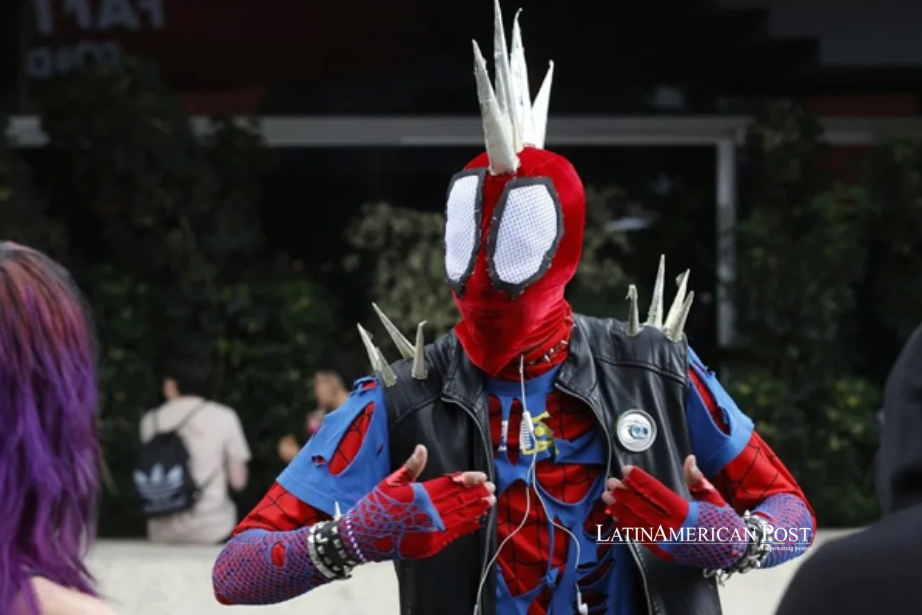
Bogotá’s SOFA festival expects 200,000 attendees, but its most revealing stories unfold beneath the costumes. Across 23 pavilions, Colombian fan communities are transforming imported fantasy into creative work, shared identities, and a public claim to belonging.
The Work Beneath the Costume
Kachan Sekai arrives at Corferias in a pink hat with rabbit ears, a corset, and dark stockings. This, the Bogotá cosplayer explains, is her uncomplicated outfit. “I have more complicated cosplays. But today I wanted to keep it simple,” she tells EFE. Around her, costumes make the ordinary act of walking through a fair look like a performance.
This is her 13th visit to the Salón del Ocio y la Fantasía, known as SOFA, but only her second as a guest. That distinction matters more than the rabbit ears. Someone who once came to participate now comes to meet followers and model for photographers. Across 23 pavilions, the fair turns private interests into visible social identities.
Tatiana Rudd, a Corferias project manager, describes the gathering to EFE as a place where everyone can develop an identity. Kachan’s combination of sweetness and melancholy makes that proposition visible. She is not simply disappearing into somebody else’s character; she is choosing how to be seen.
The fair opened Thursday with a forecast of 200,000 attendees over five days. That averages 40,000 a day, though attendance may not spread evenly. The projection also leaves unclear whether repeat visitors would be counted separately. It is a measure of anticipated scale, not proof of the event’s economic return.
Imported Characters, Colombian Lives
SOFA’s 17th edition brings together 150 communities and 450 exhibitors. Those figures describe different kinds of participation. Exhibitors add a commercial dimension; communities bring relationships that cannot be reduced to purchases. A visitor may shop, perform, learn, or simply find people who share an enthusiasm.
Organizers also report around 900 cultural managers and 5,000 artists, with graffiti particularly prominent. These are participation figures, not a census of separate, salaried jobs. Their scale nevertheless shifts attention toward the work behind the spectacle: making, organizing, teaching, exhibiting and performing.
Graffiti is particularly revealing beside the imported characters. It prevents the event from reading merely as a showroom for entertainment produced elsewhere. Colombian participants are bringing urban art into the same space as manga and gaming. The encounter is not a simple contest between local and foreign culture.
The Colombian idol community similarly builds around Japanese urban culture, bringing singers, musicians and dancers together. Meanwhile, a dedicated circuit gives South Korean popular culture greater prominence. Content director Sebastián Echeverri tells EFE that these activities help expand the fair’s range. Their value is not measured only by how much merchandise visitors buy.
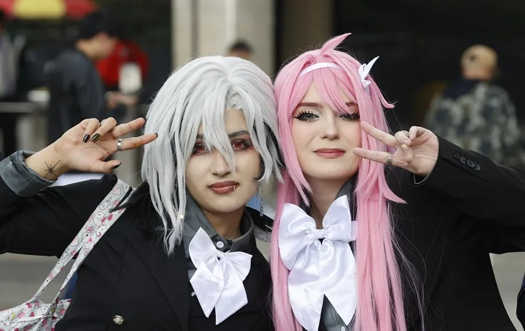
That difference challenges the idea that fandom is merely passive consumption. These participants do not have to originate a fictional universe to make something within it. Kachan can interpret an aesthetic rather than reproduce a character. Colombian performers can adapt imported influences into a shared local scene.
A Regional Audience Finds Its Voice
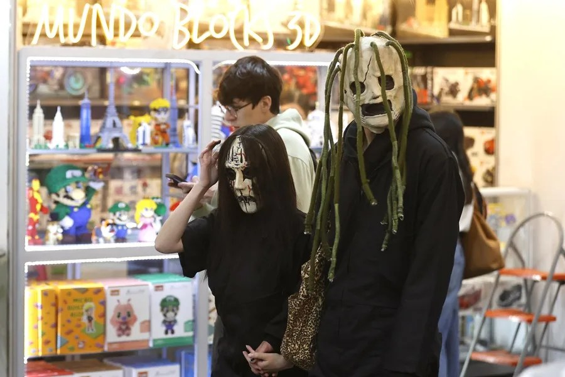
Echeverri reports visitors and guests from across Latin America, including Venezuela and Ecuador, with stronger Mexican and Brazilian participation this year. The regional exchange complicates the familiar picture of foreign entertainment flowing toward Colombia without returning anything.
Among the advertised guests are the Mexican duo Banana Cospboys and Óscar Flores, the Latin American Spanish voice of the Ice King in “Adventure Time.” A dubbing actor offers a particularly intimate connection. Audiences may recognize a character first through the voice that made it familiar in their own language.
For Hatsu, a Venezuelan attending a cosplay runway for the first time, the attraction is less complicated. He calls it “a magical place” and tells EFE, “Here you simply laugh and carry on with life.” His explanation has no grand theory. The pleasure is enough.
The dragon, SOFA’s recurring figure since 2010, returns through this edition’s theme, “The Dragon’s Reflection.” It is a fitting emblem for a gathering without a single uniform identity. Across 23 pavilions, the challenge is not making everybody resemble one another but allowing different communities to share a space.
Attendance will offer one verdict when the doors close. It will not tell organizers whether artists earned enough, newcomers felt welcome, or communities found space beyond their commercial appeal. Those are harder questions. Kachan’s return offers another kind of measure: a participant has become a guest, and a private interest has found a public.