Venezuela Earthquake Makes DNA the Last Road Home for Families
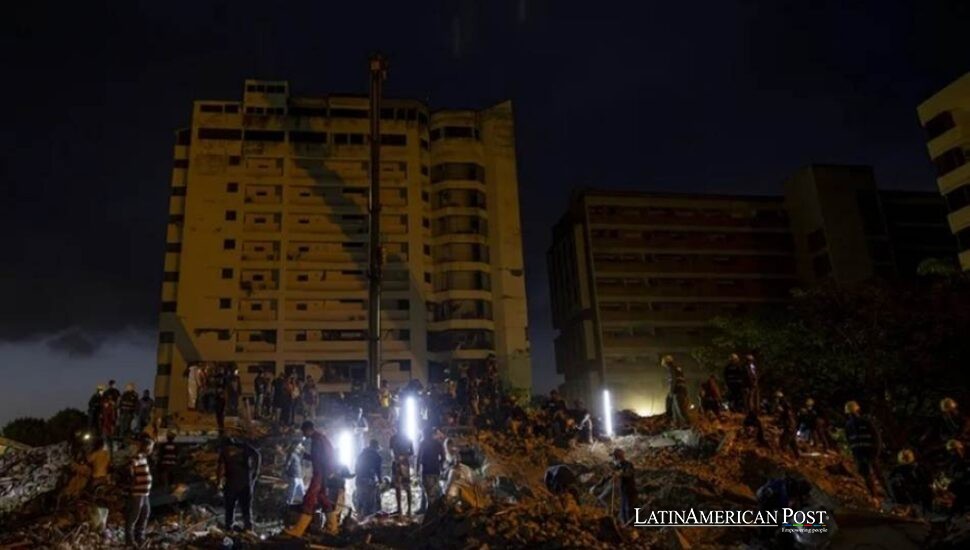
Nearly a month after two quakes struck Venezuela, families are being asked for DNA as morgues, mass graves, and missing-person lists expose a second disaster: the struggle to identify the dead and rebuild a battered coast without repeating history again.
Grief Now Has Office Hours
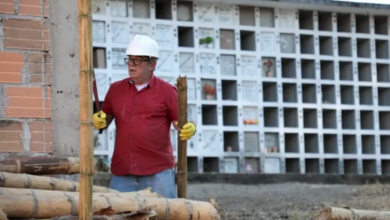
At the national forensic service in Bello Monte, grief now has office hours. From Monday through Saturday, between 8:30 a.m. and 6 p.m., relatives who believe a loved one may be lying unidentified in a morgue in Caracas or devastated La Guaira can submit a DNA sample.
The government issued the call Tuesday, nearly a month after the June 24 earthquakes, measured at magnitudes 7.2 and 7.5, tore through Venezuela’s central coast. Genetic comparisons are meant to bring families “certainty and peace,” the forensic service and Interior Ministry said in a statement reported by EFE.
The phrase sounds clinical. The reality is not. A mother, brother or daughter must enter a government building carrying the possibility that a missing relative is already dead. It also means the ordinary ways of recognizing someone, a face, a document, a scar, have failed at disaster scale.
The official death toll reached 5,278 Monday after authorities added 70 deaths in one update. Another 16,740 people were injured, and 17,907 were reported without housing. Yet the government has released no official missing-person count, the number families need most while hope and mourning still occupy the same room.
A citizen platform, Desaparecidos Terremoto Venezuela, lists 29,500 people with whom contact has not been restored. The United Nations humanitarian office received unconfirmed estimates of up to 50,000 missing. Neither is a verified total. Broken communications, displacement and duplicate reports can inflate a list. Fear, isolation and unidentified bodies can hide losses.
That uncertainty is its own emergency. Witnesses interviewed by EFE said unidentified victims had been buried in newly opened graves at a municipal cemetery in La Guaira. Emergency burial is not evidence of concealment, but it makes meticulous records essential. Otherwise, a temporary measure can harden into permanent doubt.
The Numbers Refuse to Line Up
Disasters are described through totals, but Venezuela’s totals tell different stories depending on the denominator. The government says 23,587 people are living in 107 temporary camps, roughly 220 people per site. That camp population is 5,680 higher than the official number left without housing.
The gap may include families whose homes remain standing but unsafe, residents cut off from their neighborhoods, or categories compiled by separate agencies. The government has not explained it. In a country where institutional trust has been thinned by political conflict, economic collapse and opaque public data, such differences are never merely technical.
Authorities also say 128,324 families have received assistance, suggesting damage far beyond the buildings that fell. Yet without a breakdown, “assisted” might mean food, medical care, transport, shelter or housing. The figure sounds sweeping while remaining hard to audit.
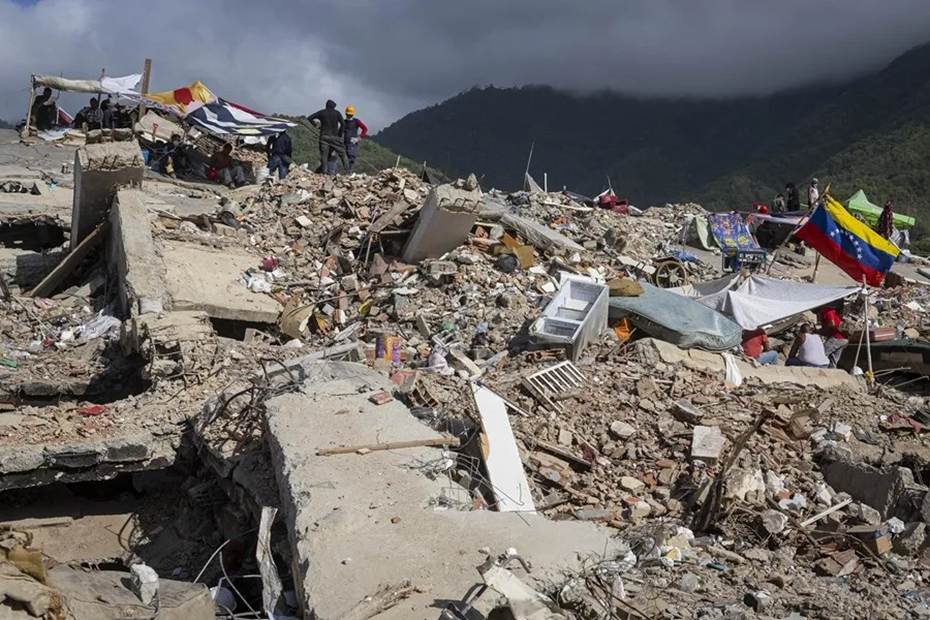
The physical burden is easier to picture. Officials count 190 collapsed buildings, 856 damaged structures and 1,405 aftershocks since June 24. The government and the United Nations Development Program estimate 2.106 million tons of debris. That means blocked roads, contaminated dust, broken drainage, stalled commerce and private lives mixed into concrete.
More than 240 affected families received the first government apartments Monday. Acting President Delcy Rodríguez promised monthly deliveries, reaching 4,000 homes by December and more than 10,000 in 2027, many recovered from unfinished buildings.
The promise may be substantial, but the public ledger mixes people, families and housing units. The 17,907 people without homes cannot be directly compared with 4,000 apartments because household sizes vary. Still, reconstruction is measured by how many displaced residents leave camps for safe, serviced neighborhoods, not by ceremonies.
La Guaira Remembers the Last Disaster
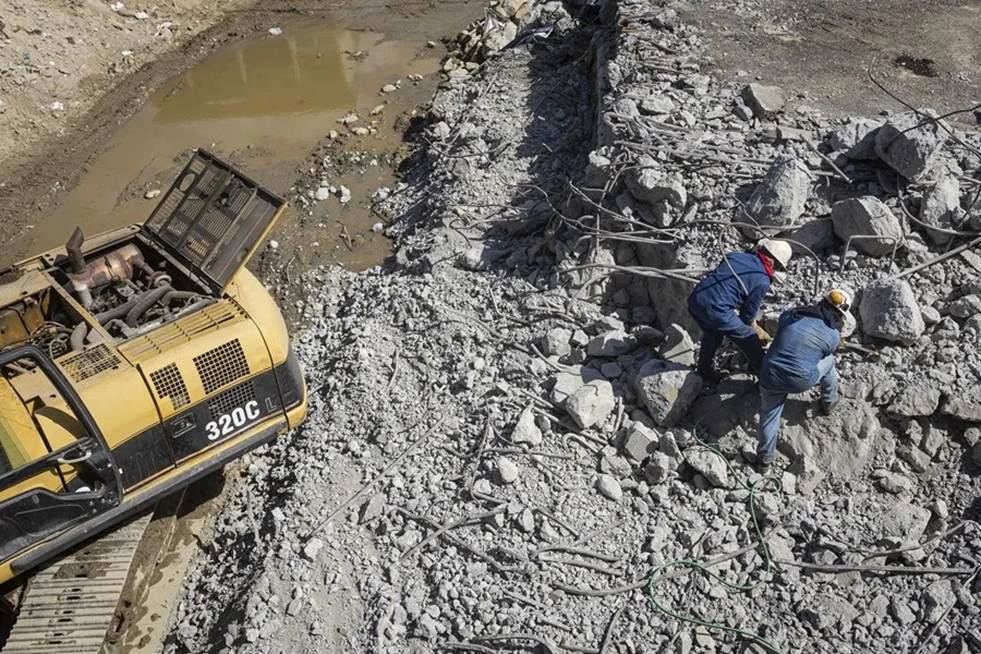
The opposition party Primero Justicia has proposed a scientifically guided reconstruction modeled partly on Japan. María Gabriela Hernández, its environment and sustainability secretary, called for debris to be divided, classified, crushed and processed with mobile equipment so roads can reopen faster. She also urged authorities to prevent toxic material from being dumped into the sea, according to a statement cited by EFE.
The proposal reaches back to Venezuela’s own unfinished lessons. It calls for reviving a disaster-prevention plan delivered by the Japan International Cooperation Agency after the 1999 landslide and floods that devastated La Guaira, then widely known as Vargas. It also embraces Central University of Venezuela recommendations to modernize reinforced-concrete channels and require seismic microzoning before coastal construction.
That history makes reconstruction a political test. La Guaira is not facing its first warning about unstable terrain, weak infrastructure, or dense settlement. The 1999 catastrophe became a national wound. To rebuild after 2026 with the same land-use habits would turn memory into negligence.
“The reconstruction is not viable under the same schemes of those who failed in the past,” Hernández said in the statement reported by EFE. Her party accused the state of lacking technical capacity and political will, a charge the government’s housing deliveries are clearly meant to answer.
But speed and safety are not rivals. Clearing 2.106 million tons of debris matters for access and commerce. So do environmental controls, seismic mapping, drainage and rules strong enough to survive political pressure after the cameras leave.
For now, the most intimate work happens away from reconstruction podiums. It happens in a forensic office where relatives offer their genetic material in search of someone else. A match can close a file. It can also open a grave, begin a funeral, and return a name to a family.
That is the first reconstruction Venezuela owes its dead.
Also Read: Trinidad Volcano Rises as Venezuela Quakes Put NASA on Fault Watch Again