Uruguay NOMA Carries a Small Nation’s Giant Football Tradition
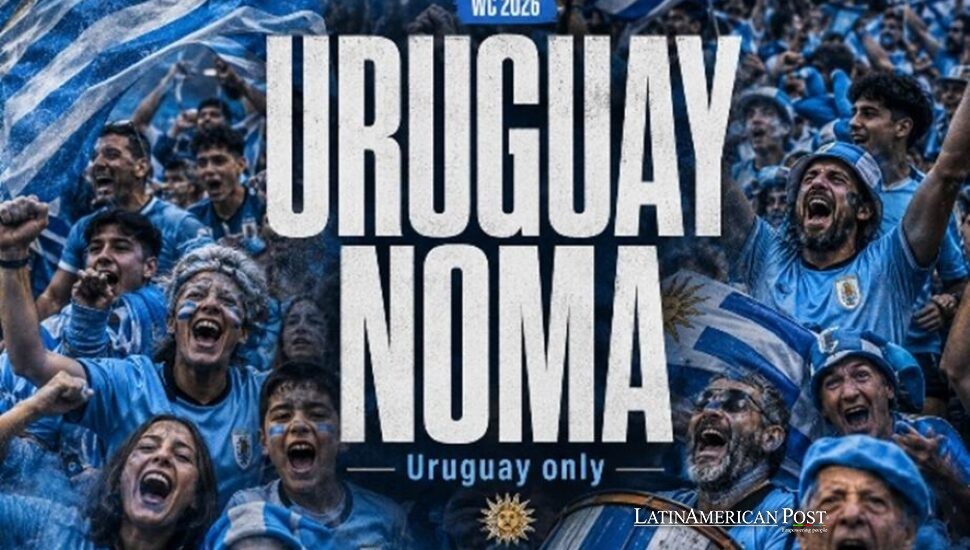
At Uruguay matches, the phrase “Uruguay nomá” is not just decoration. It is a border, a prayer, and a dare, carrying a three-million-person country into World Cup noise with beef smoke, drums, exile, history, and one stubborn national heartbeat.
The Motto That Refuses to Bow
Uruguay NOMA (nomá) does not sound like a slogan invented in a marketing room. It sounds older, rougher, more useful. It has the shape of a phrase said after suffering, after doubt, after being reminded once again that Uruguay is small.
Just Uruguay. Uruguay, nothing more. Uruguay, that is enough.
That is the force inside the words. In original reporting, quotes and interviews by Thomas Harris for The Athletic show that Uruguayan supporters describe a football culture that does not begin at kickoff or end at the final whistle. It begins in the body. In the stomach. In the neighborhood. In the old ritual of preparing for a match, as if preparing for the weather.
Hector Lara, a retired architect in Rivera, near the Brazilian border, told Harris that when Uruguay plays, the streets empty. In Montevideo, Alvaro Martinez speaks with a mate close by, as if the national team can be summoned through the bitter straw. Felicia and Raul Guizzo carry out the ritual in Texas. Franco Cassoni carries it in Miami. Gonzalo Perez turns fandom into civic work. Different places, same phrase.
Uruguay nomá is what holds them together.
The arithmetic is almost absurd. Uruguay has a little more than three million people, fewer than many cities in Latin America, yet its football memory is on a continental scale. It hosted and won the first World Cup. It still exports elite players. It still expects to matter. The Athletic notes that only Qatar, Cape Verde, and Curaçao will have smaller populations at the next World Cup. For most countries, that would be an excuse. In Uruguay, it becomes fuel.
Latin America is full of nations that must negotiate size. Brazil is overwhelmed by abundance. Mexico by market and media. Argentina by myth, theater, and grief. Colombia by talent and unresolved promise. Uruguay does something stranger. It compresses. It takes a limited population, a limited territory, and a limited spectacle, then turns them into density. A shirt becomes a family document. A chant becomes a passport.
Asado, Mate, and the Stadium Within
To understand Uruguay nomá, one has to leave the stadium for a moment and enter the kitchen, the patio, the living room, where old matches are replayed before the new one begins.
Matchday is not an appointment. It is a domestic mobilization. Meat is bought early. The grill is prepared with the seriousness of a public duty. The television warms up before the players do. Songs arrive before anxiety can fully name itself. Harris’ reporting captures that lived rhythm, the way supporters do not simply watch Uruguay. They stage Uruguay around themselves.
The asado matters because it is not just food. It is a social constitution written in smoke. People stand, wait, argue, laugh, remember. No one eats entirely alone. Mate matters for the same reason. It moves hand to hand, mouth to mouth, across class, age, and distance. It creates intimacy without requiring speeches. Football borrows these rituals and projects them onto the world.
That is why Uruguay nomá lands differently from a generic chant of national pride. It is not only boastful. It is communal. It says the small country has already gathered before anyone counted it out.
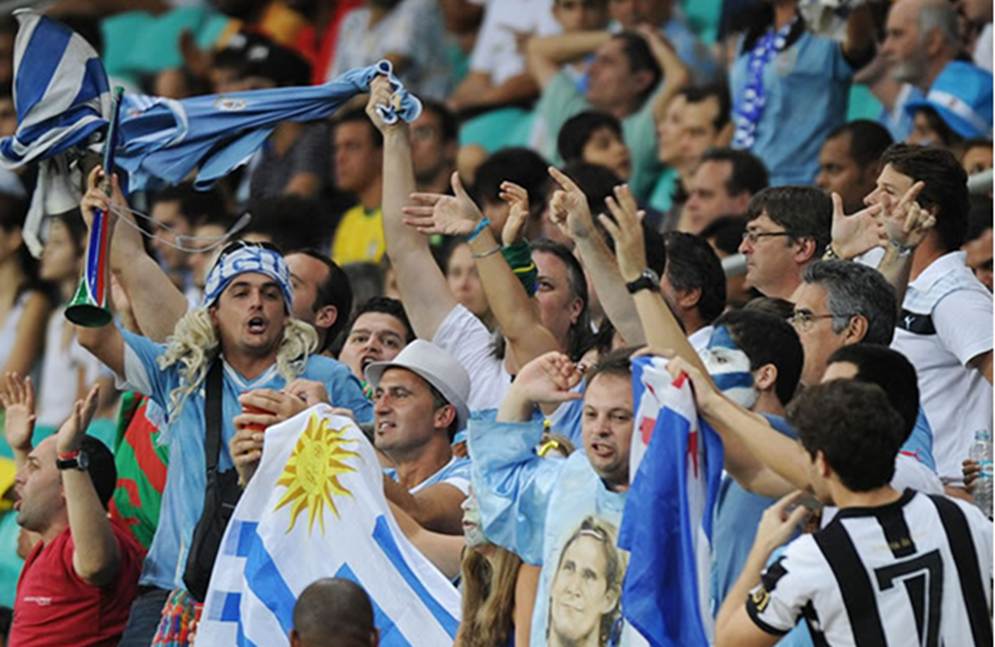
Then come the drums. Alvaro’s supporters’ group brings percussion, banners, and the pulse of Candombe, the Afro-Uruguayan tradition centered on barrel-shaped drums. That sound complicates the clean myth of a tiny white republic playing brave football. Uruguay, like Latin America itself, is layered with European immigration, African survival, Indigenous absence, borderland exchange, and selective memory. Candombe carries that history into the stands. The drum does not decorate the nation. It corrects it.
And then the anthem rises. Fans speak of goosebumps, especially around “Sabremos cumplir,” which means “we will deliver.” In many countries, the language of the anthem can feel official, distant, or even performative. In Uruguay, supporters hear it as a public contract. The country is promising itself again.
Uruguay nomá comes after that promise. It is shorter, more street-level, and less formal. The anthem says we will deliver. The slogan answers, of course, we will—Uruguay, and nothing else.
A Small Republic With a Loud Memory
There is danger in romanticizing this. Uruguay’s football mythology often turns on garra Charrua, the idea of ferocious Uruguayan grit. The phrase invokes the Charrua people, whose name has been folded into national identity, while the actual history of Indigenous violence and erasure remains painful. Latin America often builds unity from symbols drawn from people pushed to the margins. Uruguay is not exempt from that contradiction.
But this is precisely why Uruguay nomá is worth taking seriously. It is not pure innocence. National chants rarely are. They carry pride and forgetting, resistance and myth, belonging and exclusion. The honest story is not that Uruguay’s football culture is simple. Its simplicity is hard-earned.
For Latin America, the phrase offers a compact lesson. The region has long been measured from outside: by population, debt, exports, crisis, violence, migration, instability, and dependency. Smaller countries are often treated as footnotes to larger regional dramas. Uruguay refuses that script through football. It says scale is not destiny. It says a country can be minor in population and major in memory.
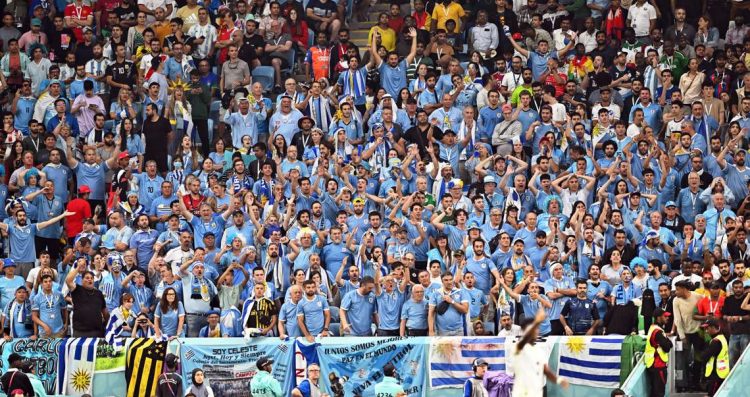
The diaspora makes the phrase even stronger. A fan in Texas, another in Miami, one in Montevideo, another in Rivera. These are not separate scenes. They are extensions of the same imagined grandstand. Migration has scattered Latin Americans across the hemisphere, but football gives people a way to gather without having to return. The team becomes a portable homeland. Uruguay nomá becomes an address.
That portability is not sentimental decoration. It is political and cultural survival. In a region where institutions often feel fragile, and economies push people outward, football becomes one of the few public languages that can still hold memory together. It allows exile to feel less like disappearance.
The suffering is real, too. Supporters told Harris they live matches as if they were playing them. They pace. They lose their appetite. They imagine disaster. That anxiety is not weakness. It is the cost of belonging to a country where the national team seems close enough to wound you personally.
Still, the final note is not fear. It is smoke, drums, flags, hoarse voices, and strangers becoming relatives for 90 minutes. It is Uruguay nomá, a phrase with no need to explain itself too much.
Uruguay only. Uruguay and that is enough.
*This article is based on original reporting, quotes, and interviews by Thomas Harris for The Athletic. https://www.nytimes.com/athletic/7183829/2026/06/08/uruguay-world-cup-fans/
Also Read: Uruguayan Legend Suárez Misses World Cup as Bielsa Bets Forward