Colombia Jersey Turns World Cup Pride Into Election Campaign Armor
Colombia’s yellow national soccer jersey has slipped from stadium ritual into presidential combat, exposing how World Cup pride, polarized politics, and borrowed nationalist imagery can transform a shared emblem into a campaign weapon before the June runoff.
A Shirt Leaves the Stadium
The jersey was never just cloth. In Colombia, the yellow national soccer shirt belongs to the bar before kickoff, the taxi radio turned too loud, the child with face paint, and the grandmother who knows nothing about formations but knows when to pray. It belongs to a country that has often found brief unity in ninety minutes because politics, history, and violence have made longer truces harder to keep.
Now that same shirt is standing under campaign lights.
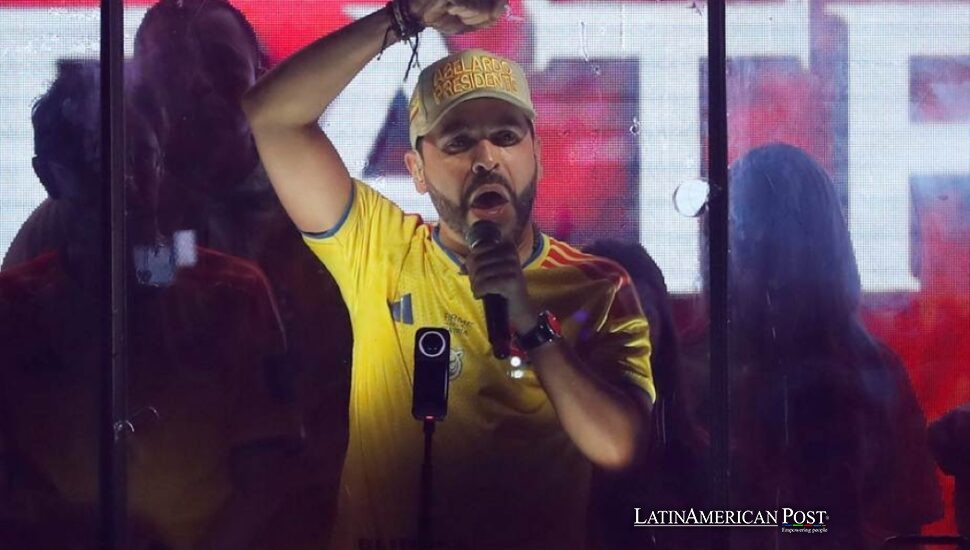
As Colombia heads toward a June twenty-one presidential runoff, the national team jersey has become a dispute inside a dispute. Supporters of Abelardo de la Espriella, the conservative celebrity lawyer who led the first round, have been wearing it frequently at rallies. De la Espriella himself has appeared in the bright yellow shirt while addressing crowds from stages protected by suited bodyguards and bulletproof glass, turning the garment into a visual shorthand for patriotism, defiance, and political identity. The Associated Press reported that the controversy erupted after the jersey became common at his rallies, while his rival, Senator Iván Cepeda of the ruling Historical Pact, accused him of exploiting a symbol that belongs to all Colombians.
Cepeda’s criticism was sharp because the symbol is powerful. In a message on X, he called the use of the national team jersey at political rallies an opportunistic act and said its legality should be examined. He has asked his own supporters to avoid the jersey and other national symbols, presenting restraint as a way to keep the campaign clean. De la Espriella has not directly addressed the criticism, but allies have leaned into the confrontation. Congressman Daniel Briceño, a supporter, argued in a video that the jersey now represents not only support for Colombia’s players, but also the defense of freedoms he claims Cepeda wants to take away.
That is how symbols change meaning. Not by decree. By repetition.
The Colombian Football Federation has reportedly lamented the politicization of the shirt, while acknowledging that it cannot control its noncommercial use. That leaves the jersey in the hands of the street, the rally, and the algorithm. It can still mean Colombia at the World Cup. It can also mean one candidate’s version of Colombia. The two meanings now rub against each other.
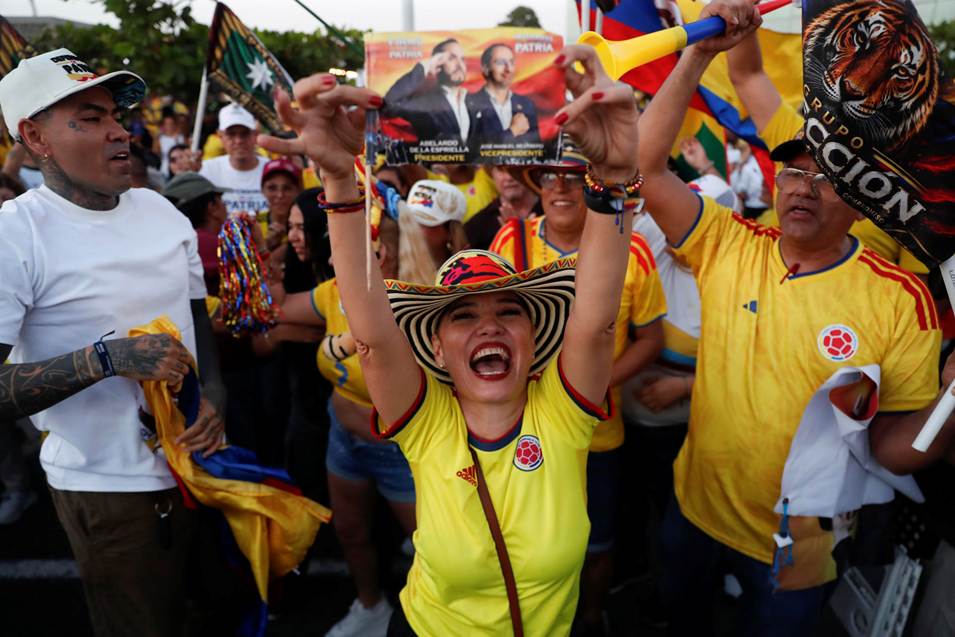
When National Colors Choose Sides
The timing is explosive. Colombia is approaching the twenty twenty-six FIFA World Cup with the kind of anticipation that makes the national jersey visible everywhere. Matches, holidays, airports, family gatherings, neighborhood stores, campaign plazas. In ordinary years, that ubiquity creates communion. In election season, it creates an opening.
De la Espriella led the first round with roughly 44% of the vote. In comparison, Cepeda followed with about 41%, setting up a close runoff between sharply different political projects. Reuters reported that Donald Trump endorsed de la Espriella ahead of the runoff, praising his law-and-order approach. At the same time, President Gustavo Petro criticized the endorsement as foreign interference.
That outside endorsement matters because the jersey fight is not only about apparel. It is about the language of sovereignty. Who gets to define the nation? The candidate in the shirt? Is the critic asking him not to use it? The fans who simply want their team back? The federation that regrets the fight but cannot stop it?
Latin America knows this script. Brazil lived through its own yellow-shirt battle when supporters of Jair Bolsonaro appropriated the famous green-and-gold jersey as a political uniform. Bolsonaro promoted its use at rallies and on voting days. After his defeat, Luiz Inácio Lula da Silva and aligned cultural figures tried to reclaim it, arguing that Brazil’s colors should not belong to one ideological camp. The Guardian described how left-wing Brazilians sought to reclaim the national football shirt from Bolsonaro’s movement during the World Cup, while later images of Bolsonaro supporters in national colors reinforced how deeply the shirt had become embedded in political identity.
Colombia is not Brazil. Its party system, armed conflict, peace process, and regional divides follow their own history. But the resemblance is too obvious to ignore. In both cases, soccer’s emotional reservoir became useful to political actors who understood that national belonging can be worn before it is argued.
That is the danger. A jersey shortens politics. It bypasses policy and goes straight to the chest. It says: we are the people, we are the flag, we are the team. Opponents then risk appearing outside the national body, even when they are simply contesting a campaign tactic. Cepeda’s refusal to wear the shirt may look principled to some voters. To others, it may allow de la Espriella’s camp to claim the symbol more aggressively.
This is how polarization steals from ordinary life. It not only invades Congress or television debates, but also invades the public sphere. It enters music, food, flags, holidays, sports, and clothing. It turns shared objects into loyalty tests.
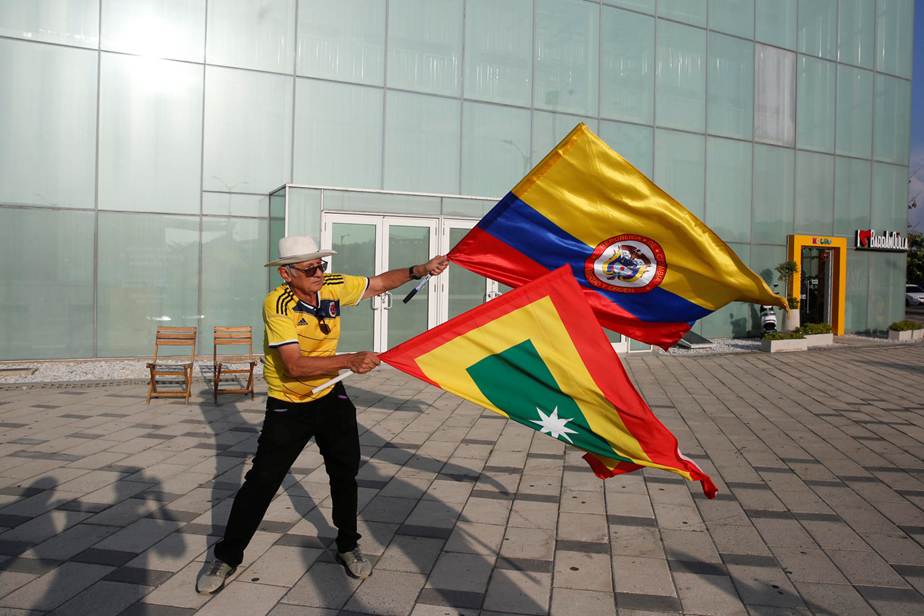
Latin America’s Fragile Common Ground
The Colombian jersey controversy also reveals something deeper about Latin American democracy. In countries with high levels of distrust, national symbols often serve as substitutes for institutions. When courts, parties, and legislatures are viewed with suspicion, the flag and the shirt feel cleaner, older, more emotional. They offer belonging before bureaucracy. That makes them politically irresistible.
But symbols are not neutral once campaigns weaponize them. Colombia’s yellow jersey carries memories of joy, but also of fragile national stitching. It belongs to Bogotá and Barranquilla, Medellín and Cali, the Caribbean coast and the Andean interior, urban professionals and informal workers, Petro voters and anti-Petro voters, peace supporters and security hardliners. Its power comes from that broadness. If one camp captures it, the symbol shrinks.
The runoff itself is already tense. De la Espriella, a political newcomer with a hard-line security message, has promised aggressive measures against criminal groups and drawn comparisons to El Salvador’s Nayib Bukele. Cepeda represents continuity with Petro’s left-wing project, but also faces the challenge of defending an unpopular government’s record while appealing beyond its base. El País reported that the first-round result left de la Espriella with about 43% and Cepeda near 41%, intensifying the struggle over undecided voters and national imagery.
This is why the shirt matters. It is not trivial. It is a battle over emotional permission. A candidate who can make voters feel that the nation already wears his colors has gained something no debate can fully measure.
For Latin America, the lesson is not that political campaigns should be stripped of national imagery. That’s impossible and likely undesirable. Politics is always symbolic. The question is whether symbols remain open enough for democratic disagreement. A flag that can be waved by only one side becomes a warning sign. A jersey that half the country stops wearing has lost its most beautiful purpose.
Colombia’s national team will go to the World Cup carrying the hopes of millions who disagree about almost everything else. That should be the point. The yellow shirt’s deepest meaning is not victory. It is a temporary coexistence. The miracle of people shouting the same goal from different histories.
If Colombian democracy is strong enough, the jersey will survive this campaign. It will return to the stadium bruised, argued over, maybe even embarrassed. But still shared.
If not, the shirt will become another small casualty of a larger Latin American illness: the conversion of common pride into partisan property.
Also Read: Uruguayan Legend Suárez Misses World Cup as Bielsa Bets Forward