Chile’s Valparaíso Port Gamble Tests a City’s Pacific Soul Again
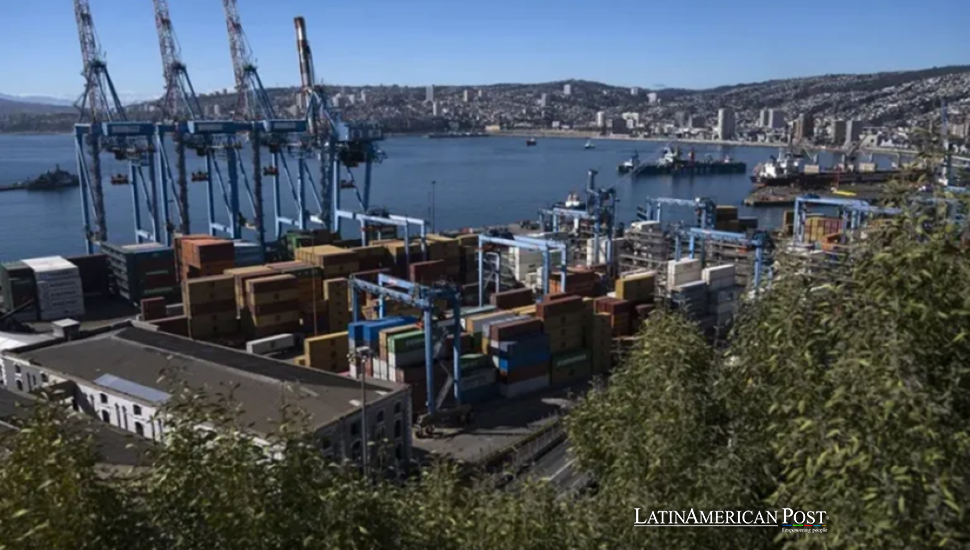
Valparaíso’s planned $900 million port expansion promises jobs, cruise ships, and modern cargo capacity. Still, residents fear cranes will bury ocean views, weaken tourism, and push Chile’s most poetic port closer to becoming another logistics corridor with faded UNESCO dreams.
A Window Facing the Future
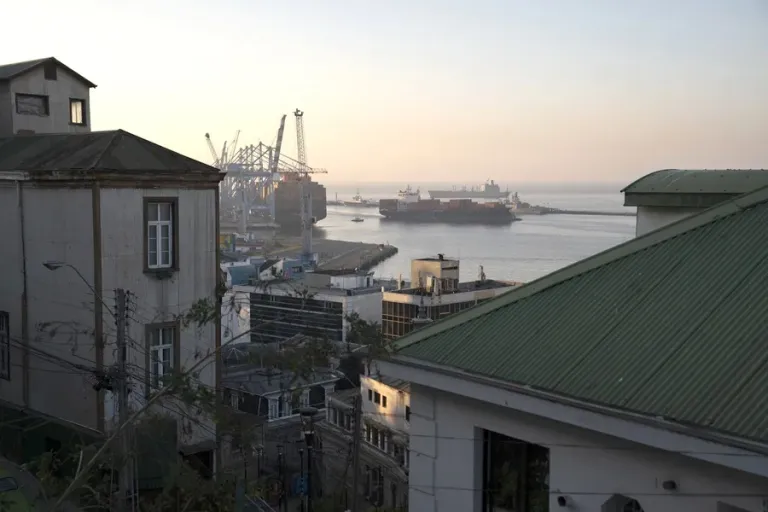
From Manuel Selís’s window, the Pacific still looks like a promise. It opens wide and blue beyond Valparaíso, beyond the ships and the salt air, beyond the patched walls and steep streets of a city that has always seemed to lean toward the sea as if listening to it. But Selís no longer trusts the view. He has decided to sell his apartment before the skyline changes.
“The added value of this building is going to fall to the ground. They are going to expand the breakwater and hang cranes and containers,” Selís told EFE, describing a future in which his view becomes a wall of metal, movement, and noise. What he fears losing, he said, is the “magic” of Valparaíso, the port city that inspired Pablo Neruda and that Chileans still call Valpo with a tenderness reserved for places that feel wounded and beloved at the same time.
That magic has always been uneven. Valparaíso is not a postcard city in the polished sense. Its beauty is cracked, improvised, vertical. Colorful houses climb the hills. Old wooden-and-steel funiculars haul residents up slopes too steep for comfort. Graffiti, rust, cafés, sailors, stray dogs, tourists, students, and memory share the same narrow geography. It is bohemian because it has had to survive by invention.
Now the city faces another test. The future expansion of the Port of Valparaíso, a two-phase project whose first stage received environmental approval in March after more than 12 years of processing, has divided residents, hoteliers, tourism operators, and authorities. The plan calls for a $900 million investment, a cruise ship pier, a new container yard, and extended berthing sites. Supporters see rescue. Critics see erasure.
Containers Against the Horizon
The conflict is not simply between development and nostalgia. It is between two economies, both of which claim to keep Valparaíso alive.
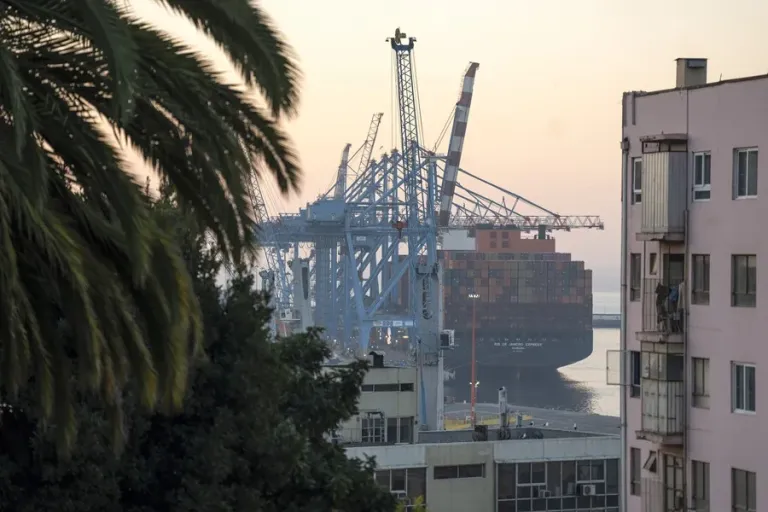
On one side is the port, the city’s original reason for existence. According to Universidad Andrés Bello, port activity currently generates 18,000 direct and indirect jobs. The expansion would allow the port to move around 2.3 million TEUs and more than 3.4 million tons of breakbulk cargo per year. It is expected to create 2,500 new jobs. For a city struggling with decline, those numbers are not decoration. They are wages, contracts, shifts, truck routes, lunch counters, uniforms, and school supplies.
The project could also help Valparaíso receive more cruise ships directly. Today, many passengers land in San Antonio, Chile’s most important port, then travel roughly 200 kilometers by road to Valparaíso. In theory, a proper cruise pier could bring visitors closer, capture more spending, and reconnect the city’s maritime identity with tourism.
But tourism leaders are not convinced. Patricio Veas, president of Valparaíso’s Chamber of Commerce and Tourism, told EFE that the expansion will “directly harm several strategic points” and that “tourists are going to lose the direct view of the sea.” The visual impact, he added, would be joined by “the noise generated by container movements.”
That phrase, direct view of the sea, carries more weight in Valparaíso than it might elsewhere. The sea is not just scenery. It is the city’s argument for itself. People climb the hills for that view. Hotels sell it. Restaurants frame it. Artists paint around it. Residents endure decay, crime, fires, bureaucracy, and abandonment partly because the Pacific still appears at the end of a steep passageway.
If containers occupy that horizon, the city risks weakening one of its few irreplaceable assets. A port can modernize in many places. Valparaíso’s exact mixture of hillside, sea, port memory, and urban disorder cannot be rebuilt once flattened into logistics.
Latin America’s Old Development Trap
The state-owned company that manages the port insists it has listened. Franco Gandolfo, general manager of Empresa Portuaria Valparaíso, told EFE that the company held dialogue with different actors and made “important” changes to the original design to “combine the heritage appeal with the port activity that gives life to the city.”
“We received the doubts and critical views that existed and reduced the berthing front by nearly 400 meters, which will become a new coastal promenade, a plaza, and a new viewpoint of the city and port activity,” Gandolfo said.
That concession matters. It suggests that public pressure changed the project, at least on paper. Yet the deeper question remains unresolved: who gets to decide what kind of city Valparaíso becomes?
This is as much a Latin American question as a Chilean one. Across the region, ports, highways, mines, tourist districts, and energy projects often arrive with the language of modernization. They promise jobs, investment, and global competitiveness. Communities answer with older concerns: view, memory, noise, displacement, neighborhood life, environmental risk, and cultural survival. Too often, officials treat those concerns as sentimental obstacles instead of economic facts.
Valparaíso is especially symbolic because it is a UNESCO World Heritage city fighting to keep that status while also trying to escape decline. Heritage can become a blessing and a cage. It attracts tourists and international prestige, but it does not automatically repair housing, fund schools, control crime, or create stable employment. A city cannot live on memory alone. But if it sacrifices memory too cheaply, it becomes replaceable.
Chile’s dilemma in Valparaíso reflects a broader Latin American contradiction. The region wants infrastructure capable of competing in global markets, but it also carries cities built through fragile layers of history, migration, labor, and loss. Ports are not just machines for cargo. They are social landscapes. They shape who works, who sleeps, who profits, who sees the ocean, and who hears the machinery at night.
The real test, then, is not whether Valparaíso expands. It is whether Chile can build without repeating the old habit of asking ordinary people to absorb the costs of national ambition. Selís selling his apartment is not a minor anecdote. It is an early warning from the window. When residents begin leaving before the cranes arrive, the city is already changing.
Valparaíso has survived earthquakes, fires, neglect, and the slow fading of its golden age. It may survive this, too. But survival is not the same as dignity. If the new port brings jobs while burying the city’s soul behind containers, Chile will have gained capacity and lost something harder to count. And in Latin America, the things hardest to count are often the first to disappear.
Also Read: Economists Watch Ecuador’s Ministry of Finance as Noboa Tests Austerity