Uruguay Greets Pope Leo XIV in a Land Where Christmas Has a Different Name
Pope Leo XIV’s visit to Uruguay begins in a country that renamed Christmas and separated church and state generations ago. Yet its religious landscape is richer than the secular stereotype, revealing how public institutions and private belief can follow different paths.
A Welcome Without a State Religion
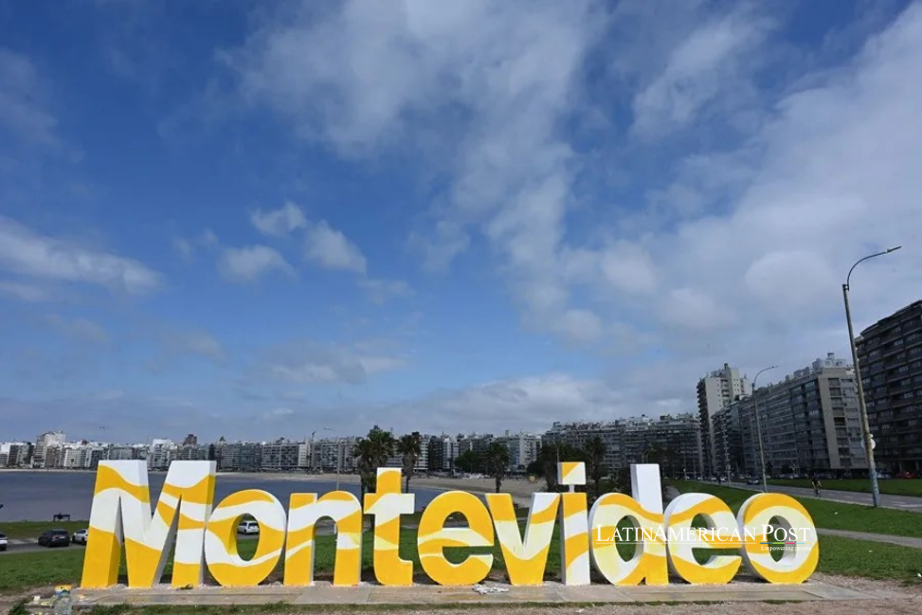
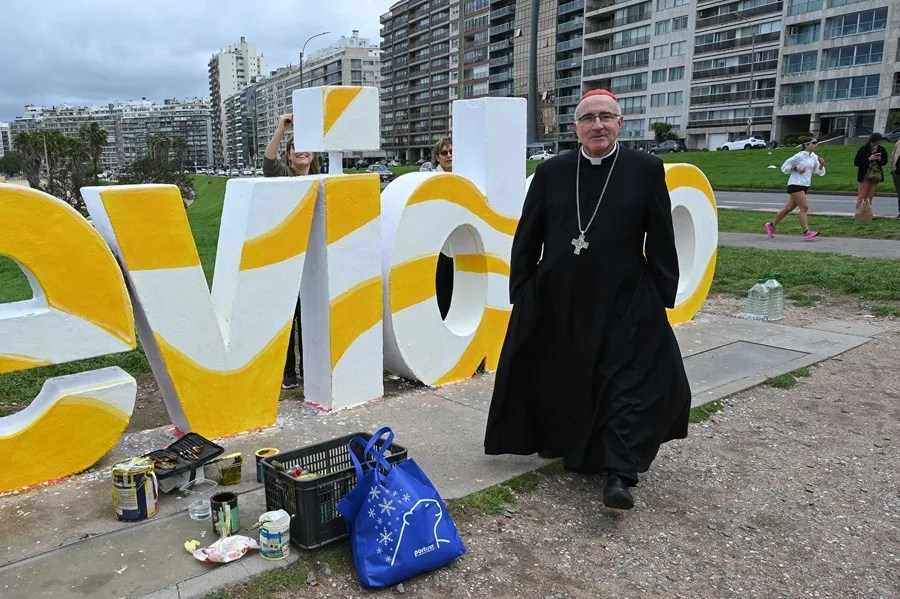
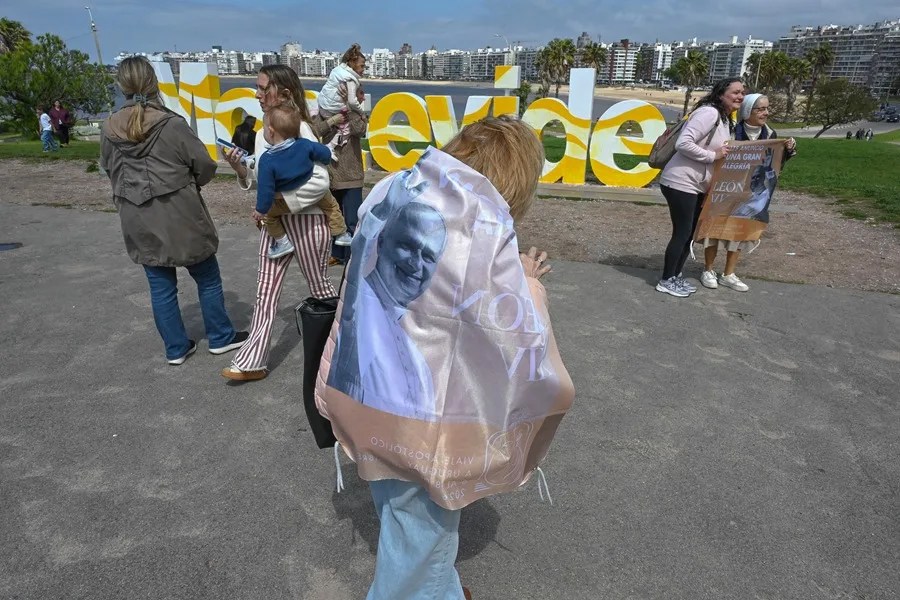
On Montevideo’s waterfront, the city’s landmark lettering wears Vatican yellow and white. Pedestrians pass the sign along the Rambla, where Cardinal Daniel Sturla has posed for photographs. The pope has a place in the public landscape. His church, however, holds no official authority over the state.
Leo’s November 6 arrival opens a visit to Uruguay through November 8, before Argentina and Peru. Across that itinerary, familiar Catholic ceremonies will encounter different arrangements of political power. Uruguay offers the sharpest reminder that welcoming a pontiff does not require a confessional state.
Its calendar makes the point with unusual flair. A 1919 law named December 25 Family Day and January 6 Children’s Day. December 8 became Beaches Day, while Holy Week became Tourism Week. The dates survived; the state changed the language it used to recognize them.
Behind those names lay struggles over matters far more intimate than a holiday: where families buried relatives, who recorded a birth, whose authority made a marriage legally binding.
Historian Carolina Greising told EFE that, beginning in 1861, authorities gradually removed responsibilities that had given the Catholic Church institutional power. Cemeteries passed into municipal management. Civil registration and compulsory civil marriage followed, alongside the secularization of public education.
The 1918 Constitution, effective in 1919, completed the separation during the expansion of batllismo, the political current associated with José Batlle y Ordóñez—raising cautions against crediting one president for a transformation that began decades earlier.
“Pope Leo is not coming to the most secular country in Latin America,” she told EFE. “He is coming to the country with the most secular state in Latin America.” The constitution guarantees religious freedom while declaring that the state supports no religion.
The Believers Behind the Numbers
That distinction becomes clearer when Uruguayans describe themselves.
An Equipos Consultores survey published in October, with interviews conducted in August, found 36% identifying as Catholic. Another 13% identified with other Christian religions and 7% with other religions. Together, those affiliations account for 56% of respondents.
A religious majority, then, lives under institutions built to operate independently of religion. Catholicism remains the largest single identification, but cannot claim to speak for most Uruguayans.
Meanwhile, 29% identified as agnostic or atheist, and 15% did not know or declined to answer. That final group cannot simply be recruited into an imaginary atheist majority. Nor can everyone outside Catholicism be counted as someone who has abandoned faith.
Latinobarómetro’s Catholic estimate of 35% broadly reinforces the picture. The agreement between surveys supports a sizable Catholic minority. These affiliation figures cannot establish enthusiasm for the visit or obedience to church teaching.
Church leaders nevertheless describe tensions within this settlement. In EFE’s reporting, Sturla distinguishes secular government from what he calls Uruguay’s “secularist sin.” The priest Juan Andrés Verde told EFE that he celebrates a secular country but objects to what he regards as an excessively secularist culture.
Those are criticisms from religious leaders, not findings that the state denies freedom of worship. The disagreement concerns how comfortably religious voices fit into public life after a century of institutional separation.
Sturla also reports young people approaching the church, while acknowledging that this may barely change the percentages. His restraint matters. A parish can feel renewed without a nationwide religious revival showing up in representative surveys.
Three Countries, Different Terms of Belief
Argentina presents another arrangement. Its constitution commits the federal government to supporting Roman Catholic worship while protecting religious freedom. Institutional preference and individual choice coexist in the same founding document.
A University of Buenos Aires survey conducted in February and March found 57.7% identifying as Catholic, compared with 22.4% without religious affiliation and 17.4% evangelical. Catholicism remains the largest group, but faces substantial alternatives. Among those aged 16 to 29, Catholic identification falls to 44.6%, suggesting that younger generations are less likely to inherit that identity.
The unaffiliated category includes people reporting no religion alongside agnostics and atheists. It therefore cannot be compared directly with Uruguay’s narrower atheist and agnostic category. Treating those percentages as a league table of disbelief would obscure the people they describe.
Peru offers a different contrast. Its constitution recognizes Catholicism’s historical, cultural, and moral importance and provides for collaboration with the church, while respecting other faiths. The president’s attendance at the Te Deum in Lima Cathedral on Independence Day makes that relationship visible.
Such ceremonies give Catholicism a prominent place in national representation even as evangelical churches gain influence. Legal religious freedom does not automatically erase the advantages conferred by established rituals and official recognition.
Back in Uruguay, musician Diego Melano has approached the papal welcome through a smaller problem: writing a song that people outside the church might also enjoy.
He told EFE that the visit’s song should connect with Catholics celebrating their faith and with people simply pleased to receive a global spiritual figure. Its musical ingredients include candombe and murga, drawing on Uruguay’s own cultural vocabulary.
That is a practical invitation. A person can join the chorus without signing up for the creed. And a country can welcome the pope without asking its citizens to believe alike.